Kirjojen hintavertailu. Mukana 11 244 527 kirjaa ja 12 kauppaa.

Kirjahaku

Etsi kirjoja tekijän nimen, kirjan nimen tai ISBN:n perusteella.

8 kirjaa tekijältä Colin Cooper

Individual Differences and Personality
Individual Differences and Personality provides a student-friendly introduction to both classic and cutting-edge research into personality, mood, motivation and intelligence, and their applications in psychology and in fields such as health, education and sporting achievement.Including a new chapter on 'toxic' personality traits, and an additional chapter on applications in real-life settings, this fourth edition has been thoroughly updated and uniquely covers the necessary psychometric methodology needed to understand modern theories. It also develops deep processing and effective learning by encouraging a critical evaluation of both older and modern theories and methodologies, including the Dark Triad, emotional intelligence and psychopathy. Gardner’s and hierarchical theories of intelligence, and modern theories of mood and motivation are discussed and evaluated, and the processes which cause people to differ in personality and intelligence are explored in detail. Six chapters provide a non-mathematical grounding in psychometric principles, such as factor analysis, reliability, validity, bias, test-construction and test-use.With self-assessment questions, further reading and a companion website including student and instructor resources, this is the ideal resource for anyone taking modules on personality and individual differences.
Individual Differences and Personality
Individual Differences and Personality provides a student-friendly introduction to both classic and cutting-edge research into personality, mood, motivation and intelligence, and their applications in psychology and in fields such as health, education and sporting achievement.Including a new chapter on 'toxic' personality traits, and an additional chapter on applications in real-life settings, this fourth edition has been thoroughly updated and uniquely covers the necessary psychometric methodology needed to understand modern theories. It also develops deep processing and effective learning by encouraging a critical evaluation of both older and modern theories and methodologies, including the Dark Triad, emotional intelligence and psychopathy. Gardner’s and hierarchical theories of intelligence, and modern theories of mood and motivation are discussed and evaluated, and the processes which cause people to differ in personality and intelligence are explored in detail. Six chapters provide a non-mathematical grounding in psychometric principles, such as factor analysis, reliability, validity, bias, test-construction and test-use.With self-assessment questions, further reading and a companion website including student and instructor resources, this is the ideal resource for anyone taking modules on personality and individual differences.
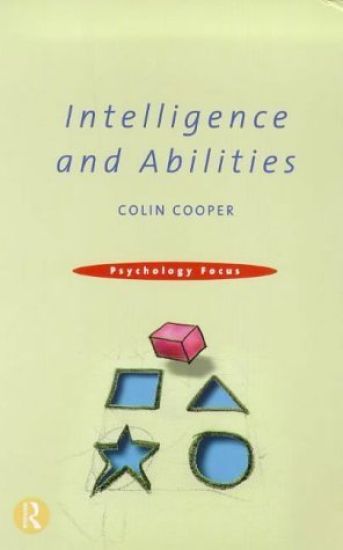
Intelligence and Abilities

Intelligence and Abilities

Colin Cooper

Routledge
1999
nidottu
Research into abilities is one of the great success stories of psychology. Ability tests are widely used and there is continued interest in the origins of abilites (enes or environment?) and their links to social phenomena such as crime and welfare dependecy. Intelligence and Abilities explains what is known about the processes associated with mental abilities and the relationship of abilities to behaviour. It also provides a clear and up-to-date guide to the main areas of research.
Jesus Is Our Friend

Jesus Is Our Friend

Colin Cooper

Ark House Kids
2023
pokkari
Colin Cooper has been a Christian for over 40 years. He has been involved with youth and children's ministries for 30 of those years, during which time he also studied at Moore Theological College to further his biblical training.Cooper comments that he has read many bible books to his grandchildren but there were always words that they didn't understand. In his book Jesus is our Friend, he explains who Jesus is and takes the reader through some of the most well know events of Jesus' life. He clearly articulates the gospel in words any child aged 3 and up can understand. To set this book apart Cooper introduces 3 teaching techniques: The reader asks questions to the young listener to heighten their focus and memory retention.The story structure provides early cognitive exercises in numbers, colours and recognition as a precursor for the young child's formal education and After each chapter, Cooper lays the first foundation stone in learning what prayer is and by echoing the reader, the young child begins their prayer life a few words at a time.
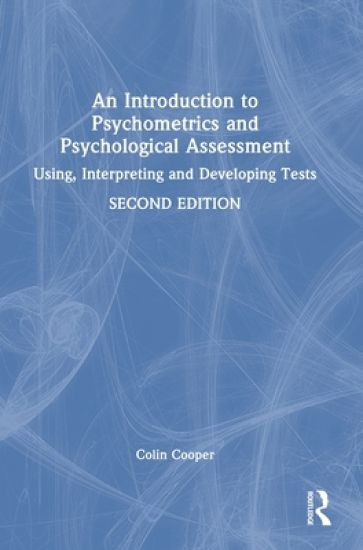
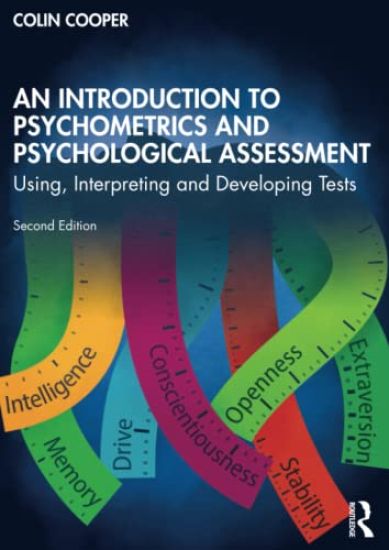
An Introduction to Psychometrics and Psychological Assessment
An Introduction to Psychometrics and Psychological Assessment is the successor to Cooper’s prize-winning book Psychological Testing: Theory and Practice. This expanded and updated volume shows how psychological questionnaires and tests can be chosen, administered, scored, interpreted and developed. In providing students, researchers, test users, test developers and practitioners in the social sciences, education and health with an evaluative guide to choosing, using, interpreting and developing tests, it provides readers a thorough grasp of the principles (and limitations) of testing, together with the necessary methodological detail.This book has three distinctive features. First, it stresses the basic logic of psychological assessment without getting bogged down with mathematics; the spreadsheet simulations and utilities which are integrated into the text allow users to explore how numbers behave, rather than reading equations. Readers will "learn by doing". Second, it covers both the theory behind psychological assessment and the practicalities of locating, designing and using tests and interpreting their scores. Finally, it is evaluative. Rather than just describing concepts such as test reliability or adaptive testing, it stresses the underlying principles, merits and drawbacks of each approach to assessment, and methods of developing and evaluating questionnaires and tests. Unusually for an introductory text, it includes coverage of several cutting-edge techniques, and this new edition expands the discussion on measurement invariance, methods of detecting/quantifying bias and hierarchical factor models, and features added sections on:Best practices for translation of tests into other languages and problems of cultural biasAutomatic item generationThe advantages, drawbacks and practicalities of internet-based testingGeneralizability theoryNetwork analysisDangerous assumptions made when scoring testsThe accuracy of tests used for assessing individualsThe two-way relationship between psychometrics and psychological theoryAimed at non-mathematicians, this friendly and engaging text will help you to understand the fundamental principles of psychometrics that underpin the measurement of any human characteristic using any psychological test. Written by a leading figure in the field and accompanied by additional resources, including a set of spreadsheets which use simulated data and other techniques to illustrate important issues, this is an essential introduction for all students of psychology and related disciplines. It assumes very little statistical background and is written for students studying psychological assessment or psychometrics, and for researchers and practitioners who use questionnaires and tests to measure personality, cognitive abilities, educational attainment, mood or motivation.
An Introduction to Psychometrics and Psychological Assessment
An Introduction to Psychometrics and Psychological Assessment is the successor to Cooper’s prize-winning book Psychological Testing: Theory and Practice. This expanded and updated volume shows how psychological questionnaires and tests can be chosen, administered, scored, interpreted and developed. In providing students, researchers, test users, test developers and practitioners in the social sciences, education and health with an evaluative guide to choosing, using, interpreting and developing tests, it provides readers a thorough grasp of the principles (and limitations) of testing, together with the necessary methodological detail.This book has three distinctive features. First, it stresses the basic logic of psychological assessment without getting bogged down with mathematics; the spreadsheet simulations and utilities which are integrated into the text allow users to explore how numbers behave, rather than reading equations. Readers will "learn by doing". Second, it covers both the theory behind psychological assessment and the practicalities of locating, designing and using tests and interpreting their scores. Finally, it is evaluative. Rather than just describing concepts such as test reliability or adaptive testing, it stresses the underlying principles, merits and drawbacks of each approach to assessment, and methods of developing and evaluating questionnaires and tests. Unusually for an introductory text, it includes coverage of several cutting-edge techniques, and this new edition expands the discussion on measurement invariance, methods of detecting/quantifying bias and hierarchical factor models, and features added sections on:Best practices for translation of tests into other languages and problems of cultural biasAutomatic item generationThe advantages, drawbacks and practicalities of internet-based testingGeneralizability theoryNetwork analysisDangerous assumptions made when scoring testsThe accuracy of tests used for assessing individualsThe two-way relationship between psychometrics and psychological theoryAimed at non-mathematicians, this friendly and engaging text will help you to understand the fundamental principles of psychometrics that underpin the measurement of any human characteristic using any psychological test. Written by a leading figure in the field and accompanied by additional resources, including a set of spreadsheets which use simulated data and other techniques to illustrate important issues, this is an essential introduction for all students of psychology and related disciplines. It assumes very little statistical background and is written for students studying psychological assessment or psychometrics, and for researchers and practitioners who use questionnaires and tests to measure personality, cognitive abilities, educational attainment, mood or motivation.
Intelligence and Human Abilities

Intelligence and Human Abilities

Colin Cooper

Routledge
2015
sidottu
Choice Recommended ReadPsychological research into human intelligence and abilities presents us with a number of difficult questions: Are human abilities explained by a single core intelligence or by multiple intelligences? How should abilities be assessed? With tests unlike the problems which people normally have to solve, or with practical problems closer to those encountered in life, school and work? Do ability tests predict how a person will behave? If so, can they predict whether a person will succeed at school and at work?Intelligence and Human Abilities critically evaluates research evidence from the past 100 years to consider these and other issues. It shows that, despite the apparent contradictions in this research, the evidence in fact supports one coherent model, a fact which has clear implications for researchers, educators and test-users.This clear and engaging text provides an up-to-date evaluation of what the empirical evidence tells us about the number, nature and origins of human abilities. It will be essential reading for students and practitioners of psychology and education, and also for users of ability tests such as applied psychologists and personnel managers.
Intelligence and Human Abilities

Intelligence and Human Abilities

Colin Cooper

Routledge
2015
nidottu
Choice Recommended ReadPsychological research into human intelligence and abilities presents us with a number of difficult questions: Are human abilities explained by a single core intelligence or by multiple intelligences? How should abilities be assessed? With tests unlike the problems which people normally have to solve, or with practical problems closer to those encountered in life, school and work? Do ability tests predict how a person will behave? If so, can they predict whether a person will succeed at school and at work?Intelligence and Human Abilities critically evaluates research evidence from the past 100 years to consider these and other issues. It shows that, despite the apparent contradictions in this research, the evidence in fact supports one coherent model, a fact which has clear implications for researchers, educators and test-users.This clear and engaging text provides an up-to-date evaluation of what the empirical evidence tells us about the number, nature and origins of human abilities. It will be essential reading for students and practitioners of psychology and education, and also for users of ability tests such as applied psychologists and personnel managers.