Kirjojen hintavertailu. Mukana 11 244 527 kirjaa ja 12 kauppaa.

Kirjahaku

Etsi kirjoja tekijän nimen, kirjan nimen tai ISBN:n perusteella.

6 kirjaa tekijältä Colin Flint

Introduction to Geopolitics

Introduction to Geopolitics

Colin Flint

Routledge
2021
sidottu
This new updated edition presents the overarching themes of geopolitical structures and agents in an engaging and accessible manner, which requires no previous knowledge of theory or current affairs. It helps readers understand the geopolitical implications of COVID-19, China’s pronounced role in the world, the relative decline of the US, and the Black Lives Matter movement. Using new pertinent case studies and guided exercises, the title explains the contemporary global power of the United States and the challenges it is facing, the changing foreign policy of China and other countries, the persistence of nationalist conflicts, migration, cyberwar and cyberactivism, terrorism, energy geopolitics, and environmental geopolitics. Expanded case studies of the South China Sea disputes and China’s Belt and Road Initiative emphasize the multi-faceted nature of conflict. The book raises questions by incorporating international and long-term historical perspectives and introduces readers to different theoretical viewpoints, including feminist contributions. The new edition features fresh discussion of island geopolitics, the Anthropocene age, and geoeconomics.Introduction to Geopolitics will provide its readers with a set of critical analytical tools for understanding the actions of states as well as non-state actors acting in competition over resources and power. Both students and general readers will find this book an essential stepping-stone to a deeper and critical understanding of contemporary conflicts.The companion website will enable readers to apply the themes of the book to the constant shifts in current affairs to enable deeper understanding. It will provide access to weekly essays showing how the themes explain current events.
Introduction to Geopolitics

Introduction to Geopolitics

Colin Flint

Routledge
2021
nidottu
This new updated edition presents the overarching themes of geopolitical structures and agents in an engaging and accessible manner, which requires no previous knowledge of theory or current affairs. It helps readers understand the geopolitical implications of COVID-19, China’s pronounced role in the world, the relative decline of the US, and the Black Lives Matter movement. Using new pertinent case studies and guided exercises, the title explains the contemporary global power of the United States and the challenges it is facing, the changing foreign policy of China and other countries, the persistence of nationalist conflicts, migration, cyberwar and cyberactivism, terrorism, energy geopolitics, and environmental geopolitics. Expanded case studies of the South China Sea disputes and China’s Belt and Road Initiative emphasize the multi-faceted nature of conflict. The book raises questions by incorporating international and long-term historical perspectives and introduces readers to different theoretical viewpoints, including feminist contributions. The new edition features fresh discussion of island geopolitics, the Anthropocene age, and geoeconomics.Introduction to Geopolitics will provide its readers with a set of critical analytical tools for understanding the actions of states as well as non-state actors acting in competition over resources and power. Both students and general readers will find this book an essential stepping-stone to a deeper and critical understanding of contemporary conflicts.The companion website will enable readers to apply the themes of the book to the constant shifts in current affairs to enable deeper understanding. It will provide access to weekly essays showing how the themes explain current events.
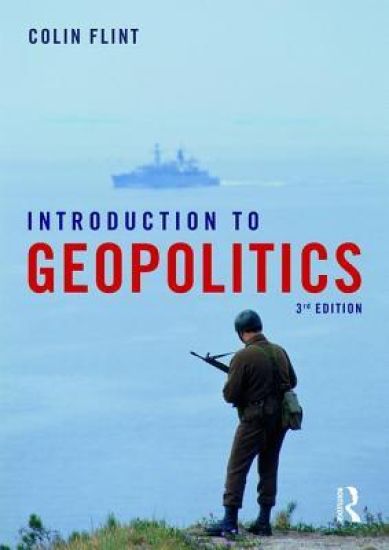
Introduction to Geopolitics

Introduction to Geopolitics

Colin Flint

Routledge
2016
nidottu
This new updated edition of Introduction to Geopolitics presents the overarching themes of geopolitical structures and agents in an engaging and accessible manner, which requires no previous knowledge of theory or current affairs.Using new pertinent case studies and guided exercises the title explains the contemporary global power of the United States and the challenges it is facing, the persistence of nationalist conflicts, migration, cyberwar, terrorism, and environmental geopolitics. Case studies of the rise of the so-called Islamic State, the South China Sea disputes, the Syrian civil war, the Korean conflict, and Israel-Palestine emphasize the multi-faceted nature of conflict. The book raises questions by incorporating international and long term historical perspectives and introduces readers to different theoretical viewpoints, including feminist contributions. The new edition features expanded sections on network geopolitics and non-state actors, a new section on geopolitics of transnational business, cyberwar, an interpretation of ISIS within historical geopolitical trends, as well as expanded discussion of the relevance of Boserup and neo-Malthusians to environmental geopolitics.Introduction to Geopolitics will provide its readers with a set of critical analytical tools for understanding the actions of states as well as non-state actors acting in competition over resources and power. Both students and general readers will find this book an essential stepping-stone to a deeper and critical understanding of contemporary conflicts.
Geopolitical Constructs

Geopolitical Constructs

Colin Flint

Rowman Littlefield
2016
sidottu
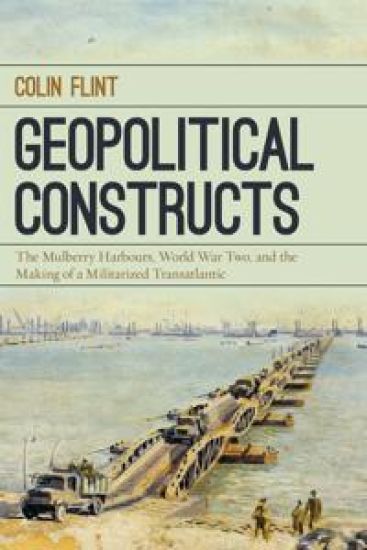
This innovative book tells a unique story about D-Day, one that does not concentrate on the soldiers who hit the beaches or the admirals and generals who commanded them. Instead, Colin Flint brings engineers, businessmen, and bureaucrats to center stage. Through them, he offers a different way of thinking about war, one that sees war as an ongoing set of processes in which seemingly isolated acts are part of broader historical developments. Developing the concept of geopolitical constructs to understand wars, the author connects specific events to long-term and global geopolitical arrangements. Focusing on the construction of the Mulberry Harbours—massive artificial structures dragged across the English Channel in the immediate wake of the invading force—Flint illustrates how the process of making war links a vast array of people, institutions, and places, as well as past events and future outcomes. He argues that the people who designed and built the Harbours became geopolitical subjects by producing pieces of engineering that helped shape the course of World War Two and the Cold War that followed, which created a militarized trans-Atlantic that remains today. Using previously unpublished archival material to give voice to those who made the Mulberry Harbours and wartime strategy, this original study broadens the historical and geographical scope of how we understand war, showing how the everyday actions of individuals made, and were made by, geopolitical settings.
Near and Far Waters

Near and Far Waters

Colin Flint

STANFORD UNIVERSITY PRESS
2024
sidottu
Seapower has been a constant in world politics, a tool through which powerful countries have policed the seas for commercial advantage. Political geographer Colin Flint highlights the geography of seapower as a dynamic, continual struggle to gain control of near waters—those parts of the oceans close to a country's shoreline—and far waters—parts of the oceans beyond the horizon and that neighbor the shorelines of other countries. A forceful and clarifying challenge to conventional accounts of geopolitics, Near and Far Waters offers an accessible introduction to the combination of economic and political relations that are the reason behind, and the result of, the development of seapower to control near waters and project force into far waters. Examining the histories of three naval powers (the Netherlands, Britain, and the United States), this book distills the past and present patterns of seapower and their tendency to trigger repercussive conflict and war. Readers will gain an appreciation for how geopolitics works, the importance of seapower in economic competition, the motivations behind China's desire to become a global naval force, and the risks of current and future wars. Drawing on decades of experience, Flint urges readers to take seriously the dilemma of near/far waters as a context for an alternative understanding of global politics.
Near and Far Waters

Near and Far Waters

Colin Flint

STANFORD UNIVERSITY PRESS
2024
pokkari
Seapower has been a constant in world politics, a tool through which powerful countries have policed the seas for commercial advantage. Political geographer Colin Flint highlights the geography of seapower as a dynamic, continual struggle to gain control of near waters—those parts of the oceans close to a country's shoreline—and far waters—parts of the oceans beyond the horizon and that neighbor the shorelines of other countries. A forceful and clarifying challenge to conventional accounts of geopolitics, Near and Far Waters offers an accessible introduction to the combination of economic and political relations that are the reason behind, and the result of, the development of seapower to control near waters and project force into far waters. Examining the histories of three naval powers (the Netherlands, Britain, and the United States), this book distills the past and present patterns of seapower and their tendency to trigger repercussive conflict and war. Readers will gain an appreciation for how geopolitics works, the importance of seapower in economic competition, the motivations behind China's desire to become a global naval force, and the risks of current and future wars. Drawing on decades of experience, Flint urges readers to take seriously the dilemma of near/far waters as a context for an alternative understanding of global politics.