Kirjojen hintavertailu. Mukana 11 244 527 kirjaa ja 12 kauppaa.

Kirjahaku

Etsi kirjoja tekijän nimen, kirjan nimen tai ISBN:n perusteella.

4 kirjaa tekijältä Colin Gardner

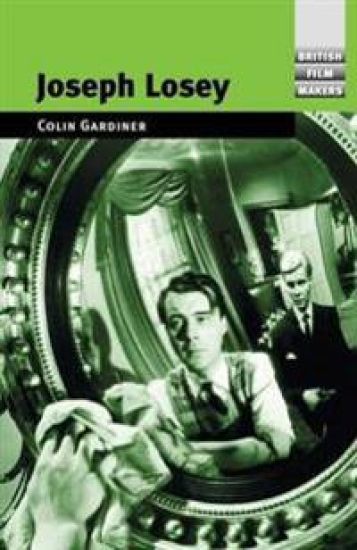
Joseph Losey

Joseph Losey

Colin Gardner

Manchester University Press
2004
nidottu
The career of Wisconsin-born Joseph Losey spanned over four decades and several countries. A self-proclaimed Marxist and veteran of the 1930s Soviet agit-prop theater, he collaborated with Bertholt Brecht before directing noir B-pictures in Hollywood. A victim of McCarthyism, he later crossed the Atlantic to direct a series of seminal British films such as "Time Without Pity," "Eve," "The Servant," and "The Go-Between," which mark him as one of the cinema's greatest baroque stylists. His British films reflect on exile and the outsider's view of a class-bound society in crisis through a style rooted in the European art house tradition of Resnais and Godard. Gardner employs recent methodologies from cultural studies and poststructural theory, exploring and clarifying the films' uneasy tension between class and gender, and their explorations of fractured temporality.
Karel Reisz

Karel Reisz

Colin Gardner

Manchester University Press
2011
nidottu
Czech-born refugee Karel Reisz (1926-2002) is widely regarded as one of the seminal figures in post-war British cinema. Along with Lindsay Anderson and Tony Richardson, Reisz was a founder member of the independent Free Cinema ‘movement’ which attacked the parochial middle-class values of home-grown studio product with a vigorous commitment to everyday working-class subject matter and a poetically charged film style. This was immediately recognisable in the aesthetic of the international success of Reisz’s first feature, Saturday Night and Sunday Morning (1960). As the import of Free Cinema rapidly dissipated during the ‘Swinging London’ era, Reisz confronted the changing cultural mores of the 1960s and 1970s with a series of ambivalent films that critique the anarchic free spirit of the times, including Morgan (1966), Isadora (1968), The Gambler (1974) and Dog Soldiers (1978).Drawing on Reisz’s early film criticism for Sequence and Sight and Sound, as well as interdisciplinary methodologies, this first career-length study explores Reisz’s personal brand of character-based realism, offering the spectator a privileged insight into an artist’s developing response to subjective and historical dislocation. The book should thus prove invaluable to film scholars, cultural historians and the Reisz aficionado.
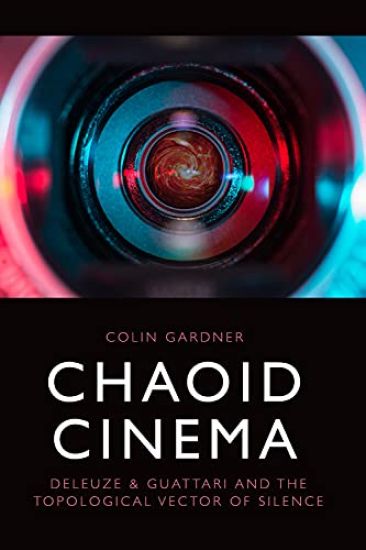
Chaoid Cinema

Chaoid Cinema

Colin Gardner

Edinburgh University Press
2021
sidottu
Expanding on a burgeoning area in contemporary film studies that explores visual and aural absences and interstices in film narrative, this book explores silences in the soundtrack not ambient silence or so-called 'room tone' but complete sound drop-outs, as if the film projector had broken down, thereby jolting the audience out of their passive relationship to the screen, forcing them to become aware of their surroundings and the material apparatus of film as a mechanical device.Drawing on Deleuze and Guattari's concept of Chaoids, which are various organizations of chaos through the different disciplines of science, philosophy and art, this book uses silence to pursue a variety of vectors that open up the surface plane of art (in this case cinema) to discover different philosophical (and by extension, political) singularities and multiplicities.
Chaoid Cinema

Chaoid Cinema

Colin Gardner

EDINBURGH UNIVERSITY PRESS
2023
nidottu
A Deleuzian analysis of the role of silence as chaotic interstice in sound film Applies Deleuze and Guattari's Chaoids to cinema for the first time Uses case studies from world cinemas - Iran, Brazil, France, UK, U.S.A., Germany to explore different philosophical, cultural and historical contexts Brings together Film-Philosophy, Comparative Literature (Lettrism, Iranian poetry, Joyce and Ponge), Film History and radical movements from the 1960s and '70s Expanding on a burgeoning area in contemporary film studies that explores visual and aural absences and interstices in film narrative, this book explores silences in the soundtrack not ambient silence or so-called 'room tone' but complete sound drop-outs, as if the film projector had broken down, thereby jolting the audience out of their passive relationship to the screen, forcing them to become aware of their surroundings and the material apparatus of film as a mechanical device. Drawing on Deleuze and Guattari's concept of Chaoids, which are various organizations of chaos through the different disciplines of science, philosophy and art, this book uses silence to pursue a variety of vectors that open up the surface plane of art (in this case cinema) to discover different philosophical (and by extension, political) singularities and multiplicities.