Kirjojen hintavertailu. Mukana 11 922 445 kirjaa ja 12 kauppaa.

Kirjahaku

Etsi kirjoja tekijän nimen, kirjan nimen tai ISBN:n perusteella.

9 kirjaa tekijältä Colin Morris

The Papal Monarchy

The Papal Monarchy

Colin Morris

Clarendon Press
1991
nidottu
The two centuries covered in this volume were among the most creative in the history of the Church. Colin Morris charts the emergence of much that is considered characteristic of European culture and religion, including universities and commercial cities, the crusades, the friars, chivalry, marriage, and church architecture. In all these developments, the Roman Church played an important and often fundamental role. A re-evaluation of that role is now particularly apt given the dissolution of Christendom in its old form witnessed by today's generation.
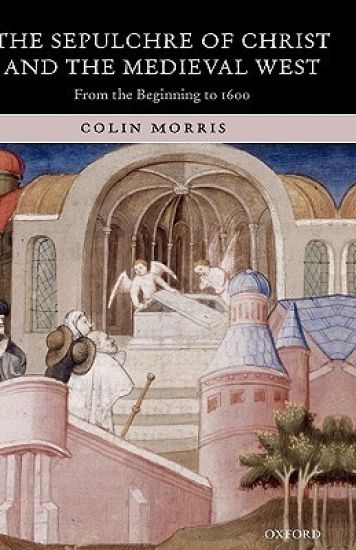
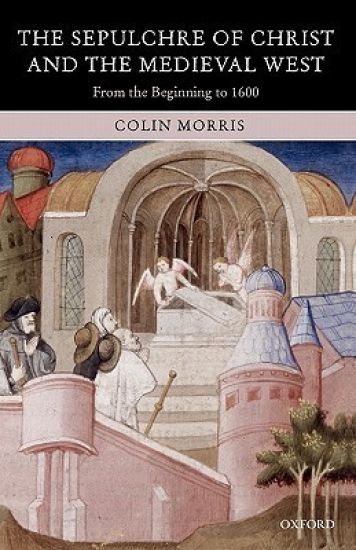
The Sepulchre of Christ and the Medieval West

The Sepulchre of Christ and the Medieval West

Colin Morris

Oxford University Press
2005
sidottu
The tomb of Christ at Jerusalem was a vital influence in the making of Western Europe. Pilgrimage there influenced the development of society and its structures. The desire to 'bring the Sepulchre to the West' in copies or memorials shaped art and religion, while the ambition to control Christ's tomb was a central objective of the crusades. Western Europe responded to the loss of Jerusalem by creating a new pilgrimage to the East, by making kingdoms 'holy lands' for their subjects, and by creating new pilgrim centres at home. This book brings together social, political, and religious themes often considered in isolation.
The Sepulchre of Christ and the Medieval West

The Sepulchre of Christ and the Medieval West

Colin Morris

Oxford University Press
2007
nidottu
The tomb of Christ at Jerusalem was a vital influence in the making of Western Europe. Pilgrimage there influenced the development of society and its structures. The desire to 'bring the Sepulchre to the West' in copies or memorials shaped art and religion, while the ambition to control Christ's tomb was a central objective of the crusades. Western Europe responded to the loss of Jerusalem by creating a new pilgrimage to the East, by making kingdoms 'holy lands' for their subjects, and by creating new pilgrim centres at home. This book brings together social, political, and religious themes often considered in isolation.
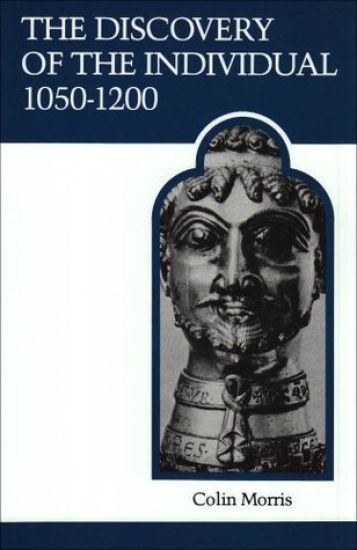
The Discovery of the Individual 1050-1200

The Discovery of the Individual 1050-1200

Colin Morris

University of Toronto Press
1987
pokkari
Colin Morris traces the origin of the concept of the individual, not to the Renaissance where it is popularly assumed to have been invented, but farther back, to the spirituality and intellectually dynamic world of Europe in the twelfth century. First published in 1972.
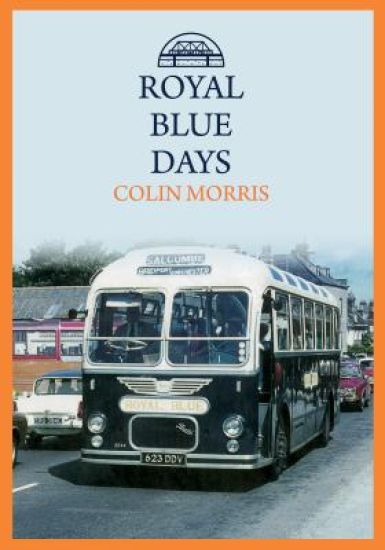
Royal Blue Days

Royal Blue Days

Colin Morris

Amberley Publishing
2019
nidottu
One of the great names of the British bus and coach industry was Royal Blue, whose vehicles were a familiar sight on the express routes between London and the West Country. For many years, Royal Blue was the name adopted by the Southern National and Western National companies for their express services, but the origins of the name date back to the late nineteenth century when a horse-drawn coach service operated from Bournemouth. The Royal Blue operation grew under the ownership of the Elliott family until it was acquired by the two subsidiaries of the Tilling Group. As part of this group, the company ultimately ended up integrated into the National Bus Company and its individual identity was lost with the creation of NBC's long-distance coaching arm, National Express. This book examines the day-to-day operations of the company and how it interlinked with the other operators in the areas that it served, and in particular covers the operator's express operations in the period up until the mid-1960s.
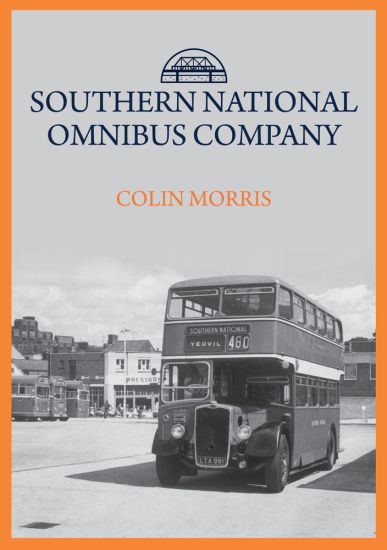
Southern National Omnibus Company

Southern National Omnibus Company

Colin Morris

Amberley Publishing
2021
nidottu
Nowhere had the nineteenth-century rivalry between competing railway companies had a more marked effect on the much later motor-omnibus industry than in the South West of England. Criss-crossing and, in some cases, almost parallel lines, laid or acquired by the GWR and London & South Western Railway, created territorial allegiances that are remembered to this day. In the 1920s, the railway companies’ operating terrain formed the basis for the establishment of two offshoots from the National Omnibus & Transport Co. Ltd. It was a time when the railway companies involved bought their way into the omnibus industry. The resultant Western National and Southern National omnibus companies shared a common address in Exeter but had different railway company directors on their boards. This book begins by outlining the founding of the National Omnibus & Transport Co. together with the express service and Royal Blue subsidiaries’ operations. It then focuses on the history of the Southern National company’s operations.