Kirjojen hintavertailu. Mukana 12 016 292 kirjaa ja 12 kauppaa.

Kirjahaku

Etsi kirjoja tekijän nimen, kirjan nimen tai ISBN:n perusteella.

10 kirjaa tekijältä Colin Pateman

Survival From the Skies

Survival From the Skies

Colin Pateman

PEN SWORD BOOKS LTD
2024
sidottu
Many are the remarkable stories of the men who, through good fortune or sheer determination, survived the loss of their aircraft in the Second World War. Depending on the circumstances, these aircrew often became members of the Caterpillar, Goldfish or Late Arrivals clubs, as well as the famous Guinea Pig Club where membership was reserved to aircrew who were operated on by the legendary plastic surgeon Sir Archibald McIndoe. Such individuals include Captain R.L. Morrison who was injured when his Curtiss P-40 Tomahawk was shot down over North Africa; he was one of six aircraft brought down by the Luftwaffe Ace Hans-Joachim Marseille in just eleven minutes. Having survived his crash landing, Morrison was eventually picked up by a South African armoured car unit operating behind enemy lines. He finally reached Tobruk, gaining membership of the Late Arrivals Club in the process, from where he was evacuated just two days before the port-city was taken by Rommel’s Afrika Korps. Then there is the story of Flight Lieutenant Charles Parish, who was the sole survivor of the crew of a Wellington bomber which was shot down in the English Channel. In pitch darkness, Parish swam seven miles to reach the English coast supported only by his Mae West life-preserver. For this remarkable achievement Parish was admitted into the hallowed ranks of the Goldfish Club. Other airmen who became a member of the Goldfish Club include rear-gunner Sergeant Frederick Price, who had been adrift at sea for six days before being rescued, and navigator Brian Beecroft, who survived not one, but two ditchings at sea. After parachuting to safety over France, and in so doing gain membership of the Caterpillar Club, Flight Engineer Kenneth Board evaded capture with the help of the Resistance. Some, however, survived the horror of the downing of their aircraft only to land in the hands of the enemy. Sergeant John Lord, who became a member of the Caterpillar Club, was one of these men; he was killed in error while a prisoner of war. Sergeant Cecil Room, meanwhile, had been adrift for three days before he was rescued by the Luftwaffe. Often these men received gallantry awards, and all have fascinating experiences to relate but their tales have not been told – until now. This collection of more than twenty accounts covers several theatres of war and deals with a wide variety of escapes following the disastrous loss of an aircraft over land or sea in the Second World War.
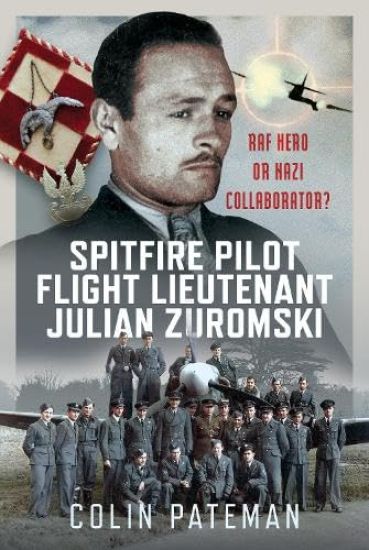
Spitfire Pilot Flight Lieutenant Julian Zuromski

Spitfire Pilot Flight Lieutenant Julian Zuromski

Colin Pateman

PEN SWORD BOOKS LTD
2025
sidottu
Julian Zuromski was on the verge of becoming a fighter pilot when Hitler invaded Poland in 1939. He witnessed the Luftwaffe's bombings and the joint German-Soviet invasion of Poland, eventually escaping to Romania. After being imprisoned, he fled to France, where he fought in the Battle of France before escaping to Great Britain after France’s surrender. There, he joined the Royal Air Force Volunteer Reserve. Zuromski served as an instructor at RAF Dumfries and later flew operational patrols, claiming his first aerial victory in 1942 while flying a Spitfire with 308 Squadron. He went on to achieve two more victories, including the destruction of a Focke-Wulf Fw 190 with 66 Squadron in 1943. On that same day, Zuromski was shot down, captured, and sent to Dulag Luft, where he wrote anti-Bolshevik propaganda, later being moved to a special camp in Berlin. Zuromski escaped captivity during an Allied bombing raid, eventually making his way to Poland and reuniting with his fiancée. Although suspected of collaboration due to his wartime activities, he was exonerated and later served in the Royal Pakistan Air Force. This book also explores the fate of Zuromski’s father, a victim of the Katyn massacre, and the contributions of other Polish pilots in WWII.
Unshackled Spirit:

Unshackled Spirit:

Colin Pateman

Fonthill Media
2012
sidottu
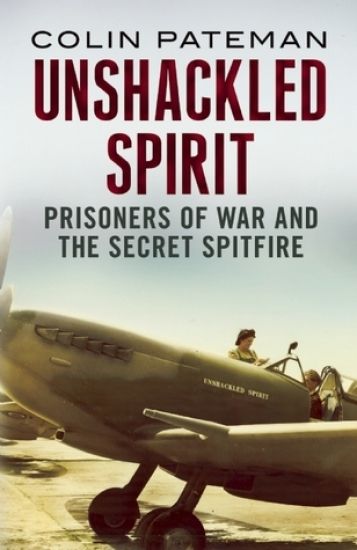
Unshackled Spirit was a unique 'Spitfire' fighter aircraft purchased by allied prisoners of war whilst imprisoned in Germany; the book explains how this remarkable achievement was possible using previously restricted and secret material. In addition, accounts are compiled from a collection of original YMCA personal wartime logs as issued to RAF prisoners of war in 1944. 'Unshackled Spirit' draws out the story of each aviator, how they became a prisoner of war and life in the various camps across occupied Europe. Extensive and amazingly detailed pieces of artwork are taken from the logs and illustrated in the book. The balance of fact and inspired drawings makes for an impressive collection from a number of incarcerated aviators. The hardship of POW's and the extraordinary means adopted to escape are touched upon, but more importantly the aspect of how agencies helped by supplying all manner of equipment to the thousands of men behind barbed wire. The role of MI9 is revealed and how it participated in those agencies exploring the efforts taken to smuggle escape material into the prisoner of war camps without breeching the Geneva Convention and finally the extraordinary measures taken to secure intelligence during the process of prisoner repatriation.
Glorious in Solitude

Glorious in Solitude

Colin Pateman

Fonthill Media
2013
sidottu
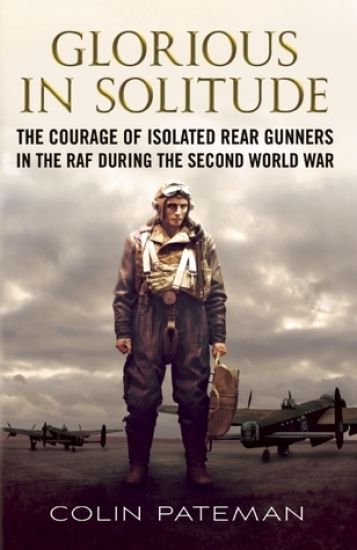
The Royal Air Force and her Commonwealth allies were thrust into war in 1939 with an ill equipped structure of aircrew and aircraft. There had been prewar plans in place to formally train 'Air Gunners' but these only materialized after the realization that 'Air Gunners' were required in significant numbers. The Second World War saw a remarkable recognition of the role undertaken by these exceptional young men, all of whom volunteered for service. Many later climbed into small cramped and isolated perspex turrets that were perched at the extremity of Whitley - Wellington - Lancaster and Halifax bombers. 'Glorious in Solitude' explores stories of these 'Rear Gunners' taken primarily from flying logbooks and recommendations for gallant action. These brave young men were totally exposed, removed from their crew and charged with providing the ultimate protection from marauding Luftwaffe night fighters - they experienced dangers unique to their chosen trade. 'Glorious in solitude' also explores the historical aspects of equipment, uniform and the medals awarded to 'Rear Gunners' A fitting tribute to those men who endured such isolated hardship and to those who lost their lives in solitude.
RAF Special Duties

RAF Special Duties

Colin Pateman

Fonthill Media
2014
sidottu
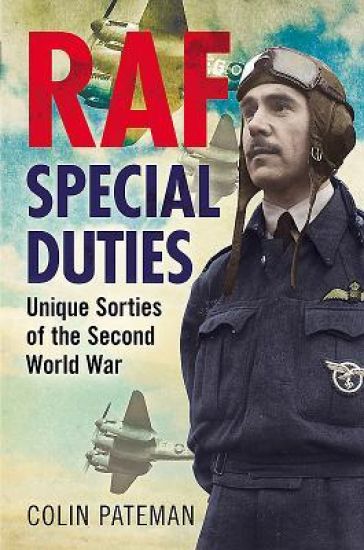
During the Second World War, the RAF employed Special Duties pilots and aircrew on operations across a wide range of extraordinary and daredevil missions. In many instances, specially selected and trained crews flew specific sorties, seeking out small targets of utmost importance to the war effort. A number of these operations were filmed by cameramen and RAF Special Duties: A Collection of Exclusive Operational Flying Sorties by the Royal Air Force enables their stories to be told for the first time. The various exploits in this exceptionally well-researched and gripping book are supported, in many instances, by 'Flying Logbooks' and other materials stemming directly from the pilots themselves. These men were true originals - undertaking hugely dangerous missions against the odds, and often operating as individual aircraft in completely unknown conditions.Accounts in the book include:Cameramen flying on special raids to film precise low level Mosquito sorties, including on the Gestapo HQ in Copenhagen; A Mosquito pilot flying a single aircraft into Germany to cause disruption by setting off air raid sirens; A Stirling pilot flying with radar-jamming equipment to disguise the D-Day invasion; Mosquito pilots attacking targets identified by British SAS units in France; Experience as a wireless operator flying in Churchill's personal aircraft; Dropping supplies over Burma
B-24 Bridge Busters

B-24 Bridge Busters

Colin Pateman

Fonthill Media
2016
sidottu
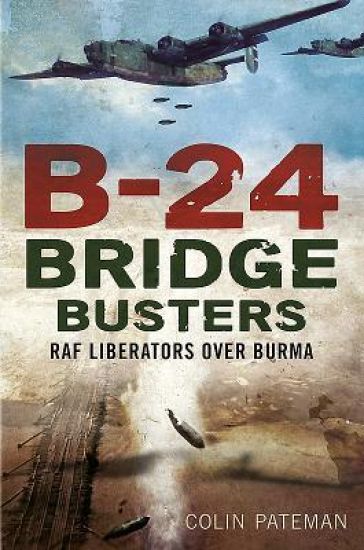
One of the many wartime airmen who documented his day to day experiences in a diary, was RCAF navigator Jan Gellner. Prior to the outbreak of the Second World War, Jan was a lawyer practicing in the Czechoslovak town of Brno. With the outbreak of hostilities on the European continent, he went to Canada and trained as an air observer on the first course of the fledgling British Commonwealth Air Training Plan. Jan Gellner began his operational tour with No. 311 Czechoslovak (B) Squadron flying the venerable Vickers Wellington. It did not take long for Jan's abilities to shine, especially as an instructor in astro navigation. For his farrowing role in the attack on the German cruise Prinz Eugen, Jan received the coveted Distinguished Flying Cross. After an incredible 37 operations over occupied France and Germany, he became Operational Tour Expired. Jan was selected for pilot training and went to Canada. During his postwar service with the RCAF, he had a distinguished career as an administrative officer, retiring in 1958. Now a civilian, Jan turned to writing and became one of Canada's most knowledgeable and sought after aviation and military affairs journalist."
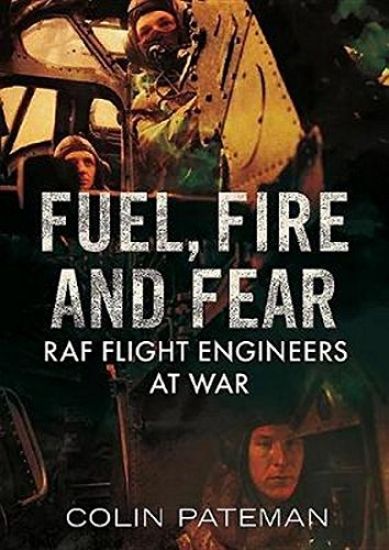
Fuel Fire And Fear

Fuel Fire And Fear

Colin Pateman

Fonthill Media
2018
sidottu
During the Second World War the need for an on-board technical expert to join the Bomber Crews evolved. The various systems on the latest 4-engined 'Heavy Bombers', namely the Handley Page Halifax, Shorts Stirling and Avro Lancaster witnessed the development of Flight Engineers. This book provides the reader with an explanation of the origin of Flight Engineers, the training of these men and the complexity of keeping large bombers in the air is an enthralling story. Many gallantry medals were won by Flight Engineers, including the Victoria Cross. Accounts of dangerous operational flying is revealed by Flight Engineers in numerous aircraft including those of Coastal Command. Direct entries into the RAF by civilians were undertaken to satisfy the demand for Flight Engineers. Entrants underwent courses of varying lengths but flying training time was very sparse and remarkably it was not unknown for these men to qualify for their flying badges without ever having flown in an aircraft. This book examines true accounts that took place; many based upon personal flying logbooks and other unique material originating from the pilots and aircrew themselves.
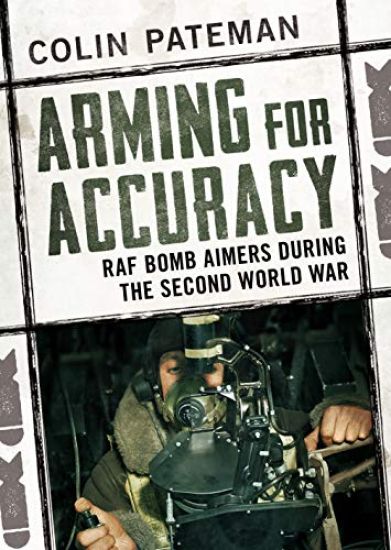
Arming for Accuracy

Arming for Accuracy

Colin Pateman

Fonthill Media
2021
sidottu
During the First World War fledgling crews in basic aircraft experimented with dropping grenades and small bombs. The need for elements of accuracy became obvious and evolved from that point onwards. The various light bombers that flew during the inter war period developed procedures which carried on into the early years of the Second World War. Bomber Command eventually witnessed the large 4-engined ‘Heavy Bombers’, namely the Handley Page Halifax, Shorts Stirling and Avro Lancaster develop into significant bomb carrying aerial platforms. This book will provide the reader with an explanation of the origin of Bomb Aimers, the training of these men and the complexity of dropping many types of bomb ordinance is an enthralling story. Technical and scientific developments are examined to provide an understanding of the trade that enabled the Bomb Aimers wing to be awarded to the men who volunteered at this time. Many gallantry medals were won by Bomb Aimers. Accounts of dangerous operational flying will be revealed by Bomb Aimers in numerous aircraft. This book will examine true accounts that took place; many will be based upon personal flying logbooks and other unique material originating from the aircrew themselves.
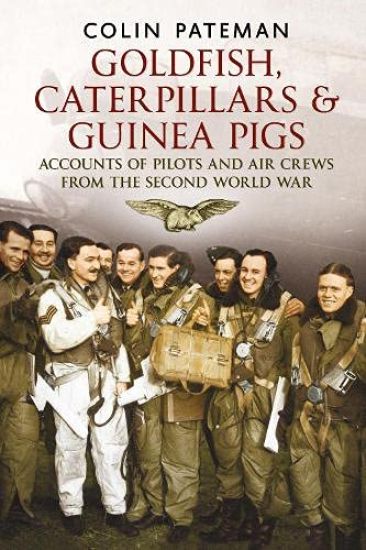
Goldfish Caterpillars & Guinea Pigs

Goldfish Caterpillars & Guinea Pigs

Colin Pateman

Fonthill Media Ltd
2021
nidottu
The RAF and Commonwealth air crews were bound by regulations and discipline during WWII. Survival was by no means a certainty, with casualties becoming a part of everyday life. The evolution of non-established clubs was recognised and regarded as an important area within RAF history that boosted moral. The regulations flexed to allow membership pins and badges to be worn on RAF and Commonwealth flying uniforms. This book allows the reader to experience a number of individual stories and understand the relevance of being a: - 'Goldfish' (Lives saved by the use of personal life preservers and dinghies), 'Caterpillar' (Lives saved by parachutes) or: - 'Guinea Pig' (Lives saved by pioneering surgery conducted by Archibald McIndoe at the Queen Victoria Hospital Sussex) In many instances the accounts are recalled in great detail from the official records of medals and awards. True heroism and gallant deeds supported by original photographs create an easy to read book, revealing areas of interest not previously visited in this format.
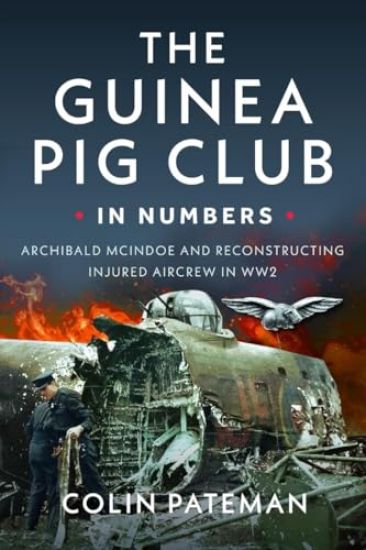
The Guinea Pig Club In Numbers

The Guinea Pig Club In Numbers

Colin Pateman

PEN SWORD BOOKS LTD
2026
nidottu
It was over a Sunday afternoon glass of sherry on 20 July 1941, that a group of airmen, all recovering from recent surgery, agreed they should form a drinking club. It was decided that membership would be open to any member of Allied aircrew who had undergone at least two operations for burns or other disfigurements at the Queen Victoria Hospital in East Grinstead. So was born the remarkable Guinea Pig Club. The club’s name, chosen humorously by its members who had suffered serious injuries in aircraft crashes or cockpit fires, reflected their status as ‘guinea pigs’ in pioneering reconstructive surgery led by the New Zealand-born plastic surgeon Sir Archibald McIndoe. McIndoe revolutionized plastic and reconstructive surgery, developing new techniques for skin grafting and rehabilitation. He also emphasized not only physical recovery but also the emotional and social reintegration of his patients. Unlike the rigid hospital norms of the time, McIndoe encouraged his men to wear civilian clothes, visit the local pub, and mix with townspeople, fostering confidence and normality. The community of East Grinstead, which came to be known as ‘the town that didn’t stare’, became an integral part of their recovery story. Though the Guinea Pig Club began as a social drinking group, it evolved into a lifelong brotherhood that offered mutual support, camaraderie, and advocacy for burn victims. By the end of the war, it had over 600 members from various Allied nations. The club continued to meet annually for decades, celebrating survival, friendship, and medical progress. Its legacy endures as a symbol of resilience, medical innovation, and the human capacity to overcome extreme trauma through courage and solidarity. The Guinea Pig Club In Numbers is illuminated by the individual stories of its members and the caring staff at the Queen Victoria Hospital. The details are fascinating, but the numbers reveal remarkable stories of resilience during the Second World War and beyond.