Kirjojen hintavertailu. Mukana 11 518 949 kirjaa ja 12 kauppaa.

Kirjahaku

Etsi kirjoja tekijän nimen, kirjan nimen tai ISBN:n perusteella.

4 kirjaa tekijältä Colin Samson

A Way of Life That Does not Exist

A Way of Life That Does not Exist

Colin Samson

Memorial University Press
2003
pokkari
This book is about the social and political processes involved in the extinguishment of a unique way of life of the Innu people of Nitassinan, the Labrador-Quebec peninsula. In the 1950s and 60s, the Innu were prompted by Canadian authorities to abandon permanent nomadic hunting, the way of life that had made them independent and self-reliant occupants of the Subarctic. These people, who had occupied a territory the size of France, and for whom the land, waterways and animals provided physical, moral and spiritual sustenance, were settled in government-built villages in Northern Quebec and Labrador. Sustained efforts to impose Euro-Canadian authority upon the Innu have had the effect of seriously eroding not only a distinct way of life, but a unique view of the self, society, and the cosmos. Such efforts have also resulted in rates of suicide, alcoholism, and other forms of self-destructive abuse that are among the highest in the world. By observing interactions between the Innu and the Euro-Canadian institutions imposed upon them, Samson examines how the attempt to destroy the Innu way of life has actually operated. The book looks in detail at Innu relations with the Canadian state, developers, explorers, missionaries, educators, health-care professionals, and the justice system.
A World You Do Not Know

A World You Do Not Know

Colin Samson

Institute of Commonwealth Studies
2014
pokkari
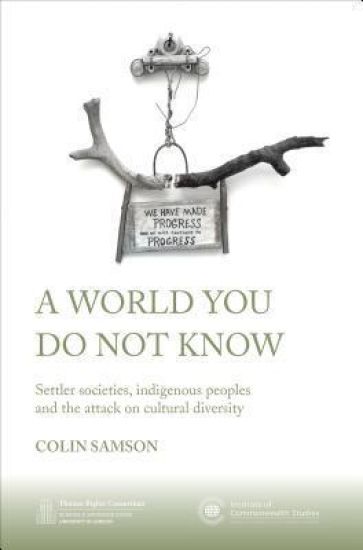
A World You Do Not Know explains how the willful ignorance of indigenous peoples was a major dynamic in the European colonization of North America. Using the Innu of Labrador-Quebec as one powerful contemporary example, Colin Samson shows how the processes of displacement, land-grabbing, and assimilation today are in their intentions and effects no different from U.S. and Canadian policies of the 19th century. While nation building, capitalism, and industrialization are shown to have undermined indigenous peoples' social stability, health, and wellbeing, Samson describes how the values that guide many indigenous societies are very much The book concludes by showcasing how land-based activities of indigenous groups in Canada and the United States are being maintained and recast. Samson argues that by continuing to hunt, fish, and live from what is left of their lands, indigenous peoples are talking back to the ignorance that transformed them and holding out the promise for more positive futures.
The Colonialism of Human Rights

The Colonialism of Human Rights

Colin Samson

Polity Press
2020
sidottu
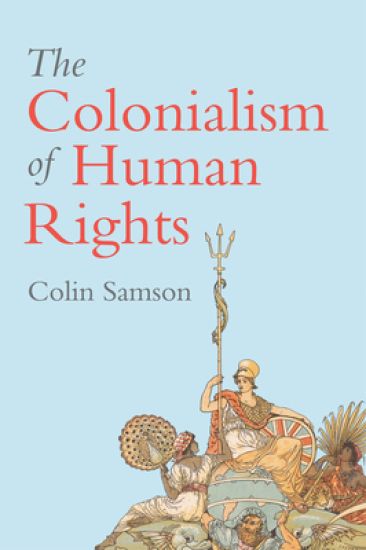
Do so-called universal human rights apply to indigenous, formerly enslaved and colonized peoples?This trenchant book brings human rights into conversation with the histories and afterlives of Western colonialism and slavery. Colin Samson examines the paradox that the nations that credit themselves with formulating universal human rights were colonial powers, settler colonists and sponsors of enslavement. Samson points out that many liberal theorists supported colonialism and slavery, and how this illiberalism plays out today in selective, often racist processes of recognition and enforcement of human rights. To reveal the continuities between colonial histories and contemporary events, Samson connects British, French and American colonial theories and practice to the notion of non-universal human rights. Vivid illustrations and case studies of racial exceptions to human rights are drawn from the afterlives of the enslaved and colonized, as well as recent events such as American police killings of black people, the treatment of Algerian harkis in France, the Windrush scandal in Britain and the militarized suppression of the Standing Rock Water Protectors movement. Advocating for reparative justice and indigenizing law, Samson argues that such events are not a failure of liberalism so much as an inbuilt racial dynamic of it.
The Colonialism of Human Rights

The Colonialism of Human Rights

Colin Samson

Polity Press
2020
nidottu
Do so-called universal human rights apply to indigenous, formerly enslaved and colonized peoples?This trenchant book brings human rights into conversation with the histories and afterlives of Western colonialism and slavery. Colin Samson examines the paradox that the nations that credit themselves with formulating universal human rights were colonial powers, settler colonists and sponsors of enslavement. Samson points out that many liberal theorists supported colonialism and slavery, and how this illiberalism plays out today in selective, often racist processes of recognition and enforcement of human rights. To reveal the continuities between colonial histories and contemporary events, Samson connects British, French and American colonial theories and practice to the notion of non-universal human rights. Vivid illustrations and case studies of racial exceptions to human rights are drawn from the afterlives of the enslaved and colonized, as well as recent events such as American police killings of black people, the treatment of Algerian harkis in France, the Windrush scandal in Britain and the militarized suppression of the Standing Rock Water Protectors movement. Advocating for reparative justice and indigenizing law, Samson argues that such events are not a failure of liberalism so much as an inbuilt racial dynamic of it.