Kirjojen hintavertailu. Mukana 11 244 527 kirjaa ja 12 kauppaa.

Kirjahaku

Etsi kirjoja tekijän nimen, kirjan nimen tai ISBN:n perusteella.

14 kirjaa tekijältä Colin Tudge

The Secret Life of Trees

The Secret Life of Trees

Colin Tudge

Penguin Books Ltd
2006
pokkari
Colin Tudge's The Secret Life of Trees: How they Live and Why they Matter explores the hidden role of trees in our everyday lives - and how our future survival depends on them. What is a tree? As this celebration of the trees shows, they are our countryside; our ancestors descended from them; they gave us air to breathe. Yet while the stories of trees are as plentiful as leaves in a forest, they are rarely told. Here, Colin Tudge travels from his own back garden round the world to explore the beauty, variety and ingenuity of trees everywhere: from how they live so long to how they talk to each other and why they came to exist in the first place. Lyrical and evocative, this book will make everyone fall in love with the trees around them. 'A love-letter to trees' Financial Times 'One of those books you want everyone to have already read' Sunday Telegraph 'Wonderful, invaluable and timely. Tudge is as illuminating a guide as one could wish for' Daily Mail 'Everyone interested in the natural world will enjoy The Secret Life of Trees. I found myself reading out whole chunks to friends' The Times Books of the Year Colin Tudge started his first tree nursery in his garden aged 11, marking his life-long interest in trees. Always interested in plants and animals, he studied zoology at Cambridge and then began writing about science, first as features editor at the New Scientist and then as a documentary maker for the BBC. Now a full-time writer, he is a Fellow of the Linnean Society of London and visiting Research Fellow at the Centre of Philosophy at the London School of Economics. His books include The Variety of Life and So Shall We Reap.
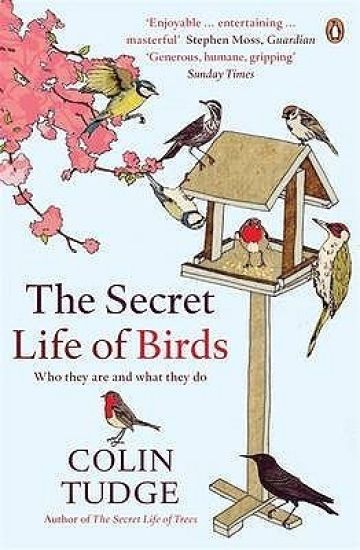
The Secret Life of Birds

The Secret Life of Birds

Colin Tudge

Penguin Books Ltd
2009
pokkari
In The Secret Life of Birds, lifelong bird enthusiast Colin Tudge explores the extraordinary variety, secret history and hidden importance of birds around the world. Birds are beautiful, intriguing and life-enhancing. They can do everything mammals can, and even more besides. Collected here are birds who navigate using the stars, tool-making crows, territorial robins, cooperative penguins and swans who mate for life - among hundreds of others. Revealing everything from why birds sing to how they fly, think, bond and survive, from how they evolved (and whether it really is from dinosaurs) to why, in so many ways, they are very much like us, this rich, evocative book will make you love and admire the birds that are all around you. 'Enjoyable ... entertaining ... masterful' Stephen Moss, Guardian 'Simply fizzing with ideas ... his heart is with the birds' Literary Review 'Inspired ... Tudge's writing is always clear and frequently embellished with wry humour' Richard Fortey, Sunday Telegraph 'Only when we read this scintillating study do we see how little we've known about the creatures we see around us' Michael Kerrigan, Scotsman Books of the Year 'An author whose own deep relish for the extraordinary lives of birds seems only marginally less pleasurable to him than sharing that wonder with others' BBC Wildlife Magazine When Colin Tudge was a small boy, he could recognize only five kinds of birds. After studying zoology at Cambridge, Colin wrote for the New Scientist and was a documentary maker for BBC radio. His other books, also published by Penguin, include The Secret Life of Trees and So Shall We Reap: What's Gone Wrong with the World's Food - and How to Fix It.
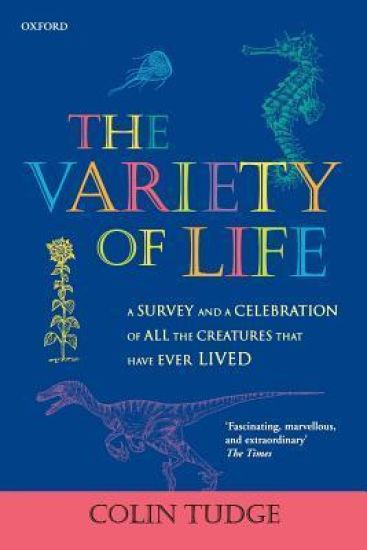
The Variety of Life

The Variety of Life

Colin Tudge

Oxford University Press
2002
nidottu
The Variety of Life can be read at many levels. Not least it is an extraordinary inventory - an illustrated summary of all the Earthly creatures that have ever lived. Whatever living thing you come across, from E coli to an oak tree or an elephant, The Variety of Life will show you what kind of creature it is, and how it relates to all others. Yet there are far too many creatures to present merely as a catalogue. The list of species already described is vast enough - nearly two million - but there could in reality be as many as 30 million different animals, plants, fungi and protists - and perhaps another 400 million different bacteria and archaea. In the 4,000 million years or so since life first began on Earth, there could have been several thousand billion different species. The only way to keep track of so many is to classify - placing similar creatures into categories, which nest within larger categories, and so on. As the centuries have passed, so it has become clear that the different groups are far more diverse than had ever been appreciated. Thus Linneus in the 18th century placed all living things in just two kingdoms, Animals and Plants. By the 1950s this had become five kingdoms - with fungi, protists, and bacteria hived off into their own separate groups. But leading biologists today acknowledge three vastly different domains, each divided into many kingdoms - so that animals and plants, spectacular though they are, are just a fragment of the whole. The Variety of Life explains the means by which systematists have attempted such a mammoth classification of so many various creatures - which in turn leads us into some of the most intriguing and knottiest areas of modern biology: evolutionary theory, molecular genetics, and the history of biological thought. Finally, however, The Variety of Life can simply be seen as a celebration. We should all share Miranda's pleasure in Shakespeare's Tempest - 'How many goodly creatures are there here!' - and feel, as she did, what a privilege it is to share this planet with such wonders. Their fate is in our hands; and first, we must begin to appreciate them.
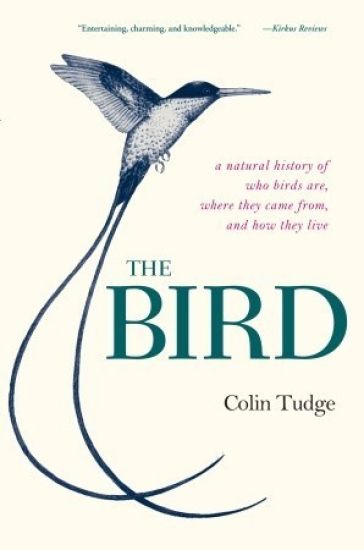
The Bird: A Natural History of Who Birds Are, Where They Came From, and How They Live
- How are birds so good at flying and navigating?- Why are birds so like mammals- and yet so very different? - Did birds descend from dinosaurs, and if so, does that mean birds are dinosaurs?- How do they court each other and fend off rivals?- What' s being communicated in birdsong?- Can we ever know how birds think? In this fascinating exploration of the avian class, Colin Tudge considers the creatures of the air. From their evolutionary roots to their flying, feeding, fighting, mating, nesting, and communicating, Tudge provocatively ponders what birds actually do-as well as why they do it and how. With the same curiosity, passion, and insight he brought to redwoods, pines, and palm trees in his widely acclaimed book The Tree, Tudge here studies sparrows, parrots, and even the Monkey-eating Eagle to better understand their world-and our own. There is far more to a bird's existence than gliding gracefully on air currents or chirping sweetly from fence posts-the stakes are life and death. By observing and explaining the complex strategy that comes into play with everything from migration to social interaction to the timing of giving birth to young, Tudge reveals how birds are uniquely equipped biologically to succeed and survive. And he offers an impassioned plea for humans to learn to coexist with birds without continuing to endanger their survival. Complete with an "annotated cast list" of all the known birds in the world- plus gorgeous illustrations-The Bird is a comprehensive and delightfully accessible guide for everyone from dedicated birders to casual birdwatchers that celebrates and illuminates the remarkable lives of birds.
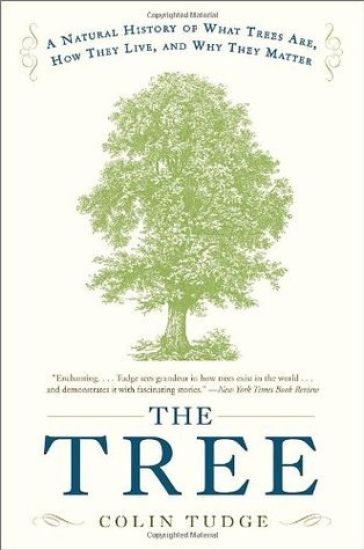
The Tree: A Natural History of What Trees Are, How They Live, and Why They Matter
A blend of history, science, philosophy, and environmentalism, The Tree is an engaging and elegant look at the life of the tree and what modern research tells us about their future. There are redwoods in California that were ancient by the time Columbus first landed, and pines still alive that germinated around the time humans invented writing. There are Douglas firs as tall as skyscrapers, and a banyan tree in Calcutta as big as a football field. From the tallest to the smallest, trees inspire wonder in all of us, and in The Tree, Colin Tudge travels around the world--throughout the United States, the Costa Rican rain forest, Panama and Brazil, India, New Zealand, China, and most of Europe--bringing to life stories and facts about the trees around us: how they grow old, how they eat and reproduce, how they talk to one another (and they do), and why they came to exist in the first place. He considers the pitfalls of being tall; the things that trees produce, from nuts and rubber to wood; and even the complicated debt that we as humans owe them. Tudge takes us to the Amazon in flood, when the water is deep enough to submerge the forest entirely and fish feed on fruit while river dolphins race through the canopy. He explains the "memory" of a tree: how those that have been shaken by wind grow thicker and sturdier, while those attacked by pests grow smaller leaves the following year; and reveals how it is that the same trees found in the United States are also native to China (but not Europe). From tiny saplings to centuries-old redwoods and desert palms, from the backyards of the American heartland to the rain forests of the Amazon and the bamboo forests, Colin Tudge takes the reader on a journey through history and illuminates our ever-present but often ignored companions.
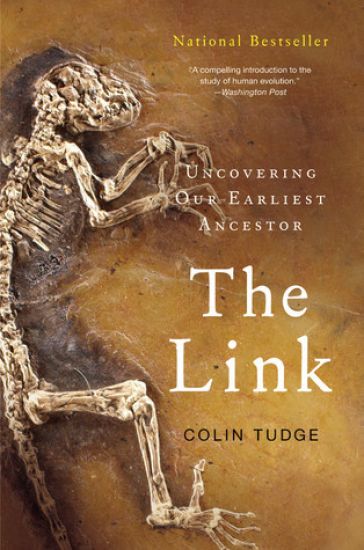
The Link

The Link

Colin Tudge

Back Bay Books
2010
nidottu
For more than a century, scientists have raced to unravel the human family tree and have grappled with its complications. Now, with an astonishing new discovery, everything we thought we knew about primate origins could change. Lying inside a high-security vault, deep within the heart of one of the world's leading natural history museums, is the scientific find of a lifetime - a perfectly fossilized early primate, older than the previously most famous primate fossil, Lucy, by forty-four million years. A secret until now, the fossil - Ida to theresearchers who have painstakingly verified her provenance - is the most complete primate fossil ever found. Forty-seven million years old, Ida rewrites what we've assumed about the earliest primate origins. Her completeness is unparalleled - so much of what we understand about evolution comes from partial fossils and even single bones, but Ida's fossilization offers much more than that, from a haunting skin shadow to her stomach contents. And, remarkably, knowledge of her discovery and existence almost never saw the light of day. With exclusive access to the first scientiststo study her, the award-winning science writer Colin Tudge tells the history of Ida and her place in the world. A magnificent, cutting-edge scientific detective story followed her discovery, and The Link offers a wide-ranging investigation into Ida and our earliest origins. At the same time, it opens a stunningly evocative window into our past and changes what we know about primate evolution and, ultimately, our own.
Engineer In The Garden

Engineer In The Garden

Colin Tudge

VINTAGE
1995
pokkari
Today we are developing a science that could change the world - for good or ill - more quickly and more profoundly than ever before. The science of genetics promises - or threatens - nothing less than the creation of life. And he speculates on its thrilling - or terrifying - future.
The Day Before Yesterday

The Day Before Yesterday

Colin Tudge

Pimlico
1996
nidottu
This brilliant and ambitious book is an account of the events that made our world the place it is - geologically, climatically and ecologically - and a call for a new way of thinking about history. 'We learn', Tudge writes, 'to think only in desperately trivial twinklings of time. . . But this contracted view of time is not merely comic. It is dangerous. ' The proper sense of time, he argues, is one that allows us to appreciate the world and see what we are doing to it. If humankind is to survive, we must UNLEARN most of what made us good at dominating our environment up to now.
Why Genes Are Not Selfish and People Are Nice
The modern world is dominated by ideas that are threatening to kill us: that life is one long battle from conception to grave; that all creatures, including human beings, are driven by their selfish DNA; that the universe is just stuff, for us to use at will.These ideas are seen as emerging from science and hard-nosed philosophy, and become self-fulfilling. They have led us to create a world in perpetual strife,that is unjust and in many ways precarious.This remarkable book by an experienced author and thinker argues there's another way of looking at the world that is just as rooted in modern science, and yet says precisely the opposite: that life is in fact cooperative; all creatures, including human beings, are basically nice; that there's more to the 'stuff' of the world than meets the eye.This book is both a powerful call to rethink our assumptions, and a message of hope for those who believe we're doomed to self-destruction.
Six Steps Back to the Land

Six Steps Back to the Land

Colin Tudge

BLOOMSBURY PUBLISHING PLC
2024
nidottu
An exploration into how we can have truly sustainable, resilient and productive farms.In the 1930s, nutritionists claimed that the increase in population size would soon make it challenging to eat enough protein, which they thought was only obtainable from meat. Mercifully, this is not true. Although meat does offer a nutritional bonus, we do not need vast amounts of it and could get all our protein from plants. The world has lots of food problems still – from issues surrounding fertile soill to agroforestry and livestock – but there are solutions.Colin Tudge coined the expression 'Enlightened Agriculture' to describe agriculture that is expressly designed to provide everyone, everywhere, with food of the highest standard, nutritionally and gastronomically, without wrecking the rest of the world. In his enlightening book, Six Steps Back to the Land, he explains how we can achieve truly sustainable, resilient and productive farms, looking at why we need to rethink our approach to farming, how we can move to low-input mixed farms, and how tightly-integrated farms employ many skilled people, as well as the practicalities in today's world and how to deal with those.Informative, uplifting and deeply inspiring, Six Steps Back to the Land is perfect for anyone with an interest in our food chain, and includes lots of ideas on how to get involved and make a difference.
Footprints in Time

Footprints in Time

Colin Tudge

Atlantic Books
2012
sidottu
Footprints in Time recounts the 3.8 billion-year history of life on Earth through the stories of fifty remarkable fossils. From petrified primordial bacteria to the weird wonders preserved in the Burgess Shale, from the reign of the dinosaurs to the remains of our recent Neanderthal cousins, these fossils are prime documentary evidence for the progress of evolution and perfect examples of Charles Darwin's 'endless forms most beautiful'. The tremendous fossil discoveries of the last few decades have filled in many of the so-called 'missing links: 580 millions years ago, Pikaia is our first ancestor to show some backbone; Tiktaalik is the fish that left the sea for the land 375 million years ago; Archaeopteryx marks the transformation of dinosaurs into birds 150 millions years ago; Sahelanthropus tchadensis is the first of our ancestors to walk upright seven million years ago; Homo erectus the first to master fire 70,000 years ago. We can even watch small, dog-like creatures return to the sea and evolve into whales over a 55 million-year time scale.
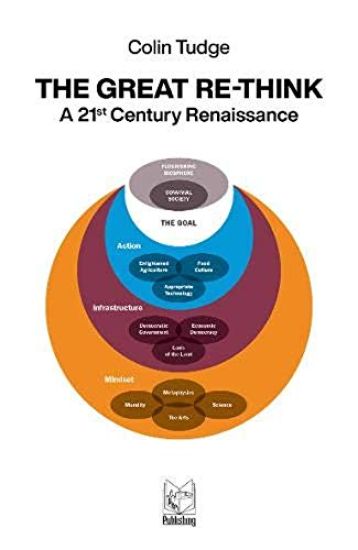
The Great Re-Think

The Great Re-Think

Colin Tudge

Pari Publishing
2021
nidottu
All too plausibly, it seems, popes and scientists are warning us of impending collapse—yet humanity and our fellow creatures could still be looking forward to a long and glorious future: at least a million years of peace and personal fulfilment, with abundant and diverse wildlife. But to achieve this we need to re-think everything that we do and take for granted, from the day-to-day mundanities of growing and cooking, to the economy and methods of governance, to the most arcane reaches of science and metaphysics. It all amounts to nothing less than a Renaissance—a re-birth—and the Renaissance to come must be driven and led by us, ordinary Joes and Jos, because the oligarchy of governments, corporates, financiers, and their attendant intellectuals who now dominate the world have largely lost touch with the moral and ecological realities of life. The transformation won’t be easy but—the good news!—millions of grassroots initiatives of all kinds the world over are already moving in the right directions.