Kirjojen hintavertailu. Mukana 11 244 527 kirjaa ja 12 kauppaa.

Kirjahaku

Etsi kirjoja tekijän nimen, kirjan nimen tai ISBN:n perusteella.

34 kirjaa tekijältä Colin Wilson

The Ultimate Colin Wilson

The Ultimate Colin Wilson

Colin Wilson

Watkins Publishing
2019
pokkari
The best of Colin Wilson in one fantastic volume. Containing extracts from Wilson's work on existentialism, criminology, psychology and the occult, this is an invaluable introduction to one of the late twentieth-century's most incisive thinkers. This is a new edition of the classic Colin Wilson collection The Essential Colin Wilson (first published in 1985), updated and introduced by Wilson's bibliographer Colin Stanley. It is the only book to contain extracts from Colin Wilson's most important work in one volume, including The Outsider (1956), A Criminal History of Mankind (1983), The New Existentialism (1966), The Occult (1971), New Pathways in Psychology (1972) and Mysteries (1978), as well as three of his novels and many other texts. Subjects covered include existentialism, criminology, psychology, consciousness studies, the occult and much more. This second edition includes all of the original volume plus six essential post-1985 essays and chapters chosen by Stanley and other Colin Wilson experts including Gary Lachman. These essays provide a much needed update covering aspects of Wilson's work from the 28 years that followed the publication of the first edition to his death in December 2013. This is an invaluable introduction for those approaching one of the late twentieth century's most incisive thinkers for the first time and also a timely reminder, to Colin Wilson's many fans and scholars worldwide, of a unique and challenging body of work.
Introduction to the New Existentialism
Colin Wilson revitalised existentialism with a completely new approach to the philosophy. The six volumes of his ‘Outsider’ series created an existentialism that is not paralysed by its own nihilism. This book, first published in 1966, is a clear summary of the ideas of the ‘Outsider’ cycle, and also develops them to a new stage. Wilson’s ‘new existentialism’ sees philosophy as an intellectual adventure that aims at a real command and control of human existence, and this book is its clearest exponent.
The Outsider: The Classic Exploration of Rebellion and Creativity
Colin Wilson's classic exploration of the rebel as genius, with a new introduction by Gary Lachman. When the upstart English writer Colin Wilson debuted on the literary scene with The Outsider in 1956, it marked one of the opening notes of the cultural revolution of the sixties. Wilson celebrated the misfit not as a figure be "fixed" and reintegrated into society, but as a lone journeyer who often had a stirring artistic, political, or spiritual innovation to convey to society. Wilson lived this book as much as wrote it. As an impoverished 23-year-old, the Englishman slept in a tent in a London park so that he could be free of material demands to dedicate himself fully to his study. When The Outsider appeared in 1956, it became a sensation among both critics and beats, who formed the vanguard of the dawning Aquarian Age. In Wilson's epic exploration of mystics, visionaries, literary pioneers, political troublemakers, and rule breakers of all sorts, he evoked a new kind of heroism, which changed how we view ourselves and our purpose in life. The Outsider is now reissued and reset in a beautiful Tarcher Cornerstone Edition, with a new introduction by Wilson's friend and biographer, Gary Lachman. This new volume coincides with Tarcher's publication of Lachman's biography of Wilson, Beyond the Robot.
From Atlantis To The Sphinx

From Atlantis To The Sphinx

Colin Wilson

Ebury Publishing
2007
nidottu
Inspired by the revelation that the Sphinx had been weathered by water and not by wind-blown sand and was, therefore, thousands of years older than the oldest civilisation known to man, Colin Wilson sets out to explore the remote depths of history. The compelling argument of this bestselling book is that, thousands of years before Ancient Egypt and Greece held sway, there was a great civilisation whose ships travelled the world and who possessed some knowledge system that offered a unified view of the universe, alien to modern man. In this fascinating exploration of the world at a time when, according to Plato, the 'lost civilisation' of Atlantis was destroyed, the author makes a ground-breaking attempt to understand how these long-forgotten peoples thought, felt and communicated on a universal plane.
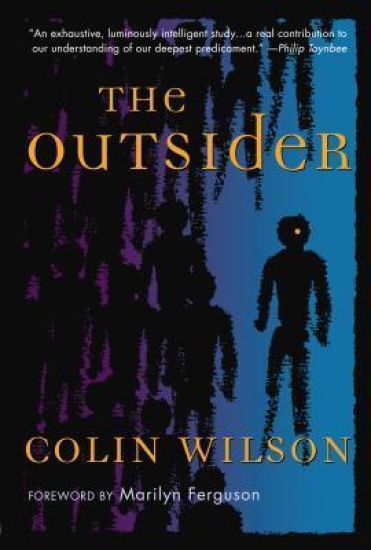
The Outsider

The Outsider

Colin Wilson

Tarcher/Putnam,US
1987
nidottu
The seminal work on alienation, creativity, and the modern mind-set. "An exhaustive, luminously intelligent study...a real contribution to our understanding of our deepest predicament."--Philip Toynbee.
Religion and The Rebel

Religion and The Rebel

Colin Wilson

Aristeia Press
2017
nidottu
Religion and the Rebel, Colin Wilson's second volume from his internationally acclaimed Outsider Cycle, is a casebook about and for rebels. With inspirational wisdom and engaging clarity, Wilson shows us that the purpose of religion, of our personal relationship with the sacred and the all-pervading mystery of existence, is to expand our consciousness and intensify our sense of life. Wilson heroically claims that the power to create meaning resides in our mental and spiritual discipline. Examining the lives and works of Nietzsche, Kierkegaard, Rilke, Shaw, Pascal, Swedenborg, Rimbaud and Scott Fitzgerald, among others, Wilson explores the main existential questions and shows how these remarkable writers, scientists, philosophers and poets faced their need for transcendence. Like many of us, they were driven by a need to become more than men. Religion and the Rebel is an outstanding and enjoyable book that combines philosophical analysis, historical interest, and religious insight.
The Age of Defeat

The Age of Defeat

Colin Wilson

Aristeia Press
2018
pokkari
In The Age of Defeat, the third volume of the Outsider Cycle, Colin Wilson introduces his New Existentialism as the basis for the revolution in thought that we need to bring about; a revolt against insignificance and ordinariness. The New Existentialism is a practical and strong-willed philosophy that will renew the concept of Man as hero. It emphasises the extraordinary in us.The Age of Defeat examines the loss of the hero in Western culture and the implications of that loss for humanity. When it was written in the middle of the 20th century, it was the idea of the hero that was endangered. Today it is Man, his identity and his masculinity, who is verging on extinction. The concept of Man is one of the most ambiguous and puzzling in our culture. It might be a good moment to remember what to be a Man used to imply.
Introduction to The New Existentialism

Introduction to The New Existentialism

Colin Wilson

Aristeia Press
2019
nidottu
"The New Existentialism consists of a phenomenological examination of consciousness, with the emphasis upon the problem of what constitutes human values. Existentialism is romanticism, and romanticism is the feeling that man is not the mere creature he has always taken himself for." In this book, Wilson claims Nietzsche as the true founder of the new existentialism because it was he who heralded the coming of the superman, with his valiant optimism and zeal, so utterly removed from passivity, complacency and herd-following. Whereas the optimism of the new existentialism entreats us to achieve a state of constant awareness, to become conscious of every thought that comes into our heads, every belief that underpins our personal value system, every act that expresses our most intimate, truest self. This is what Husserl meant when he said that consciousness is intentional. The new existentialism is pure attention. Wilson proposes that we make a science of our happiness and fulfilment. By applying ourselves, by bringing our willpower and attention to bear, every day will become a site of potential, an adventure, that is, a chance to put our abilities to the test. Because as with science, the premise of the new existentialism is optimistic, which is to say, it believes in the success of its mission, of its quest. The new existentialism is the philosophy of the future because its goal is to create the ideal man. The man yet to be born. It urges us to recognise the active part we play in constructing our lives, reminding us that we do not need to go on suffering the "passive fallacy". The new existentialism empowers us, awakens our ontological ambitions and brings awareness of all that we can achieve.
The Stature of Man: An Essay on the Concept of the Hero
The Stature of Man: An Essay on the Concept of the Hero is a non-fiction book written by Colin Wilson. The book explores the concept of the hero, a figure who embodies the highest ideals and values of humanity. Wilson argues that heroes are essential to the human experience, as they provide us with a sense of purpose and meaning, and inspire us to strive for greatness.The book is divided into several chapters, each of which examines a different aspect of the hero. Wilson begins by tracing the history of the hero, from ancient mythology to modern literature and film. He then explores the psychological and philosophical dimensions of the hero, examining the ways in which the hero reflects our deepest desires and fears.Throughout the book, Wilson draws on a wide range of sources, including literature, psychology, philosophy, and mythology. He also includes numerous examples of heroic figures, from ancient Greek heroes like Achilles and Odysseus to modern-day heroes like Nelson Mandela and Martin Luther King Jr.Overall, The Stature of Man is a thought-provoking exploration of the concept of the hero, and the ways in which it has shaped human history and culture. It is a must-read for anyone interested in mythology, psychology, or the human condition.This scarce antiquarian book is a facsimile reprint of the old original and may contain some imperfections such as library marks and notations. Because we believe this work is culturally important, we have made it available as part of our commitment for protecting, preserving, and promoting the world's literature in affordable, high quality, modern editions, that are true to their original work.
Hunting Serial Killers

Hunting Serial Killers

Colin Wilson

Skyhorse Publishing
2023
pokkari
A Fascinating Look into the Psychology of Serial Killers and the Men Who Hunt Them DownColin Wilson opens this illuminating psychological discussion with the development of the 1977 Behavioral Science Unit at the FBI, which was set up in order to answer the many questions surrounding serial killers:• How does someone become a serial killer?• How do they choose their victims?• Why do they not feel remorse?• How are they caught?Wilson interviews FBI Special Agent Robert Ressler, coiner of the term “serial killer” and one of the pioneers of criminal profiling, as well as Ted Bundy and Charles Manson in order to figure out the motives behind their grisly actions.In Hunting Serial Killers, by tracking the BSU’s development of psychological profiling and genetic fingerprinting, Wilson reveals the forensic investigations that caused the seizure and arrest of some of the most vile and villainous people in the world, including Jeffrey Dahmer, William Heirens, Peter Sutcliffe, John Duffy, Jerry Brudos, Wayne Williams, and many more.As he divulges the details of each case, the murderers’ fantasy worlds, sadistic motives, and monstrous psychological tendencies emerge. For anyone who wants to understand the motives, investigations, and eventual arrests behind fifty serial-killing sprees, Hunting Serial Killers will not disappoint.
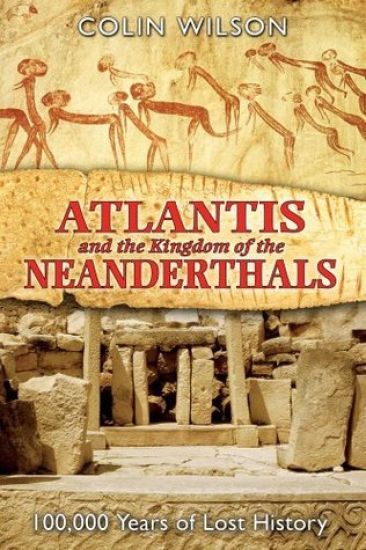
Atlantis and the Kingdom of the Neanderthals: 100,000 Years of Lost History
The history of Neanderthal influence from Atlantis to the contemporary era - Provides evidence of Neanderthal man's superior intelligence - Explores the unexplained scientific and architectural feats of ancient civilizations - Presents an alternative history of humankind since 7500 B.C. with an emphasis on esoteric traditions and the history of Christianity from the Essenes onward In Atlantis and the Kingdom of the Neanderthals Colin Wilson presents evidence of a widespread Neanderthal civilization as the origin of sophisticated ancient knowledge. Examining remarkable archaeological discoveries that date back millennia, he suggests that civilization on Earth is far older than we have previously realized. Using this information as a springboard, Wilson then fills in the gaps in the past 100,000 years of human history, providing answers to previously unexplained scientific and architectural feats of ancient civilizations. Wilson shows that not only did Atlantis exist but that the civilizing force behind it was the Neanderthals. Far from being the violent brutes they are traditionally depicted as, Wilson shows that the Neanderthals had sophisticated mathematical and astrological knowledge, including an understanding of the precession of the equinoxes, and that they possessed advanced telepathic abilities akin to the "group consciousness" evident in flocks of birds and schools of fish. These abilities, he demonstrates, have been transmitted through the ages by the various keepers of the hermetic tradition--including the Templars, Freemasons, and other secret societies. In the course of his investigation, Wilson also finds new information about historical links between the Masonic tradition and the Essenes that indicate that America was "discovered" long before Columbus set sail and that Jesus actually survived crucifixion and fled to France with his wife Mary Magdalene.
The Occult

The Occult

Colin Wilson

Watkins Publishing
2015
nidottu
Colin Wilson's great classic work is a comprehensive history of mystery and magic. His genius lies in producing a skilful synthesis of the available material; clarifying without simplifying, seeing the occult in the light of reason and reason in the light of the mystical and paranormal. It is a journey of enlightenment – a wide-ranging survey of the whole subject and an insightful exploration of Man's latent powers. Republished two years after the author's death and with a new foreword by bibliographer Colin Stanley, Wilson brings his own refreshingly optimistic and stimulating interpretation to the worlds of the paranormal, the occult and the supernatural. The Occult is the most interesting, informative and thought-provoking book on the subject I have read Sunday Telegraph
An End To Murder

An End To Murder

Colin Wilson

Robinson
2015
isokokoinen pokkari
Creatively and intellectually there is no other species that has ever come close to equalling humanity's achievements, but nor is any other species as suicidally prone to internecine conflict. We are the only species on the planet whose ingrained habit of conflict constitutes the chief threat to our own survival. Human history can be seen as a catalogue of cold-hearted murders, mindless blood-feuds, appalling massacres and devastating wars, but, with developments in forensic science and modern psychology, and with raised education levels throughout the world, might it soon be possible to reign in humanity's homicidal habits? Falling violent crime statistics in every part of the world seem to indicate that something along those lines might indeed be happening. Colin and Damon Wilson, who between them have been covering the field of criminology for over fifty years, offer an analysis of the overall spectrum of human violence. They consider whether human beings are in reality as cruel and violent as is generally believed and they explore the possibility that humankind is on the verge of a fundamental change: that we are about to become truly civilised. As well as offering an overview of violence throughout our history - from the first hominids to the twenty-first century, touching on key moments of change and also indicating where things have not changed since the Stone Age - they explore the latest psychological, forensic and social attempts to understand and curb modern human violence. To begin with, they examine questions such as: Were the first humans cannibalistic? Did the birth of civilisation also lead to the invention of war and slavery? Priests and kings brought social stability, but were they also the instigators of the first mass murders? Is it in fact wealth that is the ultimate weapon? They look at slavery and ancient Roman sadism, but also the possibility that our own distaste for pain and cruelty is no more than a social construct. They show how the humanitarian ideas of the great religious innovators all too quickly became distorted by organised religious structures. The book ranges widely, from fifteenth-century Baron Gilles de Rais, `Bluebeard', the first known and possibly most prolific serial killer in history, to Victorian domestic murder and the invention of psychiatry and Sherlock Holmes and the invention of forensic science; from the fifteenth-century Taiping Rebellion in China, in which up to 36 million died to the First and Second World Wars and more recent genocides and instances of `ethnic cleansing', and contemporary terrorism. They conclude by assessing the very real possibility that the internet and the greater freedom of information it has brought is leading, gradually, to a profoundly more civilised world than at any time in the past.
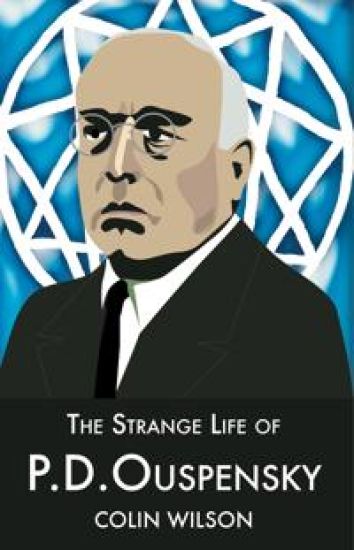
The Strange Life of P.D.Ouspensky

The Strange Life of P.D.Ouspensky

Colin Wilson

Aeon Books Ltd
2005
nidottu
One of the most original thinkers of the twentieth century, Pyotr Demianovich Ouspensky was a complex and romantic soul. His work on accessing a higher level of consciousness beyond everyday reality is a valuable legacy well worthy of consideration. This work sheds light on this gentle man and deep thinker. Ouspensky's work on accessing a higher level of consciousness beyond everyday reality is a valuable legacy well worthy of consideration today. One of the most original thinkers of the twentieth century, Pyotr Demianovich Ouspensky was a complex and romantic soul. A promising young intellectual in Tsarist Russia, he won recognition as a novelist and philosopher, yet descended into self-chosen obscurity as a teacher of 'the Work', the system of his great contemporary Gurdjieff. Today, it is as Gurdjieff's chief disciple that he is remembered, yet Colin Wilson argues convincingly that he is to be considered a major writer and man of genius in his own right. A nostalgic melancholy Russian, on of Ouspensky's deepest instincts was that man can find his own salvation, yet towards the end of his turbulent life he lost faith in the System and drank himself to death. With sympathy and admiration, Colin Wilson throws new light on this gentle man and deep thinker.
Rudolf Steiner

Rudolf Steiner

Colin Wilson

Aeon Books Ltd
2005
nidottu
Describes Rudolf Steiner's development from shy scholar to the international figurehead of Anthroposophy, his break with Madam Blavatsky's Theosophy, his struggles to find a voice, and the essence of his insights into the supersensible world. Of all the important thinkers of the twentieth century, Rudolph Steiner (1861-1925) is perhaps the most difficult to come to grips with. For the unprepared reader, his work presents a series of formidable obstacles, from the dauntingly abstract style to the often bizarre pronouncements on the nature of man and his cosmic destiny. And yet, Steiner was perhaps the most influential and charismatic occult philosopher of his generation and the movement he launched, Anthroposophy, with its educational, agricultural, and artistic applications, still has many thousands of followers worldwide. No one interested in esoteric thought can ignore Steiner, but until now there has been no genuinely accessible introduction to his ideas. This lucid and sympathetic account describes Steiner's development from shy scholar to the international figurehead of Anthroposophy, his break with Madam Blavatsky's Theosophy, his struggles to find a voice, and the essence of his insights into the supersensible world.