Kirjojen hintavertailu. Mukana 12 016 292 kirjaa ja 12 kauppaa.

Kirjahaku

Etsi kirjoja tekijän nimen, kirjan nimen tai ISBN:n perusteella.

3 kirjaa tekijältä Connie Cronley

Light and Variable

Light and Variable

Connie Cronley

University of Oklahoma Press
2006
nidottu
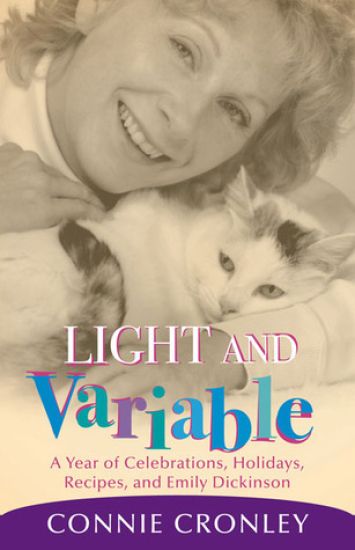
In Light and Variable, the reader is invited to join celebrated Oklahoma essayist and commentator Connie Cronley on a delightful romp through the calendar year. Honest, unpretentious, and laced with self-deprecating humor, the essays in this book revolve around special holidays or events, some of which you may never have heard of - Festival of Sleep Day, National Failures Day, and Blame Someone Else Day.Against a backdrop of celebrations and seasons, Cronley marvels at subjects close to her heart: siblings from outer space, small towns, champion whopper-telling ex-husbands, rascally cats, rescued dogs, deviled eggs, know-it-all hair dressers, church squabbles, books and authors, gardening efforts run aground, flocks of starlings, women's history, cowgirls, and her own Cherokee heritage. Woven throughout are fragments of Emily Dickinson's poetry; a few essays about food (not surprising from a former restaurant critic), including a history of celery in North America; a salute to rhubarb; and recipes from Frank Sinatra and Oprah Winfrey.Who knew that Oklahoma was such a magical place? Cronley introduces us to Oklahoma celebrities: movie stars Jennifer Jones and Tony Randall, glamorous café society singer Lee Wiley, champion poker player Bobby Baldwin, and one of the state's legendary American Indian ballerinas (and the author's personal friend) Moscelyne Larkin.Grab your hat and step into Connie Cronley's special world, where the mood, like Oklahoma weather, is always light and variable.
Poke a Stick at It

Poke a Stick at It

Connie Cronley

University of Oklahoma Press
2016
nidottu
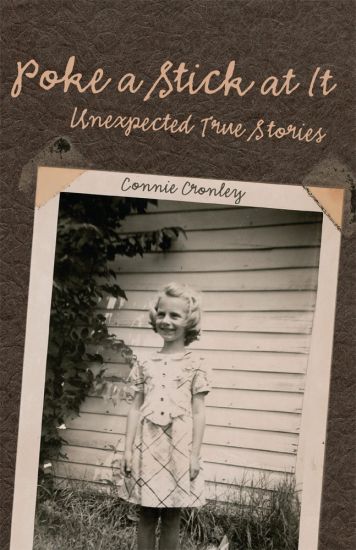
Open this book and who knows what will pop out: the story of a gangland funeral, a status report on an ex-husband, a meditation on cats and gardens, a feuilleton about Native American fry bread, or a thoughtful musing on old women and books. Welcome to the delightfully irreverent world of Connie Cronley, essayist, radio commentator, and native Oklahoman. In this collection of true stories, Cronley pokes fun at everything - including herself - as she delights in the world around her. With her trademark down-home humor, Cronley takes on a range of subjects as broad as the Oklahoma prairies. No subject is off-limits as the author casts her curious eye on vampire literature, gay insects, air-dried laundry, Emily Post etiquette, and impossible dogs. As she says, ""It's a big world and there's a lot to know.""Poke a Stick at It is also a love letter to the glories of the English language. Even as Cronley fusses around her garden or snoozes on the couch with her cat Muriel, she always has a stack of books within easy reach. Her eclectic passion for reading, embracing the lowbrow and the highbrow, the epic romance Gone with the Wind and the poems of Emily Dickinson, is both infectious and inspiring. Often compared to authors Annie Dillard, Phyllis McGinley, Robert Benchley, and Mark Twain, Connie Cronley is a Southwest original, a writer who infuses her stories with joy, humor, beauty - and plenty of spice.
A Life on Fire

A Life on Fire

Connie Cronley

University of Oklahoma Press
2021
nidottu
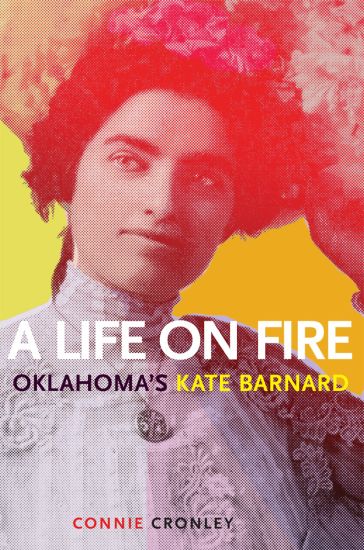
How can women wear diamonds when babies cry for bread?" Kate Barnard demanded in one of the incendiary stump speeches for which she was well known. In A Life on Fire, Connie Cronley tells the story of Catherine Ann "Kate" Barnard (1875-1930), a fiery political reformer and the first woman elected to state office in Oklahoma, as commissioner of charities and corrections in 1907-almost fifteen years before women won the right to vote in the United States. Born to hardscrabble settlers on the Nebraska prairie, Barnard committed her energy, courage, and charismatic oratory to the cause of Progressive reform and became a political powerhouse and national celebrity. As a champion of the poor, workers, children, the imprisoned, and the mentally ill, Barnard advocated for compulsory education, prison reform, improved mental health treatment, and laws against child labor. Before statehood, she stumped across the Twin Territories to unite farmers and miners into a powerful political alliance. She also helped write Oklahoma’s Progressive constitution, creating what some heralded as “a new kind of state.” But then she took on the so-called “Indian Question.” Defending Native orphans against a conspiracy of graft that reached from Oklahoma to Washington, D.C., she uncovered corrupt authorities and legal guardians stealing oil, gas, and timber rights from Native Americans’ federal allotments. In retaliation, legislators and grafters closed ranks and defunded her state office. Broken in health and heart, she left public office and died a recluse. She remains, however, a riveting figure in Oklahoma history, a fearless activist on behalf of the weak and helpless.