Kirjojen hintavertailu. Mukana 11 450 882 kirjaa ja 12 kauppaa.

Kirjahaku

Etsi kirjoja tekijän nimen, kirjan nimen tai ISBN:n perusteella.

8 kirjaa tekijältä Conrad Totman

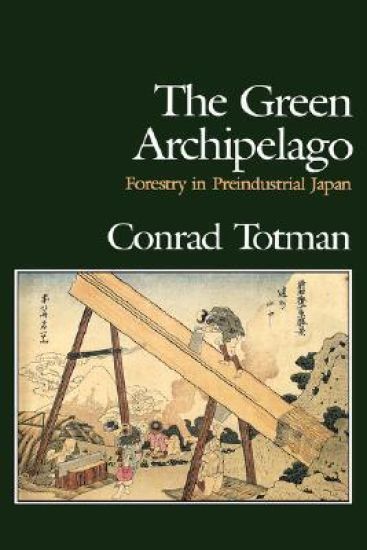
The Green Archipelago

The Green Archipelago

Conrad Totman

University of California Press
1989
sidottu
Every foreign traveler in Japan is delighted by the verdant forest-shrouded mountains that thrust skyward from one end of the island chain to the other. The Japanese themselves are conscious of the lush green of their homeland, which they sometimes refer to as 'the green archipelago'. Yet, based on its fragile geography and centuries of extremely dense human occupation, Japan today should be an impoverished, slum-ridden, peasant society subsisting on a barren, eroded moonscape characterized by bald mountains and debris-strewn lowlands. In fact, as Conrad Totman argues in this pathbreaking work based on prodigious research, this lush verdue is not a monument to nature's benevolence and Japanese aesthetic sensibilities, but the hard-earned result of generations of human toil that have converted the archipelago into one great forest preserve. Indeed, the author shows that until the late 1600s Japan was well on her way to ecological disaster due to exploitative forestry. During the Tokugawa period, however, an extraordinary change took place resulting in a system of 'regenerative forestry' that averted the devastation of Japan's forests. "The Green Archipelago" is the only major Western-language work on this subject and a landmark not only in Japanese history, but in the history of the environment.
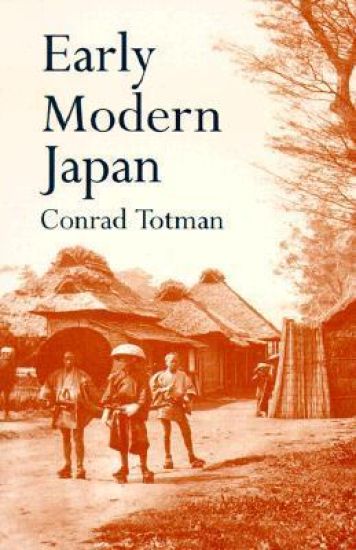
Early Modern Japan

Early Modern Japan

Conrad Totman

University of California Press
1995
pokkari
This thoughtfully organized survey of Japan's early modern period (1568-1868) is a remarkable blend of political, economic, intellectual, literary, and cultural history. The only truly comprehensive study in English of the Tokugawa period, it also introduces a new ecological perspective, covering natural disasters, resource use, demographics, and river control.
Japan before Perry

Japan before Perry

Conrad Totman

University of California Press
2008
pokkari
By 1853 Japan had been transformed from a sparsely populated land of nonliterate tribal peoples into an elaborately structured commercial society sustaining massive cities and a varied array of sophisticated cultural production. In this authoritative survey, Conrad Totman examines the origins of Japanese civilization and explores in detail the classical, medieval, and early-modern epochs, weaving interpretations of the major themes in Japan's cultural and political development into a rich historical narrative.
The Green Archipelago

The Green Archipelago

Conrad Totman

Ohio University Press
1998
pokkari
This inaugural volume in the Ohio University Press Series in Ecology and History is the paperback edition of Conrad Totman's widely acclaimed study of Japan's environmental policies over the centuries. Professor Totman raises the critical question of how Japan's steeply mountainous woodland has remained biologically healthy despite centuries of intensive exploitation by a dense human population that has always been dependent on wood and other forest products. Mindful that in global terms this has been a rare outcome, and one that bears directly on Japan's recent experience as an affluent, industrial society, Totman examines the causes, forms, and effects of forest use and management in Japan during the millennium to 1870. He focuses mainly on the centuries after 1600 when the Japanese found themselves driven by their own excesses into programs of woodland protection and regenerative forestry.
A History of Japan

A History of Japan

Conrad Totman

Wiley-Blackwell (an imprint of John Wiley Sons Ltd)
2004
nidottu
This is an updated edition of Conrad Totman's authoritative history of Japan from c.8000 BC to the present day. The first edition was widely praised for combining sophistication and accessibility.Covers a wide range of subjects, including geology, climate, agriculture, government and politics, culture, literature, media, foreign relations, imperialism, and industrialism.Updated to include an epilogue on Japan today and tomorrow.Now includes more on women in history and more on international relations.Bibliographical listings have been updated and enlarged. Part of The Blackwell History of the World Series The goal of this ambitious series is to provide an accessible source of knowledge about the entire human past, for every curious person in every part of the world. It will comprise some two dozen volumes, of which some provide synoptic views of the history of particular regions while others consider the world as a whole during a particular period of time. The volumes are narrative in form, giving balanced attention to social and cultural history (in the broadest sense) as well as to institutional development and political change. Each provides a systematic account of a very large subject, but they are also both imaginative and interpretative. The Series is intended to be accessible to the widest possible readership, and the accessibility of its volumes is matched by the style of presentation and production.
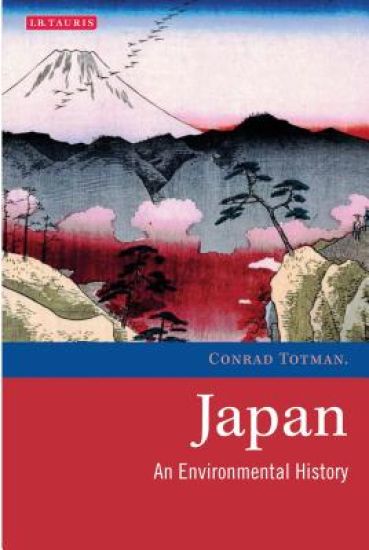
Japan

Japan

Conrad Totman

I.B. Tauris
2016
nidottu
The lush green mountainous archipelago of today supports a population of over 127 million people and one of the most advanced economies in the world. How has this come about? At what environmental cost? Conrad Totman, one of the world's foremost scholars on Japan, here provides a comprehensive and detailed account of the country's environmental history, from its beginnings to the present day. What makes the Japanese story particularly instructive is that the country's boundaries are uncommonly clear and the nature, timing, and extent of external influences on its history are unusually identifiable. The Japanese experience, therefore, not only yields important insights into the processes of environmental history, it offers important lessons for the wider environmental history of the planet.
Japan's Imperial Forest Goryorin, 1889-1946

Japan's Imperial Forest Goryorin, 1889-1946

Conrad Totman

Global Oriental Ltd
2007
sidottu
This is the first study of its kind to trace the history of what was to become one of Japan’s major resources and a model of conservation and forestry management. Central to the planning of the Meiji reformers was securing the long-term financial stability of the Imperial household that would not leave it exposed to the whims of future political and economic change. The solution was the goryorin, or imperial forests. Over time, however, the acquired land generated controversy within the framework of law and other imperatives, and was finally abandoned by the Occupation authorities because of the political ideology that was its raison d’être in the first place. In Part II, the author explores the great early Meiji debate between government and people (kan/min) concerning the reorganization of woodland in Japan, which in essence was a contest for control of the realm. By 1889 the Tokyo government, despite having 80 percent of the people (min), then living in villages, against them, completed their programme of forest consolidation, leading the way to their rationale for the goryorin allocation.