Kirjojen hintavertailu. Mukana 11 244 527 kirjaa ja 12 kauppaa.

Kirjahaku

Etsi kirjoja tekijän nimen, kirjan nimen tai ISBN:n perusteella.

3 kirjaa tekijältä Constance M. Furey

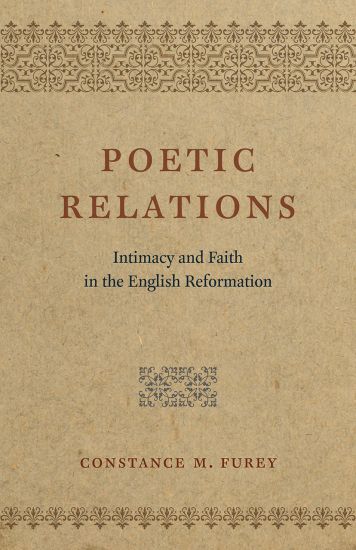
Poetic Relations

Poetic Relations

Constance M. Furey

University of Chicago Press
2017
sidottu
What is the relationship between our isolated and our social selves, between aloneness and interconnection? Constance M. Furey probes this question through a suggestive literary tradition: early Protestant poems in which a single speaker describes a solitary search for God. As Furey demonstrates, John Donne, George Herbert, Anne Bradstreet, and others describe inner lives that are surprisingly crowded, teeming with human as well as divine companions. The same early modern writers who bequeathed to us the modern distinction between self and society reveal here a different way of thinking about selfhood altogether. For them, she argues, the self is neither alone nor universally connected, but is forever interactive and dynamically constituted by specific relationships. By means of an analysis equally attentive to theological ideas, social conventions, and poetic form, Furey reveals how poets who understand introspection as a relational act, and poetry itself as a form ideally suited to crafting a relational self, offer us new ways of thinking about selfhood today and a resource for reimagining both secular and religious ways of being in the world.
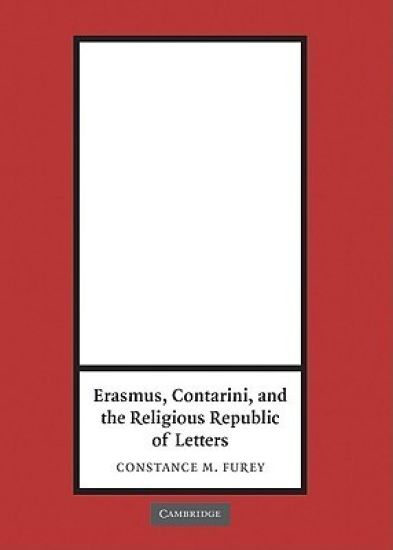
Erasmus, Contarini, and the Religious Republic of Letters

Erasmus, Contarini, and the Religious Republic of Letters

Constance M. Furey

Cambridge University Press
2008
pokkari
Though the paradigm of modernist progression has been challenged on many fronts, Erasmus and other sixteenth-century figures are still commonly viewed as people who led the transition from a religious Middle Ages to a more godless modern era. Erasmus, Contarini and the Religious Republic of Letters, published in 2005, complicates this transition by analysing a unique realm of spiritualised scholarship that cannot fit easily into any conventional intellectual chronology. By analysing the lives, work, and correspondence of Erasmus, Thomas More, Margaret More Roper, Reginald Pole, Gasparo Contarini, and Vittoria Colonna, this book demonstrates how these Catholic men and women of letters created a distinctive kind of religious community rooted in friendship and spiritualised scholarship. By spanning the too frequently respected gap between humanist reformers in northern and southern Europe, the book uncovers a widespread, if previously less visible, network that exhibited concerns we still grapple with today.
Erasmus, Contarini, and the Religious Republic of Letters

Erasmus, Contarini, and the Religious Republic of Letters

Constance M. Furey

Cambridge University Press
2005
sidottu
Though the paradigm of modernist progression has been challenged on many fronts, Erasmus and other sixteenth-century figures are still commonly viewed as people who led the transition from a religious Middle Ages to a more godless modern era. Erasmus, Contarini and the Religious Republic of Letters, published in 2005, complicates this transition by analysing a unique realm of spiritualised scholarship that cannot fit easily into any conventional intellectual chronology. By analysing the lives, work, and correspondence of Erasmus, Thomas More, Margaret More Roper, Reginald Pole, Gasparo Contarini, and Vittoria Colonna, this book demonstrates how these Catholic men and women of letters created a distinctive kind of religious community rooted in friendship and spiritualised scholarship. By spanning the too frequently respected gap between humanist reformers in northern and southern Europe, the book uncovers a widespread, if previously less visible, network that exhibited concerns we still grapple with today.