Kirjahaku
Etsi kirjoja tekijän nimen, kirjan nimen tai ISBN:n perusteella.
21 kirjaa tekijältä Constantin Floros
Passion: Music – An Intellectual Autobiography
Constantin Floros
Peter Lang AG, Internationaler Verlag der Wissenschaften
2018
nidottu
The present autobiography sets out from the contrast between "establishment" and "outsiders" in science and scholarship. It portrays a number of prominent composers, conductors and musicologists and seeks to illuminate the nature of the phenomenon of music from diverse vantage points, centering on cultural, biographic, psychological, philosophic, critical, aesthetic and axiological questions. Lutz Lesle (Das Orchester, 2018): At the price of being deemed an outsider, Floros has devoted a major part of his life's work to the semantic dimension of music, from the Viennese Classics to Postmodernism. His endeavor has been to preserve for music the dignity of manifold meaning that the school of bean counters were stripping from it by reducing musical scores to structure-analytical databases. "To simply ignore the spiritual depth dimension of important musical art works," the author bluntly proclaims, "and to limit oneself to the investigation of the 'tonal body': to me there is no greater aberration."
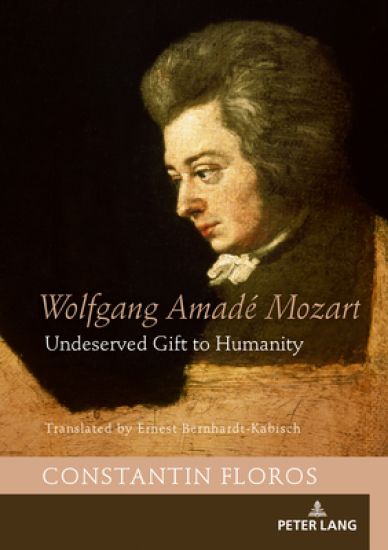
Wolfgang Amadé Mozart
Constantin Floros
Peter Lang AG, Internationaler Verlag der Wissenschaften
2019
sidottu
Mozart’s ambivalent personality offers a key to a deeper understanding of his music. He could be merry, even boisterous, but from many of his works speaks a deep seriousness. Both mirth and melancholy stamp his being. His operatic music includes both the comic and the tragic. The present study treats the special character of his musical language and the relations between his personality and his multiform oeuvre. Its mission is to grasp the peculiarities of his operatic work, his opere serie, opere buffe and singspiels. The chapter "The Program in the Master Overtures" initiates the series of semantic analyses the author has pursued in other books. In the 19th century, it was fashionable to compare Mozart to Raffael. But the comparison is askew, as the graceful is only one side of his personality. About the German edition Chapter II "presents new and even surprising insights into the ‘program’ in Mozart’s master overtures. The connection between overture and drama is viewed from both compositional and semantic points of view. The studies, written with great stylistic and literary knowledge, enter deep into Mozart’s way of working. For both amateurs and cognoscenti, Floros achieves ad better understanding, above all, of the musical interconnections." (Rudolf Angermüller, Mitteilungen des Mozarteums)
Five kondakarian manuscripts dating from the 11th to 13th century belong among the oldest witnesses of Russian church music. The Slavonic church texts are accompanied by a peculiar notation which represents the most complex notational system of the European Middle Ages. For centuries this system has been viewed as being undecipherable. In 1962 the author of this book succeeded in deciphering this notation using various methods even though directly compatible Greek sources were unknown at that time. His research appeared in two issues of journal which ceased publication several years ago. After the publication of the first part of this study a Greek philologist discovered in Kastoria (Northern Greece) a unique manuscript with a system of notation similar to that of the Russian kondakaria, confirming there by his research results in a most unexpected and indubitable manner. This path-breaking study has been revised and brought up to date in the present publication. The prominent Russian scholar Yuri Keldysh was of the opinion that «no historian of Russian music would be able to proceed without taking into consideration this study».
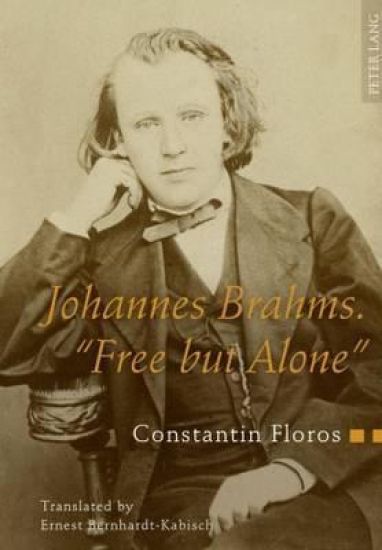
Johannes Brahms was until now widely regarded as the archetype of the «absolute musician». Based on new research, the study shows how close autobiographic and poetic elements are in fact linked to his œuvre. Like Robert Schumann, Brahms subscribed to an aesthetic of «poetic» music. In many of his compositions he got his inspiration from personal experiences, poems or images, as is shown by hitherto unpublished documents, letters, and diary entries, as well as from close analyses of individual works. Brahms’s personality, too, is seen in a new way. He adopted Joseph Joachim’s motto «Frei, aber einsam», «Free but Alone». The tonal code F – A – E, the musical symbol of this, recurs frequently in his works. Not least, the English version of the book, originally published in German in 1997, includes four additional chapters that investigate novel aspects by dealing in detail with the First Symphony, the German Requiem, Nänie and the Four Serious Songs. The American Brahms Society stressed the importance of the study for all those who want to come to know the unknown Brahms.
Modern music notation developed out of the so-called square notation and this out of the Latin neumes. The question of where these neumes came from has long been the subject of scholarly debate. As the author demonstrated in his three-volume Universale Neumenkunde published in German in 1970, there is a very close relationship between the Paleo-Byzantine notation and the Latin neumes. Although the study aroused a great deal of dispute, more recent studies have revealed that the relevance of the Neumenkunde remains essentially unchallenged after 40 years. Those path-breaking research results on the relationship of the Greek and Latin notational systems are now available for the first time in a completely revised and augmented English translation.
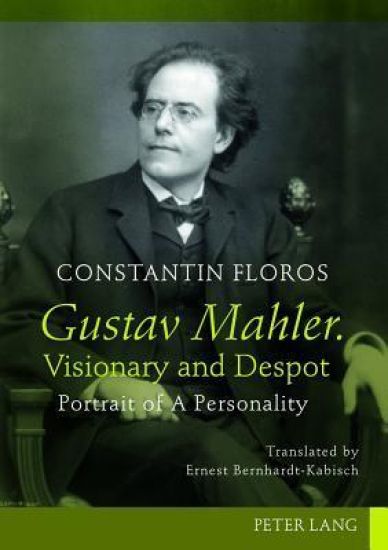
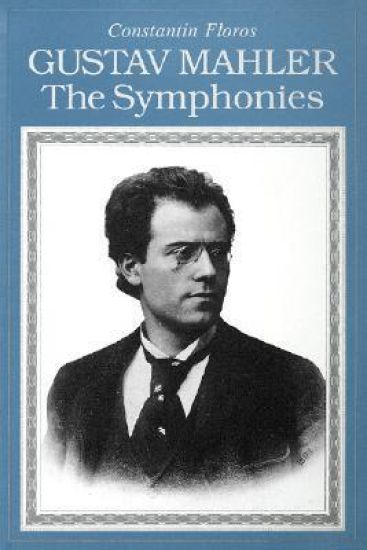
With the terms «visionary» and «despot», the author seeks to circumscribe the multilayered personality of Gustav Mahler. Opening up a terra incognita, he draws a comprehensive map of the various aspects of Mahler’s inner biography: his unshakable belief in the «sacredness of musical art» and strongly developed sense of mission, his double life as conductor and composer, his inexorability and refusal to compromise vis-à-vis himself and others, his discomfort with the world in which he lived, the complex facets of his psyche and his enormous energy potential. The result is the disclosure of new and unexpected connections between Mahler’s personality and his œuvre.
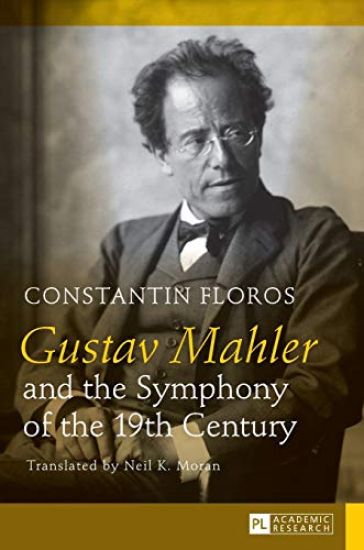
The subject of this book is the semantics of symphonic music from Beethoven to Mahler. Of fundamental importance is the realization that this music is imbued with non-musical, literary, philosophical and religious ideas. It is also clear that not only Beethoven, Schubert and Bruckner were crucial role models for Mahler, but also the musical dramatist Wagner and the programmatic symphony composers Berlioz and Liszt. At the same time a semantic musical analysis of their works reveals for the first time the actual inherent (poetic) quintessence of numerous orchestral works of the 19th Century.
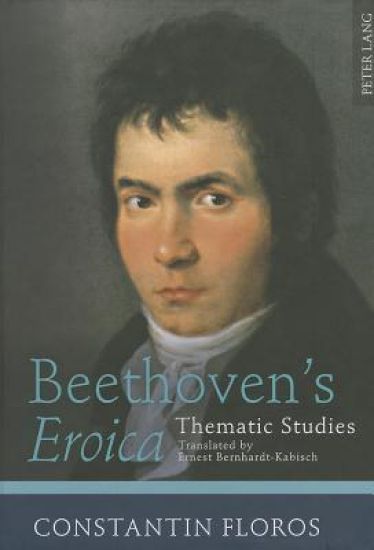
With this study the author «opened up a previously locked door of Beethoven research» (Martin Geck). The book presents conclusive answers to questions that had occupied critics for more than a century. It makes clear what exactly Beethoven and his contemporaries meant by the term «heroic». It proves that the «heroic-allegorical ballet» The Creatures of Prometheus is a key work for an understanding of the Eroica, and shows that Beethoven associated the First Consul of the French Republic, Napoleon Bonaparte, with the mythical figure of the Titan Prometheus. The book draws on interdisciplinary researches in the areas of Greek Mythology, Napoleonic History and Comparative Literature.

The central point of this book is the realization that the creative work of Alban Berg, which in recent years has moved to the forefront of scholarly interest, is largely rooted in autobiography, so that therefore one can gain access to the music by studying the inner biography of its creator. Accordingly, the first of the three parts of this volume outlines a character portrait of this great composer. Part two considers the conditions relevant to a deeper understanding of Berg and of the Second Viennese School generally. In part three, then, Berg’s key works will be analyzed and semantically deciphered in terms of his inner biography. The study is based not only on the sources in print but also on the rich unpublished material. Alban Berg was incapable of composing without a program. He needed an extra-musical stimulus. With him, personal experience was the indispensable condition of the creative process: the autobiographic reference was all-important for composing.
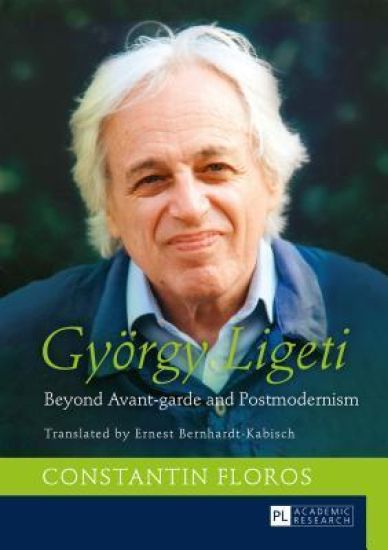
This monograph is an authoritative study of the œuvre of one of the most important composers of our time. For the first time, Ligeti’s key works are presented in the context of their drafts and sketches. His personal and artistic development is set forth and illuminated, and his principal compositions are analyzed and reinterpreted, based on detailed studies of the scores and drafts, as well as on personal conversations with the composer. In addition, numerous questions concerning today’s composing are raised and discussed. Music does not have to be puristic: Ligeti’s spheres of interest are close to universal, embracing history, natural science, and visual arts, as well as music of diverse eras and ethnicities. This expanded world of the musical comprises not just tones and sounds, speech and music, the vocal and the instrumental: Ligeti conceives music as a cosmos of acoustic form.
Music is often defined as art for the ear, as the language of feeling, of the heart, as sound play, or as the science of composition. But music also conveys intellectual and emotional experiences, literary, religious, philosophical, social and political ideas. Countless composers encrypt contents in their music that can be deciphered by a variety of methods. This book is designed as an introduction to the basic questions of musical semantics and discusses Beethoven’s committed art, the core ideas of the «Ring of the Nibelung» and of the «Symphony of a Thousand», Wagner’s idea of a religion of art, the relation of music and poetry, the musico-literary conceptions of composers, the large field of program music and the history of the impact of Gustav Mahler.
In the last third of the 19th century Brahms and Bruckner were regarded as antipodes. Is this perception really true to the historical reality or had their contemporaries overestimated the «dimension of their distance», as argued later? Both wrote autonomously conceived music, both held on to traditional forms, and both rejected program music. To find an answer to this question, part I tries to elucidate Brahms’ relation to Bruckner in its biographic, historical, artistic and art-theoretical aspects. At the center of the second part, whose subject is Brahms’ early work, is the question whether Brahms was indeed an autonomously working composer. The topic of the third part is a taboo of Bruckner research: Bruckner’s relation to program music. «The second and third part of the study achieve new insights. With a consistent analysis of biographic data and, simultaneously, a careful scrutiny of musical facts (increased experience in assessing the music of the 19th century), Floros gains convincing interpretations.» (Friedrich Heller about the German edition of the book) «The book is the result of Floros’s intensive study of Mahler, during which he found hitherto undiscovered clues to the interpretation of Brahms’s and Bruckner’s work. Most of the borrowings discussed confirm differences between the two composers in both ideologies and musical heritage. Long thought to be ‘absolute’ music, Bruckner’s compositions carry significant semantic meaning when the composer desired.» (Musical Borrowing)
While unappreciated and controversial during most of his life, Anton Bruckner is today regarded as the greatest symphonist between Beethoven and Gustav Mahler – in terms of originality, boldness and monumentality of his music. The image of Bruckner the man, however, is still extreme instance of the tenacious power of prejudice. No less a figure than Gustav Mahler coined the aperçu about Bruckner being «a simpleton – half genius, half imbecile». The author is out to correct that misperception. His thesis in this study is that contrary to what has hitherto been asserted, there is an intimate relation between Bruckner’s sacred music and his symphonies from multiple perspectives: biographical data, sources and influences, the psychology of creation, musical structure, contemporary testimony and reception history. Additional chapters assess important Bruckner recordings and interpreters and the progressiveness of his music.
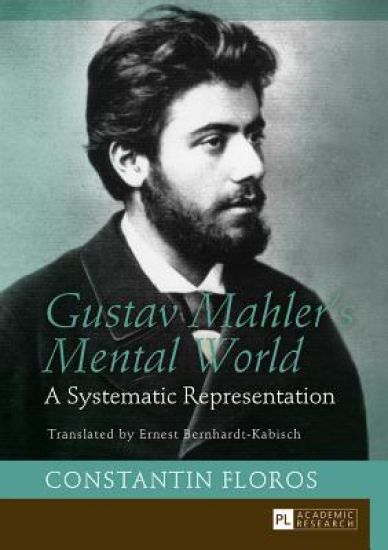
With his extensive three-volume investigation, the author has newly drawn the image of Gustav Mahler for our time. Should Mahler’s symphonies really be categorized as «absolute music»? – Little-known manuscript sources contain significant hints to the contrary: programmatic titles and catchwords or phrases, mottos, literary allusions, associations, sighs, exclamations. Mahler fully understood his symphonies as «erlebte Musik», music of experience, as autobiography in notes, and as expressions of his «weltanschauung». All the symphonies, including the purely instrumental ones, can be traced back to programs that Mahler originally made public, but suppressed later on. A knowledge of the programmatic ideas provides access to a hitherto barely sensed interior metaphysical world that is of crucial importance for an adequate interpretation of the works. This first volume uncovers the complexity of relations between Mahler’s wide-ranging reading and education, his aesthetics and his symphonic creation. About the German edition of this book: «One of the most thoroughgoing and comprehensive investigations of Gustav Mahler’s work and world to date.» (Norddeutscher Rundfunk) «The way in which Mahler’s literary background, his education, and his aesthetic and philosophical maxims are presented here indeed opens up a new approach.» (Die Musikforschung)
To grasp music in its depth dimension is an art that can be learned and perfected. Categories of formal analysis here play a subordinate role – at least as important it is to be consciously aware of timbres, dynamic processes, musical characters and expressions. Following general reflections about the art of listening, the volume in hand presents exemplary work analyses. The roster of composers introduced extends from Mozart to Bernstein, that of the genres discussed from the piano piece to the opera. A detailed register and a survey of the chief works referred to make this book an indispensable companion for both scholars and laymen. About the German edition of this book: «In Floros’ book all these details unite to form a magnificent mosaic. Individual works discussed meet us in an entirely new light, and we begin to decipher the language of music with a different set of tools.» (Helmut Peters)
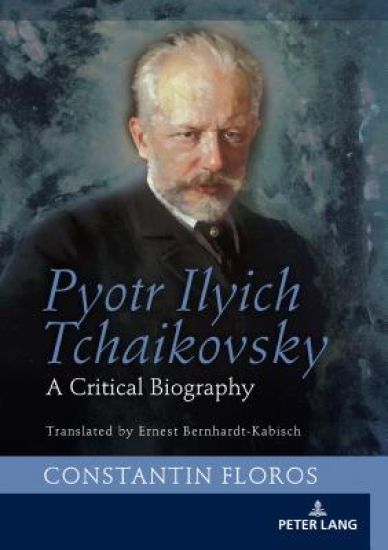
Pyotr Ilyich Tchaikovsky remains to this day one of the most-performed Russian composers. Based on recent studies and source editions, this book demonstrates the close interrelationship between Tchaikovsky’s life and his work. The author portrays the versatility of the musician who died at the mere age of 53 under controversial circumstances in St. Petersburg. About the German edition of this book: «[…] Constantin Floros devotes himself initially to the biography and then to the compositional oeuvre, divided according to genre and supplemented by concrete illustrations, thus giving greater significance to the music.» (Forum Musikbibliothek 27, 2006) «[…] the music gets more weight of its own in the more detailed analyses – illustrated with revealing note citations – which yet always remain readily accessible.» (Steffen A. Schmidt, Das Orchester 02/2007)