

Kirjahaku
Etsi kirjoja tekijän nimen, kirjan nimen tai ISBN:n perusteella.
8 kirjaa tekijältä Corey Johnson



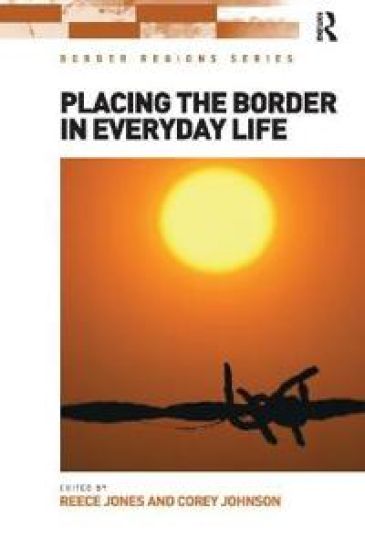
Bordering no longer happens only at the borderline separating two sovereign states, but rather through a wide range of practices and decisions that occur in multiple locations within and beyond the state’s territory. Nevertheless, it is too simplistic to suggest that borders are everywhere, since this view fails to acknowledge that particular sites are significant nodes where border work is done. Similarly, border work is more likely to be done by particular people than others. This book investigates the diffusion of bordering narratives and practices by asking ’who borders and how?’ Placing the Border in Everyday Life complicates the connection between borders and sovereign states by identifying the individuals and organizations that engage in border work at a range of scales and places. This edited volume includes contributions from major international scholars in the field of border studies and allied disciplines who analyze where and why border work is done. By combining a new theorization of border work beyond the state with rich empirical case studies, this book makes a ground-breaking contribution to the study of borders and the state in the era of globalization.
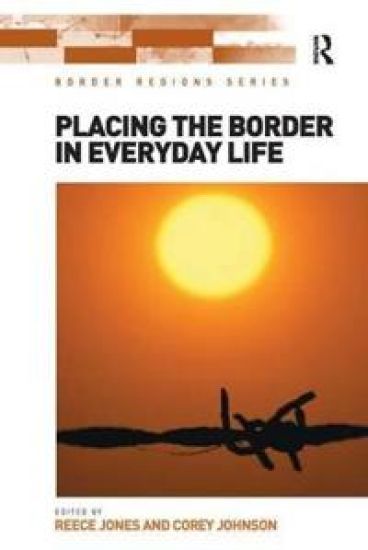
Bordering no longer happens only at the borderline separating two sovereign states, but rather through a wide range of practices and decisions that occur in multiple locations within and beyond the state’s territory. Nevertheless, it is too simplistic to suggest that borders are everywhere, since this view fails to acknowledge that particular sites are significant nodes where border work is done. Similarly, border work is more likely to be done by particular people than others. This book investigates the diffusion of bordering narratives and practices by asking ’who borders and how?’ Placing the Border in Everyday Life complicates the connection between borders and sovereign states by identifying the individuals and organizations that engage in border work at a range of scales and places. This edited volume includes contributions from major international scholars in the field of border studies and allied disciplines who analyze where and why border work is done. By combining a new theorization of border work beyond the state with rich empirical case studies, this book makes a ground-breaking contribution to the study of borders and the state in the era of globalization.
Want, Waste or War?
Philip Andrews-Speed; Raimund Bleischwitz; Tim Boersma; Corey Johnson; Geoffrey Kemp; Stacy D. VanDeveer
Routledge
2014
sidottu
In addition to environmental change, the structure and trends of global politics and the economy are also changing as more countries join the ranks of the world’s largest economies with their resource-intensive patterns. The nexus approach, conceptualized as attention to resource connections and their governance ramifications, calls attention to the sustainability of contemporary consumer resource use, lifestyles and supply chains. This book sets out an analytical framework for understanding these nexus issues and the related governance challenges and opportunities. It sheds light on the resource nexus in three realms: markets, interstate relations and local human security. These three realms are the organizing principle of three chapters, before the analysis turns to crosscutting case studies including shale gas, migration, lifestyle changes and resource efficiency, nitrogen fertilizer and food systems, water and the Nile Basin, climate change and security and defense spending. The key issues revolve around competition and conflict over finite natural resources. The authors highlight opportunities to improve both the understanding of nexus challenges and their governance. They critically discuss a global governance approach versus polycentric and multilevel approaches and the lack of those dimensions in many theories of international relations.
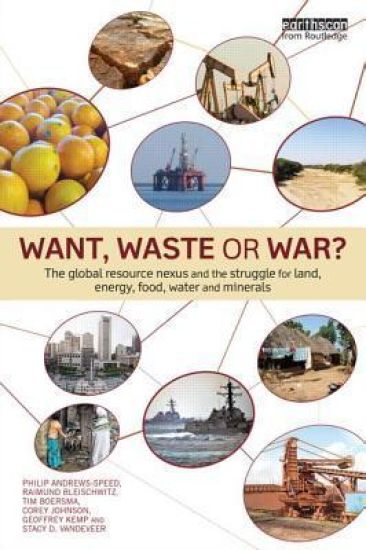
Want, Waste or War?
Philip Andrews-Speed; Raimund Bleischwitz; Tim Boersma; Corey Johnson; Geoffrey Kemp; Stacy D. VanDeveer
Routledge
2014
nidottu
In addition to environmental change, the structure and trends of global politics and the economy are also changing as more countries join the ranks of the world’s largest economies with their resource-intensive patterns. The nexus approach, conceptualized as attention to resource connections and their governance ramifications, calls attention to the sustainability of contemporary consumer resource use, lifestyles and supply chains. This book sets out an analytical framework for understanding these nexus issues and the related governance challenges and opportunities. It sheds light on the resource nexus in three realms: markets, interstate relations and local human security. These three realms are the organizing principle of three chapters, before the analysis turns to crosscutting case studies including shale gas, migration, lifestyle changes and resource efficiency, nitrogen fertilizer and food systems, water and the Nile Basin, climate change and security and defense spending. The key issues revolve around competition and conflict over finite natural resources. The authors highlight opportunities to improve both the understanding of nexus challenges and their governance. They critically discuss a global governance approach versus polycentric and multilevel approaches and the lack of those dimensions in many theories of international relations.