Kirjojen hintavertailu. Mukana 12 159 482 kirjaa ja 12 kauppaa.

Kirjahaku

Etsi kirjoja tekijän nimen, kirjan nimen tai ISBN:n perusteella.

8 kirjaa tekijältä Corey S. Shdaimah

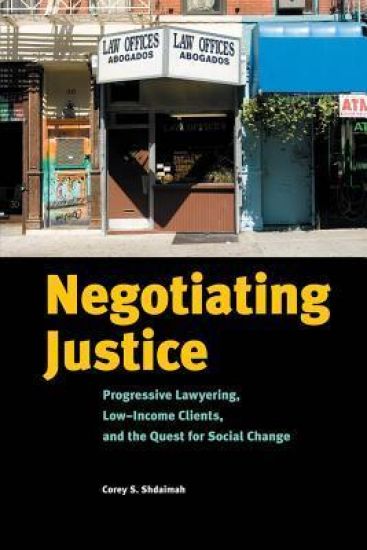
Negotiating Justice

Negotiating Justice

Corey S. Shdaimah

New York University Press
2011
pokkari
While many young people become lawyers for the big bucks, others are motivated by the pursuit of social justice, seeking to help people for whom legal services are financially, socially, or politically inaccessible. These progressive lawyers often bring a considerable degree of idealism to their work, and many leave the field due to insurmountable red tape and spiraling disillusionment. But what about those who stay? And what do their clients think? Negotiating Justice explores how progressive lawyers and their clients negotiate the dissonance between personal idealism and the realities of a system that doesn't often champion the rights of the poor. Corey S. Shdaimah draws on over fifty interviews with urban legal service lawyers and their clients to provide readers with a compelling behind-the-scenes look at how different notions of practice can present significant barriers for both clients and lawyers working with limited resources, often within a legal system that many view as fundamentally unequal or hostile. Through consideration of the central themes of progressive lawyering—autonomy, collaboration, transformation, and social change—Shdaimah presents a subtle and complex tableau of the concessions both lawyers and clients often have to make as they navigate the murky and resistant terrains of the legal system and their wider pursuits of justice and power.
Negotiating Justice

Negotiating Justice

Corey S. Shdaimah

New York University Press
2009
sidottu
While many young people become lawyers for the big bucks, others are motivated by the pursuit of social justice, seeking to help people for whom legal services are financially, socially, or politically inaccessible. These progressive lawyers often bring a considerable degree of idealism to their work, and many leave the field due to insurmountable red tape and spiraling disillusionment. But what about those who stay? And what do their clients think? Negotiating Justice explores how progressive lawyers and their clients negotiate the dissonance between personal idealism and the realities of a system that doesn't often champion the rights of the poor. Corey S. Shdaimah draws on over fifty interviews with urban legal service lawyers and their clients to provide readers with a compelling behind-the-scenes look at how different notions of practice can present significant barriers for both clients and lawyers working with limited resources, often within a legal system that many view as fundamentally unequal or hostile. Through consideration of the central themes of progressive lawyering—autonomy, collaboration, transformation, and social change—Shdaimah presents a subtle and complex tableau of the concessions both lawyers and clients often have to make as they navigate the murky and resistant terrains of the legal system and their wider pursuits of justice and power.
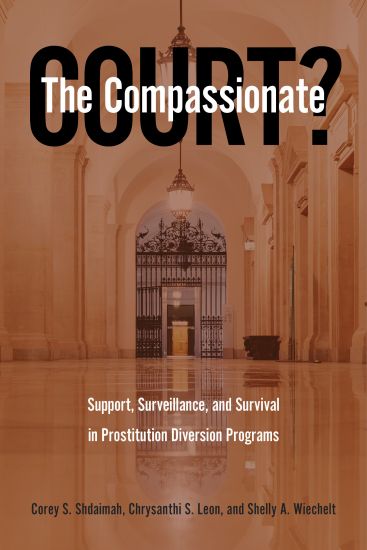
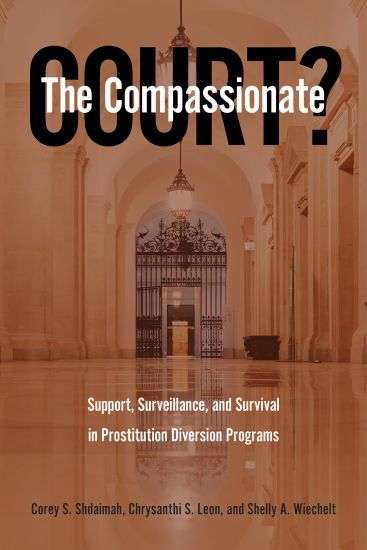
The Compassionate Court?

The Compassionate Court?

Corey S. Shdaimah; Chrysanthi S. Leon; Shelly A. Wiechelt

TEMPLE UNIVERSITY PRESS,U.S.
2023
sidottu
Laws subject people who perform sex work to arrest and prosecution. The Compassionate Court? assesses two prostitution diversion programs (PDPs) that offer to “rehabilitate” people arrested for street-based sex work as an alternative to incarceration. However, as the authors show, these PDPs often fail to provide sustainable alternatives to their mandated clients. Participants are subjected to constant surveillance and obligations, which creates a paradox of responsibility in conflict with the system’s logic of rescue. Moreover, as the participants often face shame and re-traumatization as a price for services, poverty and other social problems, such as structural oppression, remain in place. The authors of The Compassionate Court? provide case studies of such programs and draw upon interviews and observations conducted over a decade to reveal how participants and professionals perceive court-affiliated PDPs, clients, and staff. Considering the motivations, vision, and goals of these programs as well as their limitations-the inequity and disempowerment of their participants-the authors also present their own changing perspectives on prostitution courts, diversion programs, and criminalization of sex work.
The Compassionate Court?

The Compassionate Court?

Corey S. Shdaimah; Chrysanthi S. Leon; Shelly A. Wiechelt

TEMPLE UNIVERSITY PRESS,U.S.
2023
nidottu
Laws subject people who perform sex work to arrest and prosecution. The Compassionate Court? assesses two prostitution diversion programs (PDPs) that offer to “rehabilitate” people arrested for street-based sex work as an alternative to incarceration. However, as the authors show, these PDPs often fail to provide sustainable alternatives to their mandated clients. Participants are subjected to constant surveillance and obligations, which creates a paradox of responsibility in conflict with the system’s logic of rescue. Moreover, as the participants often face shame and re-traumatization as a price for services, poverty and other social problems, such as structural oppression, remain in place. The authors of The Compassionate Court? provide case studies of such programs and draw upon interviews and observations conducted over a decade to reveal how participants and professionals perceive court-affiliated PDPs, clients, and staff. Considering the motivations, vision, and goals of these programs as well as their limitations-the inequity and disempowerment of their participants-the authors also present their own changing perspectives on prostitution courts, diversion programs, and criminalization of sex work.
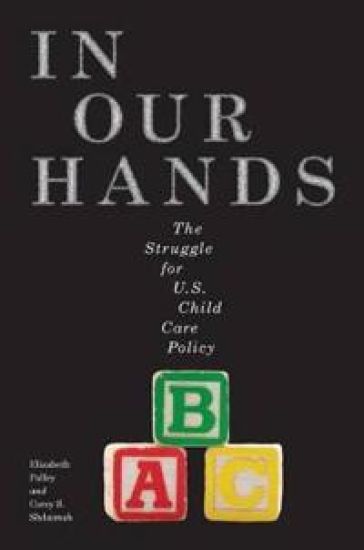
In Our Hands

In Our Hands

Elizabeth Palley; Corey S. Shdaimah

New York University Press
2017
pokkari
A call for better child care policies, exploring the reasons why there has been so little headway on a problem that touches so many families. Working mothers are common in the United States. In over half of all two-parent families, both parents work, and women's paychecks on average make up 35 percent of their families' incomes. Most of these families yearn for available and affordable child care—but although most developed countries offer state-funded child care, it remains scarce in the United States. And even in prosperous times, child care is rarely a priority for U.S. policy makers. In In Our Hands: The Struggle for U.S. Child Care Policy, Elizabeth Palley and Corey S. Shdaimah explore the reasons behind the relative paucity of U.S. child care and child care support. They examine the history of child care advocacy and legislation in the United States, from the Child Care Development Act of the 1970s that was vetoed by Nixon through the Obama administration's Child Care Development Block Grant. The book includes data from interviews with 23 prominent child care and early education advocates and researchers who have spent their careers seeking expansion of child care policy and funding and an examination of the legislative debates around key child care bills of the last half-century. Palley and Shdaimah analyze the special interest and niche groups that have formed around existing policy, arguing that such groups limit the possibility for debate around U.S. child care policy.
In Our Hands

In Our Hands

Elizabeth Palley; Corey S. Shdaimah

New York University Press
2014
sidottu
A call for better child care policies, exploring the reasons why there has been so little headway on a problem that touches so many families. Working mothers are common in the United States. In over half of all two-parent families, both parents work, and women's paychecks on average make up 35 percent of their families' incomes. Most of these families yearn for available and affordable child care—but although most developed countries offer state-funded child care, it remains scarce in the United States. And even in prosperous times, child care is rarely a priority for U.S. policy makers. In In Our Hands: The Struggle for U.S. Child Care Policy, Elizabeth Palley and Corey S. Shdaimah explore the reasons behind the relative paucity of U.S. child care and child care support. They examine the history of child care advocacy and legislation in the United States, from the Child Care Development Act of the 1970s that was vetoed by Nixon through the Obama administration's Child Care Development Block Grant. The book includes data from interviews with 23 prominent child care and early education advocates and researchers who have spent their careers seeking expansion of child care policy and funding and an examination of the legislative debates around key child care bills of the last half-century. Palley and Shdaimah analyze the special interest and niche groups that have formed around existing policy, arguing that such groups limit the possibility for debate around U.S. child care policy.
Social Welfare Policy in a Changing World

Social Welfare Policy in a Changing World

Shannon R. Lane; Elizabeth S. Palley; Corey S. Shdaimah

SAGE PUBLICATIONS INC
2025
nidottu
Social Welfare Policy in a Changing World, Second Edition offers an engaging, student-friendly approach that links policy and practice, while employing a critical analytic lens to U.S. social welfare policy. The authors provide a brief foundation in history, the policy process, and theory, while primarily helping students understand how policy shapes their lives, communities, and clients.
Social Welfare Policy in a Changing World

Social Welfare Policy in a Changing World

Shannon R. Lane; Elizabeth S. Palley; Corey S. Shdaimah

SAGE Publications Inc
2020
nidottu
Recipient of a 2022 Most Promising New Textbook Award from the Textbook & Academic Authors Association (TAA) Social Welfare Policy in a Changing World is an approachable and student-friendly text that links policy and practice and employs a critical analytic lens to U.S. social welfare policy. With particular attention to disparities based on class, race/ethnicity, ability, sexual orientation and gender, authors Shannon R. Lane, Elizabeth S. Palley, and Corey S. Shdaimah assess the impact of policies at the micro, meso, and macro levels. The authors provide students with a brief foundation in history, the policy process, and theory, while primarily focusing on helping students recognize the many ways that policy affects their lives and the lives of their clients and communities. Connecting description, theoretical analysis, and advocacy, this new text challenges readers to examine the development, consequences, and future implications of core policies. Students will come away with a newfound understanding of how to use the political process to address social justice issues and enact meaningful policy change. FREE DIGITAL TOOLS INCLUDED WITH THIS TEXT SAGE edge gives instructors and students the edge they need to succeed with an array of teaching and learning tools in one easy-to-navigate website.