Kirjahaku
Etsi kirjoja tekijän nimen, kirjan nimen tai ISBN:n perusteella.
4 kirjaa tekijältä Cornelia Sollfrank
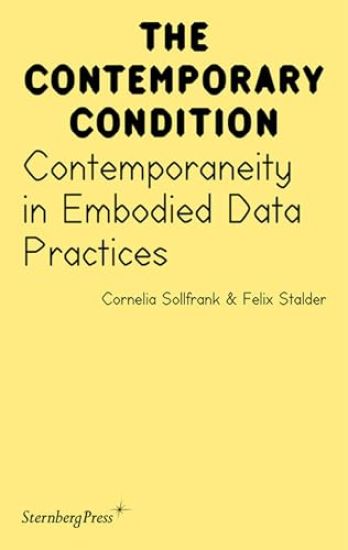
Contemporaneity in Embodied Data Practices
Cornelia Sollfrank; Felix Stalder
STERNBERG PRESS
2024
pokkari
On the relationship between quantifiable and experiential knowledge as entanglement of multiple temporalities. What parallels are there between a human pranayama practitioner and a migratory bird in heavily datafied environments? And what can they tell us about the need to reorient our thinking towards the planetary? In Contemporaneity in Embodied Data Practices, two artistic field studies provide the starting point for a dialogical reflection on the entanglement of diverse temporalities in body-related, datafied, and experiential practices. Shifting through lived, historical, evolutionary, and technological rhythms, Cornelia Sollfrank and Felix Stalder unfold their respective more-than-human frames of reference, and arrive at specific forms of agency in the contemporary moment. Published in partnership with the Centre for Research in Artistic Practice under Contemporary Conditions at Aarhus University.
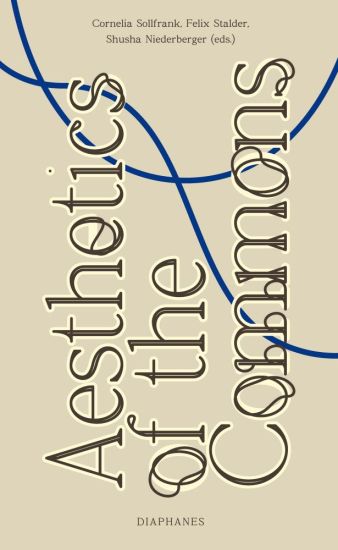
Aesthetics of the Commons
Cornelia Sollfrank; Felix Stalder; Shusha Niederberger
Diaphanes AG
2021
nidottu
What do a feminist server, an art space located in a public park in North London, a so-called pirate library of high cultural value yet dubious legal status, and an art school that emphasizes collectivity have in common? They all demonstrate that art plays an important role in imagining and producing a real quite different from what is currently hegemonic, and that art has the possibility to not only envision or proclaim ideas in theory, but also to realize them materially. Aesthetics of the Commons examines a series of artistic and cultural projects—drawn from what can loosely be called the (post)digital—that take up this challenge in different ways. What unites them, however, is that they all have a double character. They are art in the sense that they place themselves in relation to (Western) cultural and art systems, developing discursive and aesthetic positions, but, at the same time, they are operational in that they create recursive environments and freely available resources whose uses exceed these systems. The first aspect raises questions about the kind of aesthetics that are being embodied, the second creates a relation to the larger concept of the commons. In Aesthetics of the Commons, the commons are understood not as a fixed set of principles that need to be adhered to in order to fit a definition, but instead as a thinking tool—in other words, the book’s interest lies in what can be made visible by applying the framework of the commons as a heuristic device.