Kirjojen hintavertailu. Mukana 11 342 296 kirjaa ja 12 kauppaa.

Kirjahaku

Etsi kirjoja tekijän nimen, kirjan nimen tai ISBN:n perusteella.

2 kirjaa tekijältä Corngold Stanley

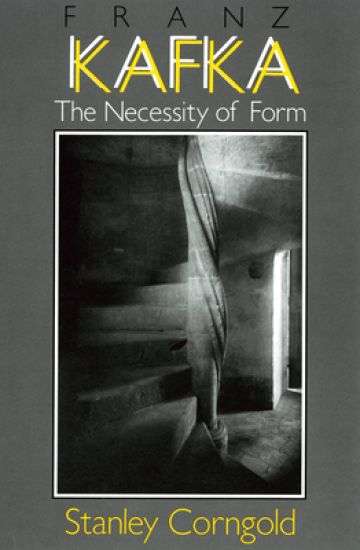
Franz Kafka

Franz Kafka

Corngold Stanley

CORNELL UNIVERSITY PRESS
1988
sidottu
In Stanley Corngold’s view, the themes and strategies of Kafka’s fiction are generated by a tension between his concern for writing and his growing sense of its arbitrary character. Analyzing Kafka’s work in light of "the necessity of form," which is also a merely formal necessity, Corngold uncovers the fundamental paradox of Kafka’s art and life. The first section of the book shows how Kafka’s rhetoric may be understood as the daring project of a man compelled to live his life as literature. In the central part of the book, Corngold reflects on the place of Kafka within the modern tradition, discussing such influential precursors of Cervantes, Flaubert, and Nietzsche, whose works display a comparable narrative disruption. Kafka’s distinctive narrative strategies, Corngold points out, demand interpretation at the same time they resist it. Critics of Kafka, he says, must be aware that their approaches are guided by the principles that Kafka’s fiction identifies, dramatizes, and rejects.
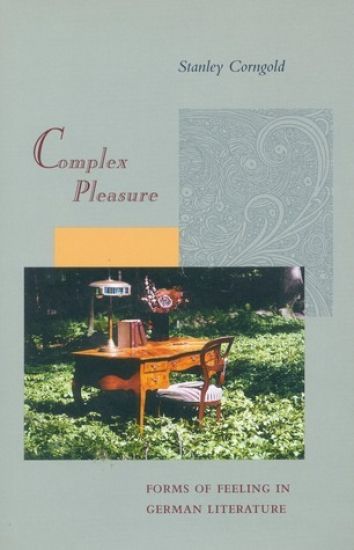
Complex Pleasure

Complex Pleasure

Corngold Stanley

Stanford University Press
1998
pokkari
Complex Pleasure deals with questions of literary feeling in eight major German writers—Lessing, Kant, Hölderlin, Nietzsche, Musil, Kafka, Trakl, and Benjamin. On the basis of close readings of these authors Stanley Corngold makes vivid the following ideas: that where there is literature there is complex pleasure; that this pleasure is complex because it involves the impression of a disclosure; that this thought is foremost in the minds of a number of canonical writers; that important literary works in the German tradition—fiction, poetry, critique—can be illuminated through their treatment of literary feeling; and, finally, that the conceptual terms for these forms of feeling continually vary. The types of feeling treated in Complex Pleasure include wit (the startling perception of likeness) and the disinterested pleasure of aesthetic judgment; Hölderlin's "swift conceptual grasp," in which "the tempo of the process of thought is stressed"; "artistic imagination," mood, sadistic enjoyment, rapturous distraction, homonymic dissonance, and courage as a mode of literary experience. At the same time, through the deftness, range, and surprise of its execution, the book itself conveys complex pleasure. The reader will also find fascinating, hitherto untranslated material by Nietzsche ("On Moods") and Kafka (important sections from his journals and from his unfinished novel The Boy Who Sank Out of Sight).