Kirjojen hintavertailu. Mukana 11 717 486 kirjaa ja 12 kauppaa.

Kirjahaku

Etsi kirjoja tekijän nimen, kirjan nimen tai ISBN:n perusteella.

4 kirjaa tekijältä Craig Steven Wilder

A Covenant with Color

A Covenant with Color

Craig Steven Wilder

Columbia University Press
2001
pokkari
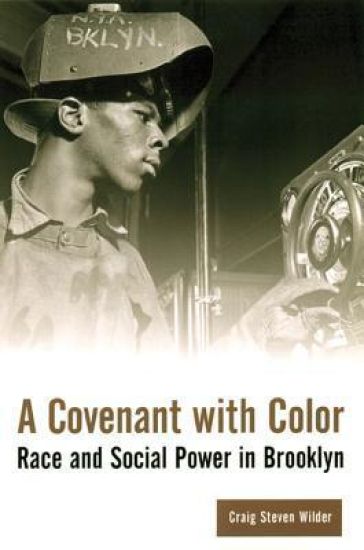
Spanning three centuries of Brooklyn history from the colonial period to the present, A Covenant with Color exposes the intricate relations of dominance and subordination that have long characterized the relative social positions of white and black Brooklynites. Craig Steven Wilder-examining both quantitative and qualitative evidence and utilizing cutting-edge literature on race theory-demonstrates how ideas of race were born, how they evolved, and how they were carried forth into contemporary society. In charting the social history of one of the nation's oldest urban locales, Wilder contends that power relations-in all their complexity-are the starting point for understanding Brooklyn's turbulent racial dynamics. He spells out the workings of power-its manipulation of resources, whether in the form of unfree labor, privileges of citizenship, better jobs, housing, government aid, or access to skilled trades. Wilder deploys an extraordinary spectrum of evidence to illustrate the mechanics of power that have kept African American Brooklynites in subordinate positions: from letters and diaries to family papers of Kings County's slaveholders, from tax records to the public archives of the Home Owners Loan Corporation. Wilder illustrates his points through a variety of cases, including banking interests, the rise of Kings County's colonial elite, industrialization and slavery, race-based distribution of federal money in jobs, and mortgage loans during and after the Depression. He delves into the evolution of the Brooklyn ghetto, tracing how housing segregation corralled African Americans in Bedford-Stuyvesant. The book explores colonial enslavement, the rise of Jim Crow, labor discrimination and union exclusion, and educational inequality. Throughout, Wilder uses Brooklyn as a lens through which to view larger issues of race and power on a national level. One of the few recent attempts to provide a comprehensive history of race relations in an American city, A Covenant with Color is a major contribution to urban history and the history of race and class in America.
In the Company of Black Men

In the Company of Black Men

Craig Steven Wilder

New York University Press
2002
sidottu
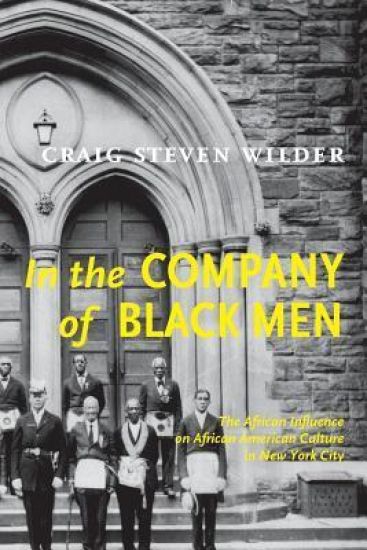
Traces the development of African-American community traditions over three centuries From the subaltern assemblies of the enslaved in colonial New York City to the benevolent New York African Society of the early national era to the formation of the African Blood Brotherhood in twentieth century Harlem, voluntary associations have been a fixture of African-American communities. In the Company of Black Men examines New York City over three centuries to show that enslaved Africans provided the institutional foundation upon which African-American religious, political, and social culture could flourish. Arguing that the universality of the voluntary tradition in African-American communities has its basis in collectivism—a behavioral and rhetorical tendency to privilege the group over the individual—it explores the institutions that arose as enslaved Africans exploited the potential for group action and mass resistance. Craig Steven Wilder's research is particularly exciting in its assertion that Africans entered the Americas equipped with intellectual traditions and sociological models that facilitated a communitarian response to oppression. Presenting a dramatic shift from previous work which has viewed African-American male associations as derivative and imitative of white male counterparts, In the Company of Black Men provides a ground-breaking template for investigating antebellum black institutions.
In the Company of Black Men

In the Company of Black Men

Craig Steven Wilder

New York University Press
2005
pokkari
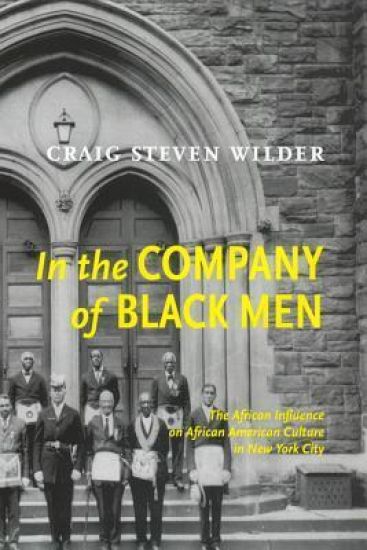
Traces the development of African-American community traditions over three centuries From the subaltern assemblies of the enslaved in colonial New York City to the benevolent New York African Society of the early national era to the formation of the African Blood Brotherhood in twentieth century Harlem, voluntary associations have been a fixture of African-American communities. In the Company of Black Men examines New York City over three centuries to show that enslaved Africans provided the institutional foundation upon which African-American religious, political, and social culture could flourish. Arguing that the universality of the voluntary tradition in African-American communities has its basis in collectivism—a behavioral and rhetorical tendency to privilege the group over the individual—it explores the institutions that arose as enslaved Africans exploited the potential for group action and mass resistance. Craig Steven Wilder's research is particularly exciting in its assertion that Africans entered the Americas equipped with intellectual traditions and sociological models that facilitated a communitarian response to oppression. Presenting a dramatic shift from previous work which has viewed African-American male associations as derivative and imitative of white male counterparts, In the Company of Black Men provides a ground-breaking template for investigating antebellum black institutions.
Ebony and Ivy

Ebony and Ivy

Craig Steven Wilder

Bloomsbury Press
2014
nidottu
A 2006 report commissioned by Brown University revealed that institution's complex and contested involvement in slavery--setting off a controversy that leapt from the ivory tower to make headlines across the country. But Brown's troubling past was far from unique. In "Ebony and Ivy," Craig Steven Wilder, a leading historian of race in America, lays bare uncomfortable truths about race, slavery, and the American academy.Many of America's revered colleges and universities--from Harvard, Yale, and Princeton to Rutgers, Williams College, and the University of North Carolina--were soaked in the sweat, the tears, and sometimes the blood of people of color. The earliest academies proclaimed their mission to Christianize the "savages" of North America and played a key role in white conquest. Later, the slave economy and higher education grew up together, each nurturing the other. Slavery funded colleges, built campuses, and paid the wages of professors. Enslaved Americans waited on faculty and students; academic leaders aggressively courted the support of slave owners and slave traders. Significantly, as Wilder shows, our leading universities were dependent on human bondage and became breeding grounds for the racist ideas that sustained it."Ebony and Ivy" is a powerful and propulsive study and the first of its kind, revealing a history of oppression behind the institutions usually considered the cradle of liberal politics.