Kirjojen hintavertailu. Mukana 11 627 670 kirjaa ja 12 kauppaa.

Kirjahaku

Etsi kirjoja tekijän nimen, kirjan nimen tai ISBN:n perusteella.

4 kirjaa tekijältä Craig Thompson Friend

Kentucke's Frontiers

Kentucke's Frontiers

Craig Thompson Friend

Indiana University Press
2010
sidottu
American culture has long celebrated the heroism framed by Kentucky's frontier wars. Spanning the period from the 1720s when Ohio River valley Indians returned to their homeland to the American defeat of the British and their Indian allies in the War of 1812, Kentucke's Frontiers examines the political, military, religious, and public memory narratives of early Kentucky. Craig Thompson Friend explains how frontier terror framed that heroism, undermining the egalitarian promise of Kentucke and transforming a trans-Appalachian region into an Old South state. From county courts and the state legislature to church tribunals and village stores, patriarchy triumphed over racial and gendered equality, creating political and economic opportunity for white men by denying it for all others. Even in remembering their frontier past, Kentuckians abandoned the egalitarianism of frontier life and elevated white males to privileged places in Kentucky history and memory.
Becoming Lunsford Lane

Becoming Lunsford Lane

Craig Thompson Friend

THE UNIVERSITY OF NORTH CAROLINA PRESS
2025
sidottu
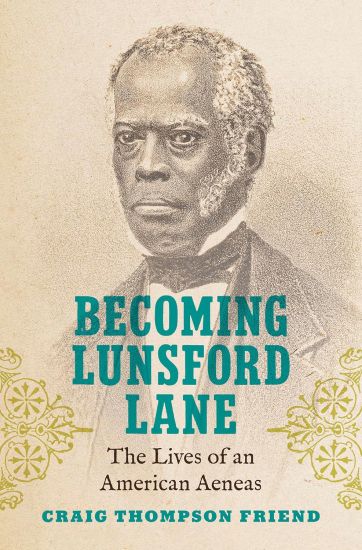
By challenging the rules of enslavement and, later, pushing the boundaries of free citizenship in North Carolina, Lunsford Lane (1803–79) became a folk hero to many enslaved Southerners, as well as a generation of abolitionists. Author of a unique "slave narrative" and a speaking partner with some of the era's greatest orators, including William Lloyd Garrison, Henry Highland Garnett, William Wells Brown, and Frederick Douglass, Lane became a celebrity who watched as the persona he created gradually faltered and failed him and his family. Yet even as his influence waned, Lane's enemies pounced—a white mob determined to tar and feather him, reformers who saw his contributions to abolition as a threat to their causes, and a neighbor who attempted to set fire to the Lane home while Lunsford and his family slept within. It was also powerful enough to inspire many to remake him for their own purposes: as a fugitive from slavery, an entrepreneur, a Christian minister, and even an abolitionist (an identity he rejected). In the first biography of Lunsford Lane based on original and extensive research, Craig Thompson Friend portrays a man who dreamed beyond his enslavement, delivered himself and his family from bondage, and spun a story of his life that brought him lasting freedom and fleeting fame. Friend casts light on Lane's family origins as well as his complex relationships with his wife, parents, children, enslavers, fellow abolitionists, and nation. Lane's story is a biography for our times: a man searching to define life, liberty, and the pursuit of happiness in a changing American society scarred by contentious politics, economic challenges, class tensions, loss of political rights, and racial violence.
Along the Maysville Road

Along the Maysville Road

Craig Thompson Friend

University of Tennessee Press
2017
nidottu
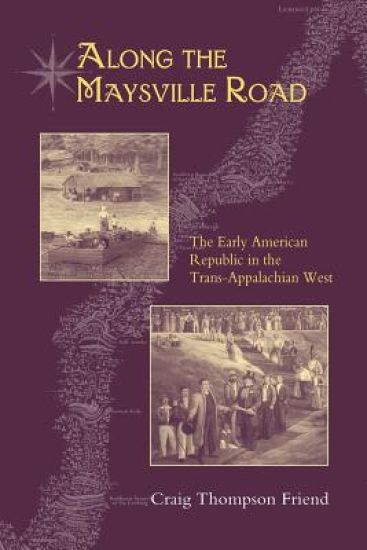
Before the National Road and the Erie Canal, another transportation revolution was underway in the United States. Beginning in the 1770s, the Maysville Road—a sixty-five-mile dirt trail that stretched from the Ohio River to the Bluegrass region of Kentucky—served as a stage upon which people wrestled with issues of power, identities, and worldviews. For six decades, the road provided a conduit through which political, economic, social, and cultural ideas circulated into and within the early American West. Andrew Jackson brought the trail to national attention when he vetoed Henry Clay’s Maysville Road Bill in 1830. As an important migration route and the center of an early urban corridor, however, the Maysville Road had already made its mark on American history, offering a focal point for the cultural reconfiguration of the Early American Republic. Some of the era’s most important events rumbled along its length as the road witnessed the rise of republicanism, democracy, urban development, refinement, an awakening middle class, revivalism, racial slavery, and nationalism.Along the Maysville Road details the life of the trail from its beginnings as a buffalo trace, through its role in populating and transforming an early American West, to its decline in regional and national affairs. This biography of a road thus serves as a microhistory of social and cultural change in the Early American Republic. Integral to this story are the people and groups who traveled and settled along the road: backcountry pioneers, refined Virginia gentry, poor and middling farmers, artisans and merchants from eastern cities, and of course the women and slaves who arrived with them. While these groups imported differing worldviews into the new American West, the merchant class’s commitment to commercial development, material acquisition, and individual achievement prophesied the triumph of a liberal economic order throughout nineteenth-century America. Alongside this individualistic impulse arose increasing pressure to abandon older identities based on regional origins and ethnic backgrounds and to accept a collective historical memory for the growing nation. Throughout the Early Republic, the call of the open road facilitated what it means to be “American.”
Along the Maysville Road

Along the Maysville Road

Craig Thompson Friend

University of Tennessee Press
2005
sidottu
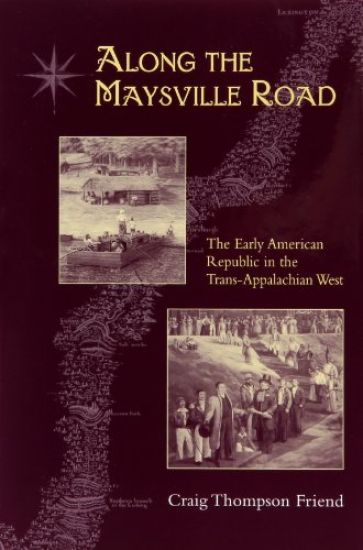
Before the National Road and the Erie Canal, another transportation revolution was underway in the United States. Beginning in the 1770s, the Maysville Road—a sixty-five-mile dirt trail that stretched from the Ohio River to the Bluegrass region of Kentucky—served as a stage upon which people wrestled with issues of power, identities, and worldviews. For six decades, the road provided a conduit through which political, economic, social, and cultural ideas circulated into and within the early American West. Andrew Jackson brought the trail to national attention when he vetoed Henry Clay’s Maysville Road Bill in 1830. As an important migration route and the center of an early urban corridor, however, the Maysville Road had already made its mark on American history, offering a focal point for the cultural reconfiguration of the Early American Republic. Some of the era’s most important events rumbled along its length as the road witnessed the rise of republicanism, democracy, urban development, refinement, an awakening middle class, revivalism, racial slavery, and nationalism. Along the Maysville Road details the life of the trail from its beginnings as a buffalo trace, through its role in populating and transforming an early American West, to its decline in regional and national affairs. This biography of a road thus serves as a microhistory of social and cultural change in the Early American Republic. Integral to this story are the people and groups who traveled and settled along the road: backcountry pioneers, refined Virginia gentry, poor and middling farmers, artisans and merchants from eastern cities, and of course the women and slaves who arrived with them. While these groups imported differing worldviews into the new American West, the merchant class’s commitment to commercial development, material acquisition, and individual achievement prophesied the triumph of a liberal economic order throughout nineteenth-century America. Alongside this individualistic impulse arose increasing pressure to abandon older identities based on regional origins and ethnic backgrounds and to accept a collective historical memory for the growing nation. Throughout the Early Republic, the call of the open road facilitated what it means to be “American.”