

Kirjahaku
Etsi kirjoja tekijän nimen, kirjan nimen tai ISBN:n perusteella.
31 kirjaa tekijältä D James Benton

Thermochemistry is the science of analyzing molecular reactions to determine if they are spontaneous, energy absorbing or releasing, and to predict the product mole ratios and rates. Chemical reactions, like most other processes, tend to follow the path of free energy minimization or entropy maximization. This principle forms the mathematical basis for the analytical approach. This book is a how-to manual, filled with many examples and comes with all the code you need to accomplish this task.

This book covers various algorithms for compression and encryption, some of which overlap, serving both purposes simultaneously. We will discuss why one algorithm works better for one case and not another as well as how different implementations are superior or more robust. All of the algorithms and code are presented in the C programming language and all are available free online.

Thermodynamic and Transport Properties of Fluids
D James Benton
Independently Published
2019
pokkari








Fluid flow is a very broad and complicated topic because of the many different aspects and types of applications. I have covered inviscid flow, which occurs when the viscosity is negligible or the velocities are very large, in two previous texts: Differential Equations and Numerical Calculus. I may at some point cover creeping flow, which occurs when the viscosity dominates momentum or the velocities are very small. In this text we will cover the range between these two extremes: when viscosity and momentum are both important, at least in some significant part of the flow field. This is by no means an exhaustive reference on the subject of computational fluid dynamics; rather, it is an introduction and overview, going just far enough to get the reader started along this path with some helpful direction based on years of experience. I have striven to make this a clear presentation, particularly of finite elements, avoiding the traditional esoteric derivations that never seem to arrive at any useful destination. The impetus to undertake this project has arisen from my interacting with many graduate students on Research Gate, who are pursuing CFD and struggling with traditional presentations. You must make decisions when you arrive at a fork in the proverbial road (such as FDM, FVM, or FEM) and I hope this text will provide you with enough information to do that without me imposing my personal preference.

Ashley thinks she has finally figured out her role and how she came to be the last of seven seraphim-complete opposite of the first and the only bat-Elohim. But God has so much more planned for her than this. She easily diffuses an invasion from space by aliens, who aren't aliens at all, but rather descendants of Cain, returning to Earth after trashing Xantha. Pictures of Ashley are everywhere, precluding anonymity and eliminating any hope of returning to school or pretence of being a normal teenager. She bounces from one natural disaster to another, always trying to rescue people from the hard things of life, but never quite able to reach that elusive goal. Her anxiety grows day-by-day until a calamity strikes that breaks her heart. Every conceivable action leaves scores, even hundreds, dead or suffering. There is no escape from the horns of this dilemma. Frozen by indecision, Ashley fails to act and helplessly watches the destruction unfold. She flies to the place of solitude, the heavenly Garden of which Gethsemane on the Mount of Olives is but a copy, and there awaits the Savior's comforting presence. Jesus has planned a surprise-and a new perspective-a pitch for His little angel to consider. Ashley is hurled like a baseball through the heavens to her next assignment. Where and when will it be?

This is a compilation of all three parts to the story of Ashley, the seventh seraphim. The overall theme is: God doesn't do things the way we expect Him to. He's better than that The story starts with an angel who retires, which isn't supposed to happen.

Heat recovery steam generators (HRSGs) are an integral part of any modern combined cycle power plant. These heat exchangers are designed to recover the heat from a gas turbine exhaust and convert this to steam, which drives a turbine and ultimately a second generator. Because the gas turbine operates efficiently at high temperatures and heat is removed down to nearly ambient temperature, the overall efficiency of this complex design exceeds that of conventional Rankine cycle coal-, oil-, or gas-fired systems. These systems can also be operated in simple or combined cycle, increasing flexibility and response to load dispatch. HRSG can be complex to analyze and also difficult to effectively test and prove their performance. This text covers both theory and testing in practice with examples.
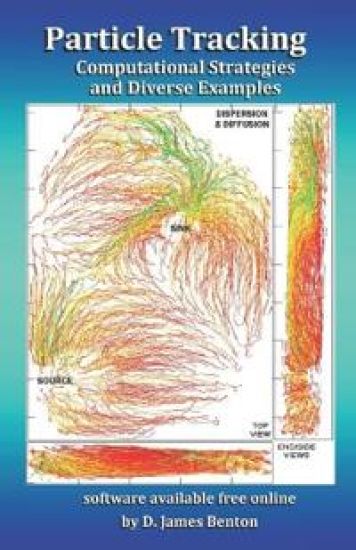
Tracking particles through a moving field, such as flowing air, ground, or surface water, is not only a powerful computational method but can also provide insightful visualizations. I have employed this process for a variety of problems from airborne contamination, thermal pollution, and contaminant transport in groundwater. I have even used it to successfully model the mixing of fluorescent dye through the confluence of three pumps in order to distinguish the time of arrival at the destination. While the Lagrangian method (based on time as the independent parameter) is most often used, the Hamiltonian method (based on time as a dependent parameter) can be much faster. Both are developed in this text, which includes many examples. Diffusion (spreading based on material properties) and also dispersion (based on local velocities) are derived, implemented, and illustrated in the text. Flow in factures within porous media, essential to accurately modeling karst formations, is also covered.