Kirjojen hintavertailu. Mukana 11 627 067 kirjaa ja 12 kauppaa.

Kirjahaku

Etsi kirjoja tekijän nimen, kirjan nimen tai ISBN:n perusteella.

4 kirjaa tekijältä D M Smith

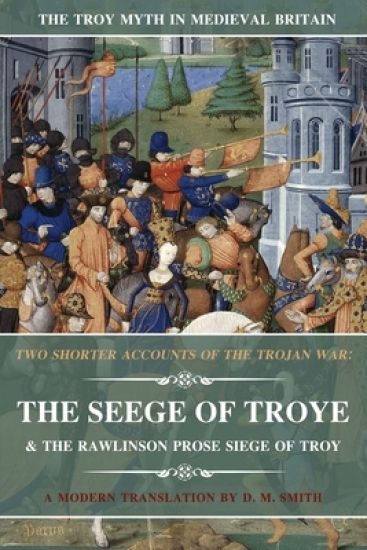
Two Shorter Accounts of the Trojan War

Two Shorter Accounts of the Trojan War

D M Smith

Independently Published
2019
pokkari
In medieval Britain, the works of Homer were practically unknown. In his absence, the half-remembered story of the Trojan War took on a distinctly Arthurian flavour, with the heroes Achilles and Hector reimagined as armoured knights on horseback, duelling with broadsword and lance. The earliest known account of the Trojan War in the English language is the Seege of Troye: an anonymous minstrel poem of the early fourteenth century, loosely based on the Excidio Trojae Historia of Dares Phrygius and the Roman de Troie of Beno t de Sainte-Maure. Fresh from his 2018 translation of John Lydgate's 30,000-line epic Troy Book, D. M. Smith now turns his attention to this lighter and more vernacular work, presenting its first translation into Modern English. Smith provides the full MS. Lincoln's Inn 150-most complete of the four surviving manuscripts of the Seege of Troye-with supplementary material from the extensively-rewritten MS. Harley 525. Also included is a modern translation of the Rawlinson Prose Siege of Troy-a fifteenth-century redaction of Lydgate's Troy Book, and the oldest English prose account of the Trojan War-here published for the first time alongside its metrical namesake. Both texts are heavily annotated, with a detailed introduction placing them within the wider "Troy" canon of the Middle Ages and classical antiquity.
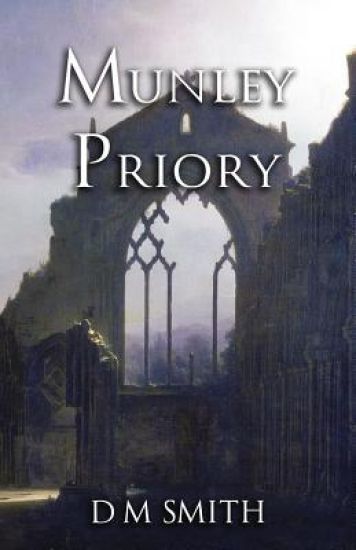
Munley Priory

Munley Priory

D M Smith

Createspace Independent Publishing Platform
2016
pokkari
Something has awakened in the ruins of Munley Priory...England, 1742. In a windswept corner of the North York Moors, the villagers of Munley are dying under mysterious circumstances. Rumour and hearsay are rife, with many blaming the vengeful spirit of a mad monk said to haunt the ruins of a nearby monastery. Dr William Marlowe, Oxford-educated and a firm believer in Science over Superstition, is determined to prove them wrong. Assisted by the ageing Earl of Munley, patriarch of a failing dynasty, and the gallant Mr Whittaker, suitor to the Earl's beautiful daughter Anne, the young physician attempts to uncover the secret of Munley Priory. Yet the skeletons he unearths threaten to shake the very foundations of his rational world.'They are calling this century "The Enlightenment". When Science and Logic tear down the superstition and mysticism we have clung to for so many centuries. A new dawn after millennia of grovelling in the dark, terrified of shadows and bumps in the night. But it is a false dawn. It seems that the cold light of day, which promised to banish the monsters our ancestors feared, has only drawn them in stark relief.''Munley Priory: A Gothic Story' is a fast-paced and darkly humorous supernatural thriller by New Zealand author D M Smith. A tale of murder, madness, family secrets and forbidden passion, set amid a bleak Northern English landscape, that is sure to delight lovers of traditional Gothic fiction.
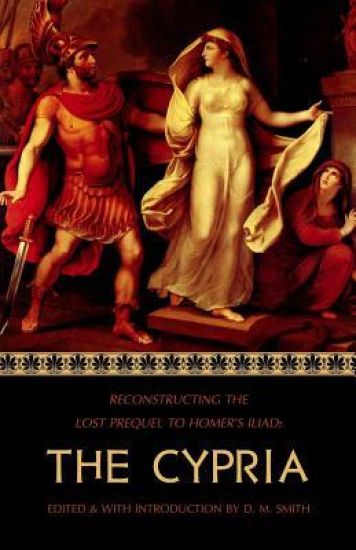
The Cypria

The Cypria

D M Smith

Createspace Independent Publishing Platform
2017
pokkari
In Classical times, the story of the Trojan War was told in a series of eight epic poems known as the Epic Cycle, of which only the Iliad and Odyssey by Homer survive to the present day. The first poem in the sequence was the Cypria, which described the early years of the war from Eris' casting of the golden apple at the wedding of Peleus and Thetis, to Paris' abduction of Helen, the sacrifice of Iphigenia, Odysseus' treacherous murder of Palamedes, and finally, the enslavement of Briseis and Chryseis, which sowed the seeds of the conflict between Achilles and Agamemnon in the Iliad. The Cypria is now lost, but the myths it once contained are known from a number of later writings. In an ambitious exercise in literary back-breeding, editor D. M. Smith attempts to reconstruct the lost prequel to Homer's Iliad from the available material. Included are excerpts from Ovid's Metamorphoses, Apollodorus' Bibliotheca, Euripides' Iphigenia at Aulis and Colluthus' The Rape of Helen, as well as lesser known documents such as Dictys Cretensis Ephemeris Belli Trojani, and the Excidium Troiae - a medieval summary of a lost Roman account of the Trojan War, discovered among the papers of an 18th century clergyman in the 1930s. This eclectic melange of Greek and Latin texts has been carefully edited and arranged in accordance with the known chronology of the Cypria, thus allowing readers to trace the story of this vanished epic as a continuous narrative for the first time in over a thousand yea
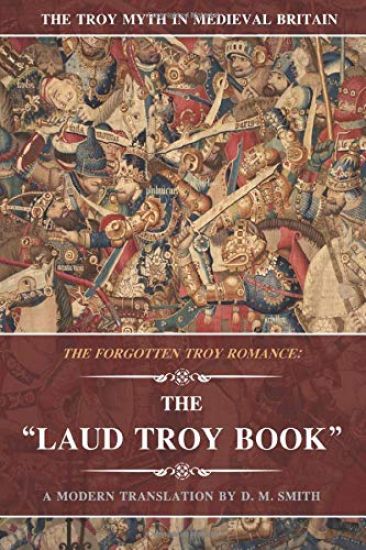
The Laud Troy Book

The Laud Troy Book

D M Smith

Independently Published
2019
pokkari
In medieval Britain, the works of Homer were practically unknown. In his absence, the half-remembered story of the Trojan War took on a distinctly Arthurian flavour, with the heroes Achilles and Hector reimagined as armoured knights on horseback, duelling with broadsword and lance. Of the various British poetical histories of the Trojan War, the Laud Troy Book is perhaps the least studied. This untitled, 18,664-line poem survives in the unique MS. Laud Misc. 595, which once formed part of a collection of medieval manuscripts belonging to the Archbishop William Laud-a favourite of Charles I, executed for treason in the lead-up to the English Civil War. Dating from about 1400 AD, the Laud Troy Book represents an anonymous Middle English poet's attempt to render the Latin prose Historia Destructionis Troiae of Guido delle Colonne as a chivalric romance in octosyllabic verse-unwittingly restoring Guido's narrative to its twelfth-century roots in Beno t de Sainte-Maure's Roman de Troie. In the third volume in this series, the Laud Troy Book receives its first translation into Modern English. The text is fully annotated, with a glossary of uncommon and untranslatable words, and includes a detailed introduction tracing the development of the Troy myth from Homer and the Cyclic Poets to its re-emergence as a courtly romance in the Middle Ages.