Kirjojen hintavertailu. Mukana 11 717 486 kirjaa ja 12 kauppaa.

Kirjahaku

Etsi kirjoja tekijän nimen, kirjan nimen tai ISBN:n perusteella.

12 kirjaa tekijältä D. A. Miller

Eight and a Half (Otto e mezzo)

Eight and a Half (Otto e mezzo)

D. A. Miller

BLOOMSBURY PUBLISHING PLC
2022
nidottu
Federico Fellini's masterpiece 8 1/2 (Otto e mezzo) shocked audiences around the world when it was released in 1963 by its sheer auteurist gall. The hero, a film director named Guido Anselmi, seemed to be Fellini's mirror image, and the story to reflect the making of 8 1/2 itself. Whether attacked for self-indulgence or extolled for self-consciousness, 8 1/2 became the paradigm of personal filmmaking, and numerous directors, including Fassbinder, Truffaut, Scorsese, Bob Fosse and Bruce LaBruce, paid homage to the film and its themes of personal and creative ennui in their own work.Now that 8 1/2's conceit is less shocking, D.A. Miller argues, we can see more clearly how tentative, even timid, Fellini's ground-breaking incarnation always was. Guido is a perfect blank, or is trying his best to seem one. By his own admission he doesn't even have an artistic or social statement to offer: 'I have nothing to say, but I want to say it anyway.' 8 1/2's deepest commitment is not to this man (who is never quite 'all there') or to his message (which is lacking entirely) but to its own flamboyant manner. The enduring timeliness of 8 1/2 lies, Miller suggests, in its aggressive shirking of the shame that falls on the man – and the artist – who fails his appointed social responsibilities.
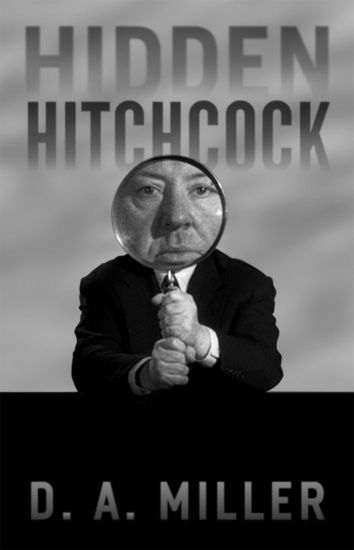
Hidden Hitchcock

Hidden Hitchcock

D. A. Miller

University of Chicago Press
2016
sidottu
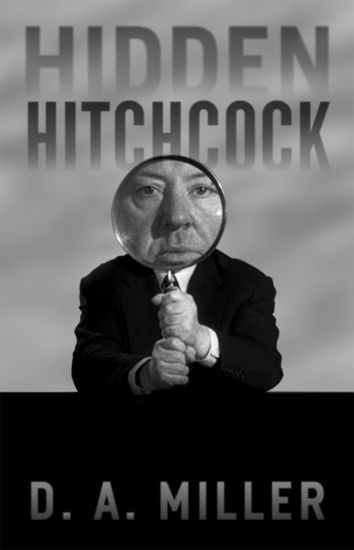
No filmmaker has more successfully courted mass-audience understanding than Alfred Hitchcock, and none has been studied more intensively by scholars. In Hidden Hitchcock, D. A. Miller does what seems impossible: he discovers what has remained unseen in Hitchcock's movies, a secret style that imbues his films with a radical duplicity. Focusing on three films Strangers on a Train, Rope, and The Wrong Man Miller shows how Hitchcock anticipates, even demands a "Too-Close Viewer." Dwelling within us all and vigilant even when everything appears to be in good order, this Too-Close Viewer attempts to see more than the director points out, to expand the space of the film and the duration of the viewing experience. And, thanks to Hidden Hitchcock, that obsessive attention is rewarded. In Hitchcock's visual puns, his so-called continuity errors, and his hidden appearances (not to be confused with his cameos), Miller finds wellsprings of enigma.Hidden Hitchcock is a revelatory work that not only shows how little we know this best known of filmmakers, but also how near such too-close viewing comes to cinephilic madness.
Hidden Hitchcock

Hidden Hitchcock

D. A. Miller

University of Chicago Press
2017
nidottu
No filmmaker has more successfully courted mass-audience understanding than Alfred Hitchcock, and none has been studied more intensively by scholars. In Hidden Hitchcock, D. A. Miller does what seems impossible: he discovers what has remained unseen in Hitchcock's movies, a secret style that imbues his films with a radical duplicity. Focusing on three films Strangers on a Train, Rope, and The Wrong Man Miller shows how Hitchcock anticipates, even demands a "Too-Close Viewer." Dwelling within us all and vigilant even when everything appears to be in good order, this Too-Close Viewer attempts to see more than the director points out, to expand the space of the film and the duration of the viewing experience. And, thanks to Hidden Hitchcock, that obsessive attention is rewarded. In Hitchcock's visual puns, his so-called continuity errors, and his hidden appearances (not to be confused with his cameos), Miller finds wellsprings of enigma.Hidden Hitchcock is a revelatory work that not only shows how little we know this best known of filmmakers, but also how near such too-close viewing comes to cinephilic madness.
Second Time Around

Second Time Around

D. A. Miller

Columbia University Press
2021
sidottu
The art houses and cinema clubs of his youth are gone, but the films that D. A. Miller discovered there in the 1960s and ’70s are now at his fingertips. With DVDs and streaming media, technology has turned the old cinematheque’s theatrical offerings into private viewings that anyone can repeat, pause, slow, and otherwise manipulate at will.In Second Time Around, Miller seizes this opportunity; across thirteen essays, he watches digitally restored films by directors from Mizoguchi to Pasolini and from Hitchcock to Honda, looking to find not only what he first saw in them but also what he was then kept from seeing by quick camerawork, normal projection speed, missing frames, or simple censorship. At last he has an unobstructed view of the gay leather scene in Cruising, the expurgated special effects in The H-Man, and the alternative ending to Vertigo. Now he can pursue the finer details of Chabrol’s debt to Hitchcock, Visconti’s mystificatory Marxism, or the unemotive emotion in Godard.Yet this recaptured past is strangely disturbing; the films and the author have changed in too many ways for their reunion to be like old times. The closeness of Miller’s attention clarifies the painful contradictions of youth and decline, damaged prints and flawless restorations.
Second Time Around

Second Time Around

D. A. Miller

Columbia University Press
2021
pokkari
The art houses and cinema clubs of his youth are gone, but the films that D. A. Miller discovered there in the 1960s and ’70s are now at his fingertips. With DVDs and streaming media, technology has turned the old cinematheque’s theatrical offerings into private viewings that anyone can repeat, pause, slow, and otherwise manipulate at will.In Second Time Around, Miller seizes this opportunity; across thirteen essays, he watches digitally restored films by directors from Mizoguchi to Pasolini and from Hitchcock to Honda, looking to find not only what he first saw in them but also what he was then kept from seeing by quick camerawork, normal projection speed, missing frames, or simple censorship. At last he has an unobstructed view of the gay leather scene in Cruising, the expurgated special effects in The H-Man, and the alternative ending to Vertigo. Now he can pursue the finer details of Chabrol’s debt to Hitchcock, Visconti’s mystificatory Marxism, or the unemotive emotion in Godard.Yet this recaptured past is strangely disturbing; the films and the author have changed in too many ways for their reunion to be like old times. The closeness of Miller’s attention clarifies the painful contradictions of youth and decline, damaged prints and flawless restorations.
The Novel and The Police

The Novel and The Police

D. A. Miller

University of California Press
1989
pokkari
Through a series of readings in the work of the decisive triumvirate of Victorian fiction, Dickens, Trollope and Wilkie Collins, Miller investigates the novel as an oblique form of social control.
Place for Us

Place for Us

D. A. Miller

Harvard University Press
2000
nidottu
It used to be a secret that, in its postwar heyday, the Broadway musical recruited a massive underground following of gay men. But though this once silent social fact currently spawns jokes that every sitcom viewer is presumed to be in on, it has not necessarily become better understood.In Place for Us, D. A. Miller probes what all the jokes laugh off: the embarrassingly mutual affinity between a "general" cultural form and the despised "minority" that was in fact that form's implicit audience. In a style that is in turn novelistic, memorial, autobiographical, and critical, the author restores to their historical density the main modes of reception that so many gay men developed to answer the musical's call: the early private communion with original cast albums, the later camping of show tunes in piano bars, the still later reformatting of these same songs at the post-Stonewall disco. In addition, through an extended reading of Gypsy, Miller specifies the nature of the call itself, which he locates in the postwar musical's most basic conventions: the contradictory relation between the show and the book, the mimetic tendency of the musical number, the centrality of the female star. If the postwar musical may be called a "gay" genre, Miller demonstrates, this is because its regular but unpublicized work has been to indulge men in the spectacular thrills of a femininity become their own.
Jane Austen, or The Secret of Style

Jane Austen, or The Secret of Style

D. A. Miller

Princeton University Press
2005
pokkari
What is the world-historical importance of Jane Austen? An old maid writes with the detachment of a god. Here, the stigmatized condition of a spinster; there, a writer's unequalled display of absolute, impersonal authority. In between, the secret work of Austen's style: to keep at bay the social doom that would follow if she ever wrote as the person she is. For no Jane Austen could ever appear in Jane Austen. Amid happy wives and pathetic old maids, we see no successfully unmarried woman, and, despite the multitude of girls seeking to acquire "accomplishments," no artist either. What does appear is a ghostly No One, a narrative voice unmarked by age, gender, marital status, all the particulars that make a person--and might make a person peculiar. The Austen heroine must suppress her wit to become the one and not the other, to become, that is, a person fit to be tied in a conjugal knot. But for herself, Austen refuses personhood, with all its constraints and needs, and disappears into the sourceless anonymity of her style. Though often treasured for its universality, that style marks the specific impasse of a writer whose self-representation is impossible without the prospect of shame. D.A. Miller argues this case not only through the close reading that Austen's style always demands, but also through the close writing, the slavish imitation, that it sometimes inspires.
Tears of the Exile

Tears of the Exile

D. A. Miller

Createspace Independent Publishing Platform
2014
nidottu
The Ogatu are an advanced reptilian race, dedicated to commerce and profit. When a small Ogatu Corporation (their word for family) found Earth, their greedy little eyes practically glowed in anticipation: a race of semi-intelligent beings that are unable to travel the stars How wonderful Their next course of action? Exploit the stupid humans. A deal was struck by the Ogatu Corporation and members of the United States Government: the Ogatu would give advanced technological schematics in exchange for "organic assets"--slaves. Faced with the threat of global invasion by the Ogatu, the Government agrees. All goes smoothly for the first decade. When Max Drago, a high school kid from Colorado Springs, asks the right question at the wrong time, his life, and many others, will be thrown in to chaos. He will lose everything, eventually becoming an "organic asset". Max will become a slave on a faraway frozen moon, where he will discover he is dying. With the aid of an alien female with mysterious powers, Max will have to find a way to escape the clutches of the Ogatu.