Kirjojen hintavertailu. Mukana 11 244 527 kirjaa ja 12 kauppaa.

Kirjahaku

Etsi kirjoja tekijän nimen, kirjan nimen tai ISBN:n perusteella.

510 kirjaa tekijältä D. H. Lawrence

Selected Stories by D.H. Lawrence
The Masterpieces of World Fiction series brings together the best-loved short stories by the great masters of the genre-from Chekov and Maupassant, Kipling and Wilde, to O. Henry and Saki and Tolstoy and Conrad. Thoughtfully compiled by the bestselling author Terry O' Brien, this series is a great way for readers to revisit old favourites and for introducing literary masterpieces to newer, younger readers.
The Letters of D. H. Lawrence

The Letters of D. H. Lawrence

D. H. Lawrence

Cambridge University Press
2002
pokkari
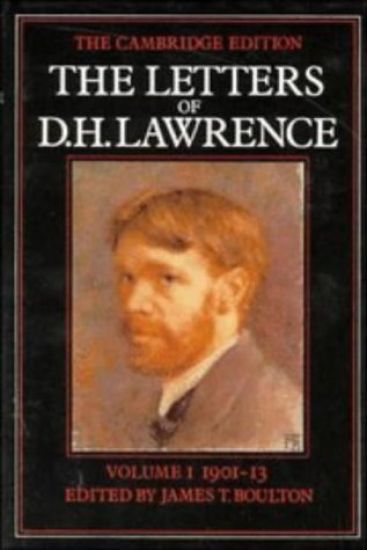
Volume I of the Letters, edited by James T. Boulton, gives the first 580 letters in the series, covering the period September 1901 to May 1913. This is the time of Lawrence’s youth in Eastwood, his first year out of England - in Italy with Frieda - to the publication of Sons and Lovers. There are letters to his early loves, Jessie Chambers, Louie Burrows and Helen Corke. He writes The White Peacock, The Trespasser, Sons and Lovers, the early stories and poems. He is welcomed into the literary world by editors such as Ford and Garnett; he meets Pound and other writers; he reads widely. His mother dies; he grows away from the younger women; he meets Frieda and elopes with her. Professor Boulton’s discreet annotation conceals an enormous labour of patient detection. There are over thirty photographs of his friends and correspondents and a newly discovered portrait miniature of Lawrence.
The Letters of D. H. Lawrence

The Letters of D. H. Lawrence

D. H. Lawrence

Cambridge University Press
2002
pokkari
Volume II of the Letters presents more than 700 letters, covering the period from June 1913 to October 1916, from the enthusiastic reception of Sons and Lovers to the completion of the first manuscript of Women in Love. Lawrence visits England in June 1913 and receives recognition as the author of Sons and Lovers. He returns to Italy in the autumn of 1913 to work on his new novel ‘The Sisters’, which subsequently becomes The Rainbow and Women in Love. Lawrence and Frieda return to England in June 1914 to be married and are caught there by the War. The letters vividly record his reaction to the War. The editors’ introduction considers the initial widening scope of Lawrence’s literary life with his later isolation in Cornwall. Over two hundred letters are previously unpublished and others are printed for the first time in their entirety.
The Letters of D. H. Lawrence

The Letters of D. H. Lawrence

D. H. Lawrence

Cambridge University Press
2002
pokkari
This volume contains 848 letters from the period June 1921 to March 1924. Lawrence decides to leave the old world - 'my heart - and my soul are broken in Europe' - to live in Taos, New Mexico. This period is characterised by the travelling he and Frieda do, from Australia to New York, via Mexico, back to England and finally to New York again. Lawrence's writings of the period reflect his restlessness. The action of Aaron's Rod shifts from a coal-mining town in England to Florence and Kangaroo conveys Lawrence's perceptions of Australia. By 1924, Lawrence is returning to Taos to write his Mexican novel, 'Quetzacoatl', published as The Plumed Serpent. His difficulties with agents and publishers continue to appear in the letters. New correspondences are started with Australians, including Mollie Skinner, the co-author of The Boy in the Bush, and Americans, such as Mabel Luhan, Idella Purnell and Witter Bynner.
The Letters of D. H. Lawrence

The Letters of D. H. Lawrence

D. H. Lawrence

Cambridge University Press
2003
pokkari
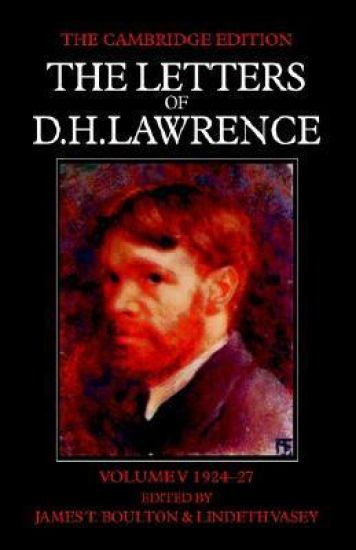
This volume, covering three years from March 1924 to March 1927, comprises over 890 letters, of which about 350 are previously unpublished. In 1924 Lawrence is again in the USA. He and Frieda, with his disciple the Honourable Dorothy Brett, return to Taos, New Mexico where Frieda soon becomes the owner of a ranch, Kiowa. The tensions among them contribute to Lawrence’s falling dangerously ill. He recovers at Kiowa; he and Frieda go to England and Germany in Autumn 1925; they then settle in Italy, where - except for his final visit the next summer to the Midlands - they remain. After leaving the USA he writes short and long stories with European settings, book reviews, and the first two versions of Lady Chatterley’s Lover. It is a productive period, but Lawrence’s health becomes a serious concern. The volume provides annotation identifying persons and allusions, and includes a biographical introduction.
The Letters of D. H. Lawrence

The Letters of D. H. Lawrence

D. H. Lawrence

Cambridge University Press
2002
pokkari
This volume contains Lawrence's letters written between March 1927 and November 1928: almost 770 letters in just a year and nine months. The letters cover the period of Lawrence's Etruscan tour in the spring of 1927 as preparation for the writing of Sketches of Etruscan Places; the performance of his play, David, in London in May, and - above all - the writing, typing, private publication, promotion and immediate consequences of Lady Chatterley's Lover. He makes new acquaintances with writers and publishers in Europe (Max Mohr, Hans Carossa, Harry and Caresse Crosby); renews friendships which will stand him in good stead in times of poor health (the Huxleys, Aldington, the Brewsters); and rediscovers the bonds of family and old Eastwood friends. The volume provides annotation identifying persons and allusions, and includes a biographical introduction, illustrations, a full chronology and index.
The Letters of D. H. Lawrence

The Letters of D. H. Lawrence

D. H. Lawrence

Cambridge University Press
2002
pokkari
This volume contains almost all of the letters D. H. Lawrence wrote in the last fifteen months of his life: 763 letters, the majority previously unpublished. Despite his failing strength, Lawrence was in constant communication with publishers and agents. He continued to write frequently to his sisters and friends. There is no new fiction for Lawrence to discuss, but there are paintings, poems, the major essays Pornography and Obscenity and A Propos of ‘Lady Chatterley’s Lover’, articles, and his last work Apocalypse. The most dramatic episodes of these months were the seizure of the Pansies manuscript, and the police raid on an exhibition of Lawrence’s paintings and the subsequent trial. The subject of his illness becomes ominously more prominent, and Lawrence apologises for letters which lack his customary vitality. The volume includes an introduction, maps, illustrations, chronology and index; full notes identify persons and explain Lawrence’s allusions.
The Letters of D. H. Lawrence

The Letters of D. H. Lawrence

D. H. Lawrence

Cambridge University Press
2002
pokkari
This final volume of The Letters of D. H. Lawrence has a threefold purpose. The first is to publish 148 letters to or from Lawrence, and two from Frieda Lawrence, which came to light too late to be entered in their correct chronological positions in earlier volumes. The second is to correct errors in the first seven volumes and offer additional annotation which clarifies some obscurities as well as enhancing our response to the letters. And the third is to provide a comprehensive critical index to the entire edition. The index includes not only specific persons and places but also general topics from Animals and Architecture to War and Youth, via such subjects as Insects, Literary Agents, Religion and Sexuality. The Cambridge Edition of Lawrence's letters has been described by one reviewer as creating itself 'a major new literary work'. This volume brings that work to a fitting conclusion.
The Letters of D. H. Lawrence 8 Volume Set in 9 Paperback Pieces
The Cambridge Edition of the Letters of D. H. Lawrence contain, in eight volumes, accurate annotated texts of the complete letters of one of the twentieth century's most significant writers. The letters, which span the years from 1901 to 1930 and which concern public and political events of the time, as well as Lawrence's own life and writing, are accompanied by full introductions and explanatory notes, with information on Lawrence and his many correspondents. The volumes are well illustrated and volume 8 contains a General Index to the letters in the edition.
The Letters of D. H. Lawrence: Volume 1, September 1901–May 1913
Volume I of the Letters, edited by James T. Boulton, gives the first 580 letters in the series, covering the period September 1901 to May 1913. This is the time of Lawrence's youth in Eastwood, his first year out of England - in Italy with Frieda - to the publication of Sons and Lovers. There are letters to his early loves, Jessie Chambers, Louie Burrows and Helen Corke. He writes The White Peacock, The Trespasser, Sons and Lovers, the early stories and poems. He is welcomed into the literary world by editors such as Ford and Garnett; he meets Pound and other writers; he reads widely. His mother dies; he grows away from the younger women; he meets Frieda and elopes with her. Professor Boulton's discreet annotation conceals an enormous labour of patient detection. There are over thirty photographs of his friends and correspondents and a newly discovered portrait miniature of Lawrence.
The Letters of D. H. Lawrence: Volume 5, March 1924–March 1927
This volume, covering three years from March 1924 to March 1927, comprises over 890 letters, of which about 350 are previously unpublished. In 1924 Lawrence is again in the USA. He and Frieda, with his disciple the Honourable Dorothy Brett, return to Taos, New Mexico where Frieda soon becomes the owner of a ranch, Kiowa. The tensions among them contribute to Lawrence's falling dangerously ill. He recovers at Kiowa; he and Frieda go to England and Germany in Autumn 1925; they then settle in Italy, where - except for his final visit the next summer to the Midlands - they remain. After leaving the USA he writes short and long stories with European settings, book reviews, and the first two versions of Lady Chatterley's Lover. It is a productive period, but Lawrence's health becomes a serious concern. The volume provides annotation identifying persons and allusions, and includes a biographical introduction.
The Letters of D. H. Lawrence: Volume 8, Previously Unpublished Letters and General Index
This final volume of The Letters of D. H. Lawrence has a threefold purpose. The first is to publish 148 letters to or from Lawrence, and two from Frieda Lawrence, which came to light too late to be entered in their correct chronological positions in earlier volumes. The second is to correct errors in the first seven volumes and offer additional annotation which clarifies some obscurities as well as enhancing our response to the letters. And the third is to provide a comprehensive critical index to the entire edition. The index includes not only specific persons and places but also general topics from Animals and Architecture to War and Youth, via such subjects as Insects, Literary Agents, Religion and Sexuality. The Cambridge Edition of Lawrence’s letters has been described by one reviewer as creating itself ‘a major new literary work’. This volume brings that work to a fitting conclusion.
The Selected Letters of D. H. Lawrence

The Selected Letters of D. H. Lawrence

D. H. Lawrence

Cambridge University Press
1997
sidottu
An authoritative selection of letters by one of the great English letter-writers is here published for the first time in paperback. ‘James T. Boulton, the chief editor of [the] definitive collection [of Lawrence’s letters] has now condensed from it an admirable 500-pages worth of The Selected Letters of D. H. Lawrence. Section by section introductions, summary biographies of correspondents, and illuminating explanatory footnotes equip the reader to follow the contours of Lawrence’s adult life as he progresses from teacher in Croydon to suspected German spy in Cornwall during the Great War, to wanderer in self-imposed exile in Australia, the US and Mexico, and finally consumptive, dying in Provence.’ Jonathan Bate, Sunday Telegraph ‘Five thousand letters cram the eight-volume Cambridge edition of Lawrence’s correspondence. So this selection, representing the full range of Lawrence’s influential acquaintance, is welcome. Angry, combative, scurrilous, the letters are also sometimes uniquely lyrical.’ Independent on Sunday
D. H. Lawrence: Late Essays and Articles

D. H. Lawrence: Late Essays and Articles

D. H. Lawrence

Cambridge University Press
2004
sidottu
In his last years D. H. Lawrence often wrote for newspapers; he needed the money, and clearly enjoyed the work. He also wrote several substantial essays during the same period. This meticulously-edited collection brings together major essays such as Pornography and Obscenity and Lawrence's spirited Introduction to the volume of his Paintings; a group of autobiographical pieces, two of which are published here for the first time; and the articles Lawrence wrote at the invitation of newspaper and magazine editors. There are thirty-nine items in total, thirty-five of them deriving from original manuscripts; all were written between 1926 and Lawrence's death in March 1930. They are ordered chronologically according to the date of composition; each is preceded by an account of the circumstances in which it came to be published. The volume is introduced by a substantial survey of Lawrence's career as a writer responding directly to public interests and concerns.
D. H. Lawrence: Late Essays and Articles

D. H. Lawrence: Late Essays and Articles

D. H. Lawrence

Cambridge University Press
2014
pokkari
In his last years D. H. Lawrence often wrote for newspapers; he needed the money, and clearly enjoyed the work. He also wrote several substantial essays during the same period. This meticulously-edited collection brings together major essays such as Pornography and Obscenity and Lawrence's spirited Introduction to the volume of his Paintings; a group of autobiographical pieces, two of which are published here for the first time; and the articles Lawrence wrote at the invitation of newspaper and magazine editors. There are thirty-nine items in total, thirty-five of them deriving from original manuscripts; all were written between 1926 and Lawrence's death in March 1930. They are ordered chronologically according to the date of composition; each is preceded by an account of the circumstances in which it came to be published. The volume is introduced by a substantial survey of Lawrence's career as a writer responding directly to public interests and concerns.