Kirjojen hintavertailu. Mukana 11 244 527 kirjaa ja 12 kauppaa.

Kirjahaku

Etsi kirjoja tekijän nimen, kirjan nimen tai ISBN:n perusteella.

12 kirjaa tekijältä D.J. Taylor

The New Book of Snobs

The New Book of Snobs

D.J. Taylor

Constable
2017
pokkari
'Hugely enjoyable' AN Wilson, Sunday Times'Thoughtful, entertaining and enjoyable' Michael Gove, Book of the Week, The TimesInspired by William Makepeace Thackeray, the first great analyst of snobbery, and his trail-blazing The Book of Snobs (1848), D. J. Taylor brings us a field guide to the modern snob. Short of calling someone a racist or a paedophile, one of the worst charges you can lay at anybody's door in the early twenty-first century is to suggest that they happen to be a snob. But what constitutes snobbishness? Who are the snobs and where are they to be found? Are you a snob? Am I? What are the distinguishing marks? Snobbery is, in fact, one of the keys to contemporary British life, as vital to the backstreet family on benefits as the proprietor of the grandest stately home, and an essential element of their view of who of they are and what the world might be thought to owe them.The New Book of Snobs will take a marked interest in language, the vocabulary of snobbery - as exemplified in the 'U' and 'Non U' controversy of the 1950s - being a particular field in which the phenomenon consistently makes its presence felt, and alternate social analysis with sketches of groups and individuals on the Thackerayan principle. Prepare to meet the Political Snob, the City Snob, the Technology Snob, the Property Snob, the Rural Snob, the Literary Snob, the Working-class Snob, the Sporting Snob, the Popular Cultural Snob and the Food Snob.
Lost Girls

Lost Girls

D.J. Taylor

Constable
2020
pokkari
A Times Book of the Year 2019'You should not deny yourself the pleasure of reading it' Sunday Times'A remarkable work and an important addition to the extraordinary wartime history of literary London' Literary ReviewWho were the Lost Girls? At least a dozen or so young women at large in Blitz-era London have a claim to this title. But Lost Girls concentrates on just four: Lys Lubbock, Sonia Brownell, Barbara Skelton and Janetta Parlade. Chic, glamorous and bohemian, as likely to be found living in a rat-haunted maisonette as dining at the Ritz, they cut a swathe through English literary and artistic life in the 1940s. Three of them had affairs with Lucian Freud. One of them married George Orwell. Another became the mistress of the King of Egypt and was flogged by him on the steps of the Royal Palace. And all of them were associated with the decade's most celebrated literary magazine, Horizon, and its charismatic editor Cyril Connolly. Lys, Sonia, Barbara and Janetta had very different - and sometimes explosive personalities - but taken together they form a distinctive part of the war-time demographic: bright, beautiful, independent-minded women with tough upbringings behind them determined to make the most of their lives in a highly uncertain environment. Theirs was the world of the buzz bomb, the cocktail party behind blackout curtains, the severed hand seen on the pavement in the Bloomsbury square, the rustle of a telegram falling through the letter-box, the hasty farewell to another half who might not ever come back, a world of living for the moment and snatching at pleasure before it disappeared. But if their trail runs through vast acreages of war-time cultural life then, in the end, it returns to Connolly and his amorous web-spinning, in which all four of them regularly featured and which sometimes complicated their emotional lives to the point of meltdown.The Lost Girls were the product of a highly artificial environment. After it came to an end - on Horizon's closure in 1950 - their careers wound on. Later they would have affairs with dukes, feature in celebrity divorce cases and make appearances in the novels of George Orwell, Evelyn Waugh, Anthony Powell and Nancy Mitford. The last of them - Janetta - died as recently as three months ago. However tiny their number, they are a genuine missing link between the first wave of newly-liberated young women of the post-Great War era and the Dionysiac free-for-all of the 1960s. Hectic, passionate and at times unexpectedly poignant, this is their story.
At the Chime of a City Clock

At the Chime of a City Clock

D.J. Taylor

Corsair
2011
nidottu
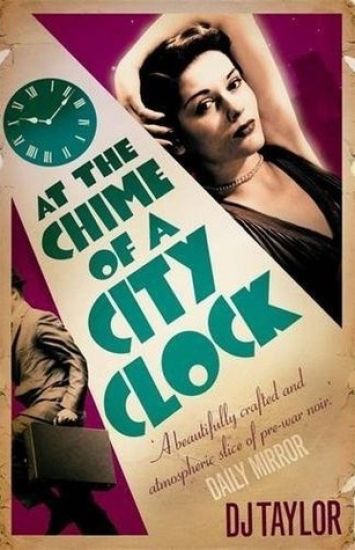
Summer 1931 in seedy Bayswater and James Ross is on his uppers. An aspiring writer whose stories nobody will buy ('It's the slump'), with a landlady harassing him for unpaid rent and occasional sleepless nights spent in the waiting room at King's Cross Station, he is reduced to selling carpet-cleaning lotion door-to-door. His prospects brighten when he meets the glamorous Suzi ('the red hair and the tight jumper weren't a false card: she really was a looker and no mistake'), but their relationship turns out to be a source of increasing bafflement. Who is her boss, the mysterious Mr Rasmussen - whose face bears a startling resemblance to one of the portraits in Police News - and why he so interested in the abandoned premises above the Cornhill jeweller's shop?Worse, mysterious Mr Haversham from West End Central is starting to take an interest in his affairs. With a brief to keep an eye on Schmiegelow, James finds himself staying incognito at a grand Society weekend at a country house in Sussex, where the truth - about Suzi and her devious employer - comes as an unexpected shock. Set against a backdrop of the 1931 financial crisis and the abandonment of the Gold Standard, acted out in shabby bed-sitters and Lyons tea-shops, At the Chime of a City Clock is an authentic slice of Thirties comedy-noir.Praise for Kept: A Victorian Mystery:'Very entertaining and well done, with a sharp appreciation for the details' The Times'An ingenious tale of madness, murder and deception.' The Guardian'A stylish page-turner ... all done with humour and cunning.' Sunday Telegraph
Rock and Roll is Life: Part I

Rock and Roll is Life: Part I

D.J. Taylor

Mensch Publishing
2023
nidottu
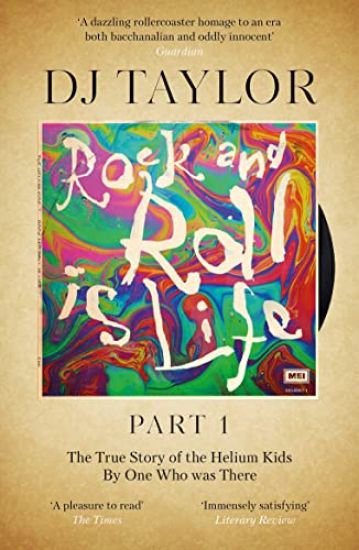
Rock and Roll is Life pays homage to a formative period in music history, at the height of the Helium Kids’ popularity. Three decades after their heyday in the late ‘60s and early ‘70s, the band’s publicist Nick Du Pont looks back on the turbulent trajectory of the supergroup, traversing the bacchanalian excesses and tragedies of a golden age in British music.
Flame Music: Rock and Roll is Life: Part II

Flame Music: Rock and Roll is Life: Part II

D.J. Taylor

Mensch Publishing
2023
nidottu
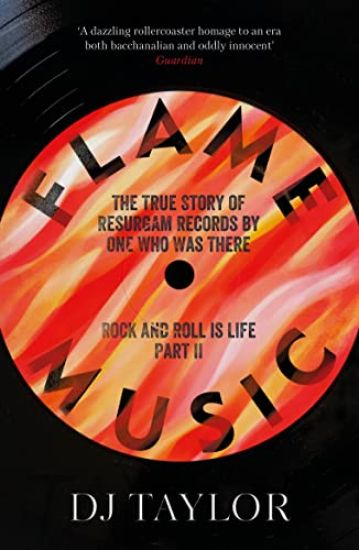
It's 1978 and Nick Du Pont, one-time PR man to Sixties rock behemoths the Helium Kids, is back in London and bent on founding his own record label. A new kind of music - sharp, hard and dangerous - is bursting onto the airwaves on both sides of the Atlantic and Nick wants a slice of the action - in particular, the work of The Flame Throwers, the most provocative assemblage of street-smart desperadoes ever to hail from downtown Los Angeles. Picking up from where the highly-praised Rock and Roll is Life (2018) left off, this is the story of Resurgam Records and the personal traumas and tragedies that attended its coruscating rise - until the time when, as so invariably happens, the dancers shuffle to a halt and the music stops. 'Taylor’s 1,000-watt satire is set half in the real rockbiz,' Philip Norman has observed, and 'half in an imaginary one whose monsters are just as believable - and unbelievable. A near-narcotic treat.