Kirjojen hintavertailu. Mukana 12 016 292 kirjaa ja 12 kauppaa.

Kirjahaku

Etsi kirjoja tekijän nimen, kirjan nimen tai ISBN:n perusteella.

10 kirjaa tekijältä Dabney Stuart

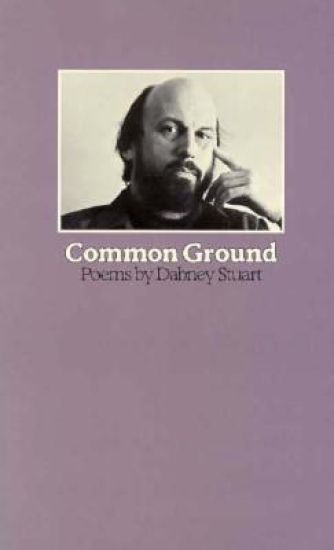
Common Ground

Common Ground

Dabney Stuart

Louisiana State University Press
1982
nidottu
The poems in Dabney Stuart's Common Ground center on a family, the bonds that unite it and the forces that break it apart. Taking as their subject friendship, air travel, men's room graffiti, conversation, the American West, the circus, and other polite topics, these poems nonetheless return again and again, often hauntingly, to the family, to childhood, to fathers and sons, to divorce.In ""Turnings,"" a father paces the halls of his home, long after his children and wife are asleep:In the years of his growing loss he would walk Through the rooms of the house after midnight, The ice tinkling in a glass of bourbon Accompanying him. Each door he passed Through seemed to yawn him in, the quiet bodies Of his sons unrecognizable in their dark beds. ................................................................................When he looked down at his wife's body in another room The night itself seemed to yawn, so he went out into it, Stood at the edge of the wide yard he'd tended for ten years, Discovered the next largest darkness of all. You are eating me alive, woman, he said softly, Hearing himself.The poems in this volume are affecting, honest attempts of the poet to find common ground with his reader; to express emotion, yearning, and confusion in a way that is readily accessible and true.
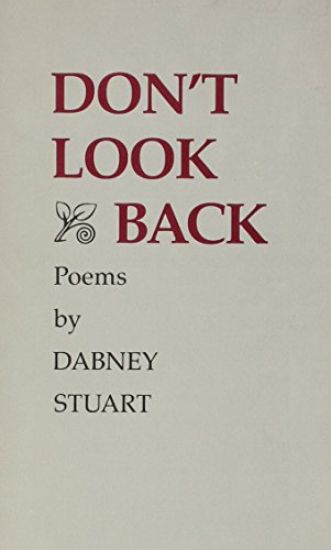
Don't Look Back

Don't Look Back

Dabney Stuart

Louisiana State University Press
1987
nidottu
In Don't Look Back, Dabney Stuart recalls central people and emotions from his past and integrates them into a search for personal wholeness in the present. He honors a network of family members, calling up the richness of their lives and making room for them in his. There is his aloof and coldly majestic grandmother, a salty, aged grandfather, variations on a dream girl, and images of a mother, wives, father, sons, and an elusive brother. Undergirding these poems is an implied chronology of psychological growth: from floating prenatal consciousness, through adolescent jealousy and repression, to adult acceptance and grief.Although the autobiographical aspect of Stuart's poems anchors them in a drama of generations, it also serves as a springboard into thoughtful and profound searchings. In the five-part poem, ""The Birds,"" the poet ponders the flow of events in life and the intangible forces that influence that flow. The birds of the title represent, and are somehow intimate with, these forces. Although not inclined to divulge them, the birds have answers to human question about pain, loss and regeneration.In such a time, in April, you could almost imagine a child standing under the pines, shadowed. He could lift his hand to them and open it, releasing among their needles an affable light, a flying instant which might nest in them, a birthday covenant of impossible flightThe poems in Don't Look Back are ambitious, complex meditation rendered with grace and clarity.
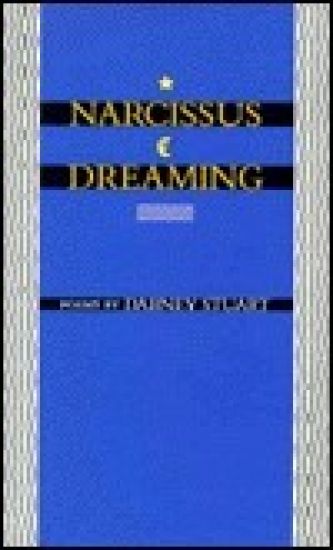
Narcissus Dreaming

Narcissus Dreaming

Dabney Stuart

Louisiana State University Press
1990
nidottu
The four sections of Dabney Stuart's new book represent a progression toward release from self-preoccupation, both personal and cultural, and a growing intimation of acceptance of the world outside the self. Using language with elasticity and elegance, Stuart is engaged in serious play, usually on more than one level.His familiar wit and subtlety arise in a context of good humor and sadness, warmth and reserve. His subject are a deft blend of pop culture (baseball, the movies), family situations, and legends, some old (Hansel and Gretel), some invented (""The Harpist's Dream""). His is by turns straightforward and surreal. In fact, Stuart's skillful rendering of dream sequenced is one of the appealing dimension of this work.Stuart is concerned as well with awakenings and with transitions, sometimes intensified into transformations. In ""Love Story,"" for example, a physical injury becomes the way to talk of psychic development; after a dizzying performance by an unusual broken leg, the poem concludes,Relax said middle age when I woke up, Dreams are for those who never heal. We healed.The title poem is a fresh appearance of Narcissus, not a mere reworking of the legend, but an opening out of the present world through the possibilities of the old myth. At the close of the poem, Narcissus, who has been fishing without luck, pulls his reflection from the water:He lower sit into the boat, takes it upon himself, drenched, obscene, a perfectly imperfect fit, leaving the water imageless, opaque, other.Narcissus Dreaming is the work of a mature, accomplished artist, sensitive to psychological nuance and complexity.
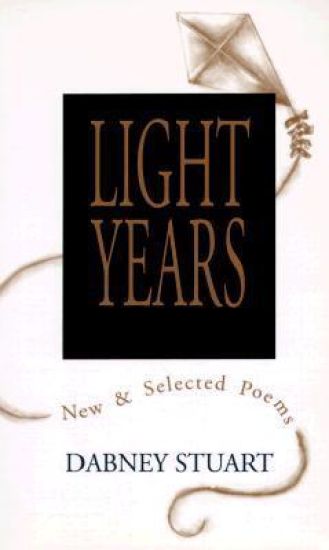
Light Years

Light Years

Dabney Stuart

Louisiana State University Press
1994
nidottu
Dabney Stuart's subject over the last thirty years are as disparate as the forms he chooses for them. His range includes baseball (and other games), geography, the movies, history, sideshows, domestic life, a world, in short, that is rich and various.Amid this exploration, Stuart has sustained certain concerns. The evasive and unsettling nature of family relationships threads consistently through the poems collected in Light Years; the poet uncovers deepening emotional and psychological complexities. There are celebrations of his children, his own sonship, his grandparents and grandchildren. Through it all as he says in ""The Opposite Field,"" the haunting image / of [a] possible life / watches from a distance.""Stuart rings evocative changes on recurrent image patterns, too. Birds are central to his work, for instance, and sing often; water flows frequently; music sounds in places as apparently incongruous as a row of cornstalks. Dreams, and dreaming, inform many poems, their precision of detail becoming part of the sharply observed physical world Stuart renders.Whatever else he is up to, Stuart always seeks the play in language, a source of delight and solace even in the most unlikely context. Indeed, as he writes in ""Coming To,""When he listens to his words play back, they shimmer oddly, on edge, a stranger talking, as if they have gone through something he has no other knowledge of and brought it back: his life.
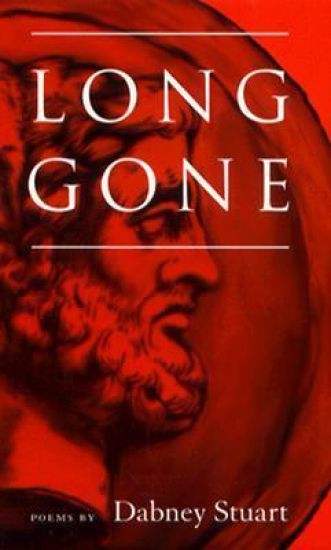
Long Gone

Long Gone

Dabney Stuart

Louisiana State University Press
1996
nidottu
From its haunted opening to the complex affirmation of its final lines, this profound collection by Dabney Stuart presents a palimpsest of the spirit in the modern age. With jagged syncopations, lyrical stop-time, and a kind of elegiac swing, these poems spiral through multiple dimensions of time, memory, and emotion, from post-World War II America to the South Pacific-evoking perspectives of the psyche as brooding and cryptic as the Antarctic.Long Gone nimbly weaves carnal and familial love, the search for lost innocence, and the epistemology of memory into moments of hallucinatory focus where insight comes, and goes, like light on water. In ""Double Exposures"" a photograph of a child and grandmother reveals the slowly accreting carapace of history, memory, and habit, that cast of ourselves, that might seal us off from the purity of our beginnings.Yet for this speaker even to guess at that unnameable beginning is in itself an illumination, one that leads to an instant of faith in the progress of our spirits and their ultimate ""implausible flight."" Long Gone is a troubling, spellbinding collection by a poet at the height of his powers; in it, readers encountering Dabney Stuart for the first time as well as those familiar with his other books of poetry and fiction will find cause to celebrate.
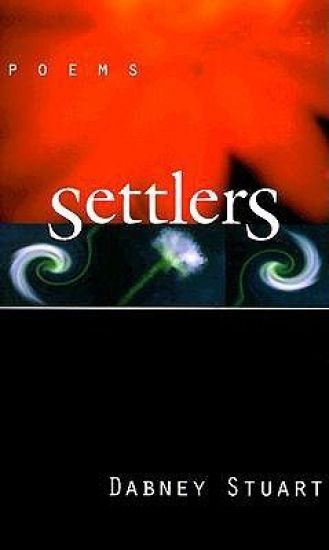
Settlers

Settlers

Dabney Stuart

Louisiana State University Press
1999
nidottu
Settlers, Dabney Stuart's thirteenth collection of poems, is a passionate and innovative commentary on exploration and discovery. As the title suggests, the major themes of this work include beginnings in disparate but related areas- the historical, physical, geologic, familial, and psychological. Stuart embeds these rather large considerations in details ranging from tectonic plates and glaciers to the pterodactyl and the observations of a grasshopper. Family ancestors appear as well as writers from earlier centuries. In the effective The Tapawera Raspberry Festival, Stuart deftly combines predation, ritual celebration, competition, and joy in a festival set on the South Island of New Zealand.Settlers' theological implications become explicit in the final section, through the title poem, and more extensively in the long section entitled ""God."" In this thoughtful sequence, Stuart struggles to understand God's mystifying absence and presence. Simultaneously bewildered, curious, distressed, and delighted, these profoundly reflective poems achieve an understanding of God as ""a name for everything timethriving."" Stuart's love of language and playfulness as well as his affection for his subjects and their mysteries are part of the fabric of these poems. The affirmation of life in all its rich and various inception shines through every line of this exceptional work.
The Man Who Loves Cezanne

The Man Who Loves Cezanne

Dabney Stuart

Louisiana State University Press
2003
nidottu
The Man Who Loves Cézanne, a quiet but authoritative new collection from Dabney Stuart, blends an assortment of landscapes, themes, forms, and tones. The poems vary in subject- World War II, browsing library stacks, a family reunion, sky diving, a visit to a museum, and cancer, among other topics- and unfold to suggest a gradual acceptance of the unavoidable vicissitudes, frictions, and griefs of human life. With allusions to writers ranging from Shakespeare to Jung, and settings such as the southwestern desert of the United States, the volume reflects an overarching concern for art, both poetic and visual, and the untoward, difficult commitment of the life of the artist. The Man Who Loves Cézanne is a delicate mingling of traditional and more open forms, creating a tension that is always attractive and often powerfully moving.
Family Preserve

Family Preserve

Dabney Stuart

University of Virginia Press
2005
nidottu
Exhibiting the mastery of poetic line and sharpness of focus we have come to associate with Dabney Stuart's work, this volume, Stuart's fifteenth, weaves a series of finely delineated portraits into a complicated fabric of relationship. Family Preserve gathers the family poems scattered throughout Stuart's books over the past four decades and intersperses them with new and previously unpublished poems. By turns comic and tragic, this collection engages the reader in the complex process of longing, mourning, and preserving family ties. Beginning with what would seem the end, the collection's introductory poem, ""The Long Good-bye,"" sets the stage for the volume, inviting the reader to accompany the speaker as he confronts the entanglement of his memories. The poems that follow offer intimate glimpses into the often tricky relationships among parents, siblings, and children. The volume ends in the union of once discordant voices: the speaker with the memory of his father, the speaker's younger self with his older self, and time with timelessness; yet it is the recognition of the often elusive process of remembering that makes Stuart's poetry so powerful. A compelling look at familial relationships and the function of memory, Family Preserve is a significant milestone in Dabney Stuart's long and distinguished poetic career, and an important addition to the elegy, open form, and ode.