Kirjojen hintavertailu. Mukana 11 342 296 kirjaa ja 12 kauppaa.

Kirjahaku

Etsi kirjoja tekijän nimen, kirjan nimen tai ISBN:n perusteella.

3 kirjaa tekijältä Dagmar Wernitznig

Going Native or Going Naive?

Going Native or Going Naive?

Dagmar Wernitznig

University Press of America
2003
nidottu
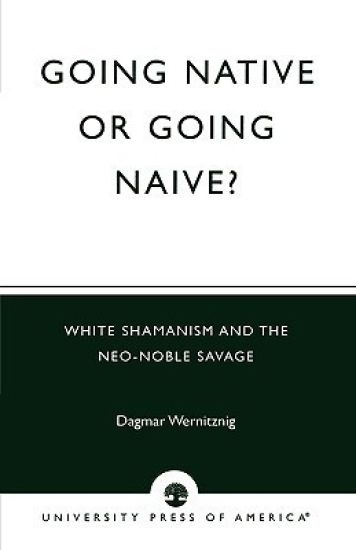
Going Native or Going Naïve? is a critical analysis of an esoteric-Indian movement, called white shamanism. This movement, originating from the 1980's New Age boom, redefines the phenomenon of playing Indian. For white shamans and their followers, Indianness turns into a signifier for cultural cloning. By generating a neo-primitivistic bias, white shamanism utilizes esoteric reconceptualizations of ethnicity and identity. In Going Native or Going Naïve?, a retrospective view on psychohistorical and sociopolitical implications of Indianness and (ig)noble savage metaphors should clarify the prefix neo within postmodern adaptations of primitivism. The appropriation of an Indian simulacrum by white shamans as well as white shamanic disciplines connotes a subtle, yet hazardous form of ethnocentrism. Transcending mere market trends and profit margins, white shamanism epitomizes synthetic/cybernetic acculturations. Through investigating the white shamanic matrix, Going Native or Going Naïve? is intended to make these synthesizing processes more transparent.
Europe's Indians, Indians in Europe

Europe's Indians, Indians in Europe

Dagmar Wernitznig

University Press of America
2007
sidottu
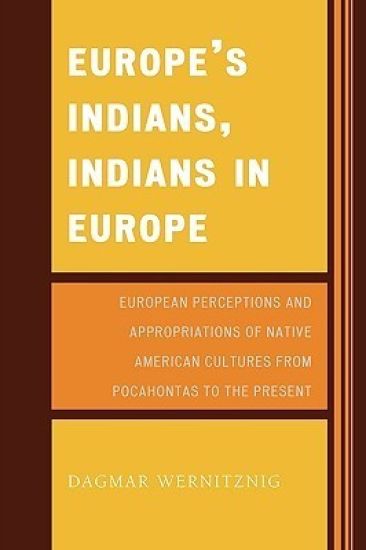
Europe's Indians, Indians in Europe is an accessible and multidisciplinary synopsis of European iconographies and cultural narratives related to Native Americans. In this pioneering work, European fascination with and phantasmagorias of 'Indianness' are comprehensively discussed, involving perspectives of history, literature, and cultural criticism. Topics range from so-called Pocahontas, paraded as an exotic souvenir princess in front of seventeenth-century Londoners, to Native Americans touring Europe as show token Indians with Buffalo Bill's Wild West show in the late nineteenth-century. European strategies of playing Indian include German dime novel artisan Karl May (1842–1912) and his literary fabrications of the 'vanishing race,' which were utilized by National Socialist propaganda, as well as the Englishman Archibald Stansfeld Belaney (1888-1938) reinventing himself as Grey Owl, or contemporary Europeans, 'cloning' surrogate Indian identities and 'patenting' synthetic tribes. Covering a vast transatlantic spectrum of aspects and anecdotes, Europe's Indians, Indians in Europe is a seminal study for anyone interested in learning more about European motives, mythopoetics, and microcosms of 'dressing in feathers.'
Europe's Indians, Indians in Europe

Europe's Indians, Indians in Europe

Dagmar Wernitznig

University Press of America
2007
nidottu
Europe's Indians, Indians in Europe is an accessible and multidisciplinary synopsis of European iconographies and cultural narratives related to Native Americans. In this pioneering work, European fascination with and phantasmagorias of 'Indianness' are comprehensively discussed, involving perspectives of history, literature, and cultural criticism. Topics range from so-called Pocahontas, paraded as an exotic souvenir princess in front of seventeenth-century Londoners, to Native Americans touring Europe as show token Indians with Buffalo Bill's Wild West show in the late nineteenth-century. European strategies of playing Indian include German dime novel artisan Karl May (1842D1912) and his literary fabrications of the 'vanishing race,' which were utilized by National Socialist propaganda, as well as the Englishman Archibald Stansfeld Belaney (1888-1938) reinventing himself as Grey Owl, or contemporary Europeans, 'cloning' surrogate Indian identities and 'patenting' synthetic tribes. Covering a vast transatlantic spectrum of aspects and anecdotes, Europe's Indians, Indians in Europe is a seminal study for anyone interested in learning more about European motives, mythopoetics, and microcosms of 'dressing in feathers.'