Kirjojen hintavertailu. Mukana 11 583 311 kirjaa ja 12 kauppaa.

Kirjahaku

Etsi kirjoja tekijän nimen, kirjan nimen tai ISBN:n perusteella.

2 kirjaa tekijältä Dale W. Jorgenson

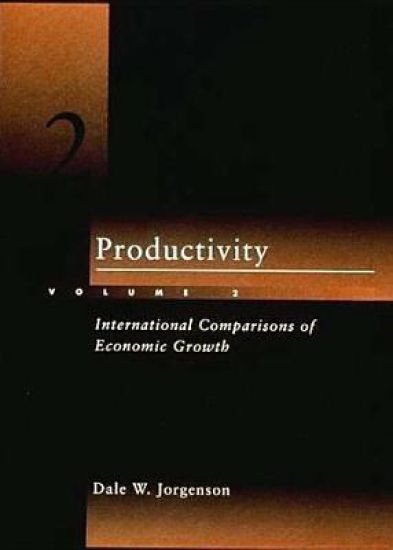
Productivity

Productivity

Dale W. Jorgenson

MIT Press
1995
pokkari
These two volumes present empirical studies that have permanently altered professional debates over investment and productivity as sources of postwar economic growth in industrialized countries. The distinctive feature of investment is that returns can be internalized by the investor. The most straightforward application of this idea is to investments that create property rights, but these volumes broaden the meaning of capital formation to include investments in education and training.International Comparisons of Economic Growth focuses on comparisons among industrialized countries. Although Germany and Japan are often portrayed as economic adversaries of the U.S., postwar experiences in all three countries support policies that give high priority to stimulating and rewarding capital formation. In the Asian model of growth exemplified by Japan investments in tangible assets and human capital are especially critical during periods of rapid growth.
Growth

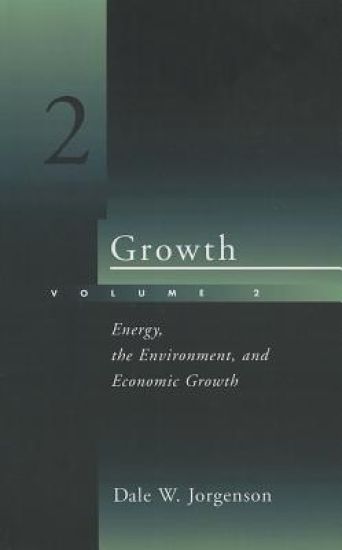
Growth

Dale W. Jorgenson

MIT Press
1998
pokkari
Volume 1: Econometric General Equilibrium Modeling presents an econometric approach to general equilibrium modeling of the impact of economic policies. Earlier approaches were based on the "calibration" of general equilibrium models to a single data point. The obvious disadvantage of calibration is that it requires highly restrictive assumptions about technology and preferences, such as fixed input-output coefficients. These assumptions are contradicted by the massive evidence of energy conservation in response to higher world energy prices, beginning in 1973. The econometric approach to general equilibrium modeling successfully freed economic policy analysis from the straitjacket imposed by calibration.As a consequence of changes in energy prices and new environmental policies, a wealth of historical experience has accumulated over the past two decades. Interpreted within the framework of the neoclassical theory of economic growth, this experience provides essential guidelines for future policy formation. Volume 2: Energy, the Environment, and Economic Growth presents a new econometric general equilibrium model of the United States that captures the dynamic mechanisms underlying growth trends and responses to energy and environmental policies. Jorgenson uses the model to analyze the impacts of environmental regulations on US economic growth and tax policies for controlling US emissions of carbon dioxide.