Kirjojen hintavertailu. Mukana 11 717 486 kirjaa ja 12 kauppaa.

Kirjahaku

Etsi kirjoja tekijän nimen, kirjan nimen tai ISBN:n perusteella.

17 kirjaa tekijältä Damien Broderick

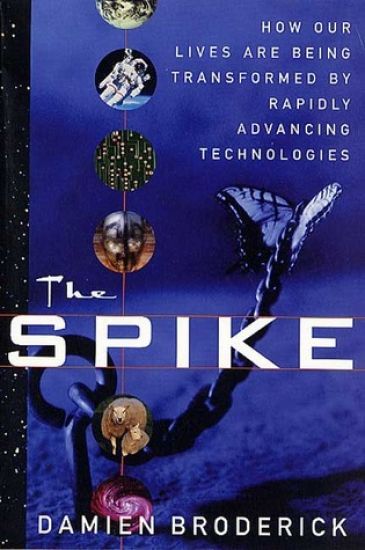
The Spike

The Spike

Damien Broderick

Forge
2002
nidottu
The rate at which technology is changing our world-not just on a global level like space travel and instant worldwide communications but on the level of what we choose to wear, where we live, and what we eat-is staggeringly fast and getting faster all the time. The rate of change has become so fast that a concept that started off sounding like science fiction has become a widely expected outcome in the near future-a singularity referred to as the Spike. At that point of singularity, the cumulative changes on all fronts will affect the existence of humanity as a species and cause a leap of evolution into a new state of being.On the other side of that divide, intelligence will be freed from the constraints of the flesh; machines will achieve a level of intelligence in excess of our own and boundless in its ultimate potential; engineering will take place at the level of molecular reconstruction, which will allow everything from food to building materials to be assembled as needed from microscopic components rather than grown or manufactured; we'll all become effectively immortal by either digitizing and uploading our minds into organic machines or by transforming our bodies into illness-free, undecaying exemplars of permanent health and vitality.The results of all these changes will be unimaginable social dislocation, a complete restructuring of human society, and a great leap forward into a dazzlingly transcendent future that even science fiction writers have been too timid to imagine.
Transrealist Fiction

Transrealist Fiction

Damien Broderick

Praeger Publishers Inc
2000
sidottu
Transrealist writing treats immediate perceptions in a fantastic way, according to science fiction writer and mathematician Rudy Rucker, who originated the term. In the expanded sense argued in this book, it also intensifies imaginative fiction by writing the fantastic from the standpoint of richly personalized experience. Transrealism is also related to slipstream writing, another category introduced into studies of speculative fiction to account for texts that seem to follow trajectories mapped by the huge body of science fiction accumulated in the last century, while retaining a central interest in traditional literary strategies.This book examines a variety of work from the transrealist perspective, something that has not been done previously. It emphasizes the texts of Philip K. Dick and Rucker himself, while it additionally engages the texts of such slipstream writers as Kurt Vonnegut, J.G. Ballard, and John Barth. It places its argument against the antihumanist trend in science fiction and builds comparisons with more traditional varieties of science fiction works.
Reading by Starlight

Reading by Starlight

Damien Broderick

Routledge
1994
sidottu
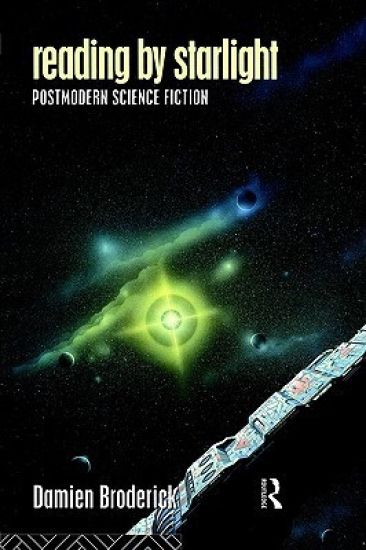
Reading by Starlight explores the characteristics in the writing, marketing and reception of science fiction which distinguish it as a genre.Damien Broderick explores the postmodern self-referentiality of the sci-fi narrative, its intricate coded language and discursive `encyclopaedia'. He shows how, for perfect understanding, sci-fi readers must learn the codes of these imaginary worlds and vocabularies, all the time picking up references to texts by other writers.Reading by Starlight includes close readings of paradigmatic cyberpunk texts and writings by SF novelists and theorists including Isaac Asimov, Arthur C. Clarke, Brian Aldiss, Patrick Parrinder, Kim Stanley Robinson, John Varley, Roger Zelazny, William Gibson, Fredric Jameson and Samuel R. Delaney.
Reading by Starlight

Reading by Starlight

Damien Broderick

Routledge
1994
nidottu
Reading by Starlight explores the characteristics in the writing, marketing and reception of science fiction which distinguish it as a genre.Damien Broderick explores the postmodern self-referentiality of the sci-fi narrative, its intricate coded language and discursive `encyclopaedia'. He shows how, for perfect understanding, sci-fi readers must learn the codes of these imaginary worlds and vocabularies, all the time picking up references to texts by other writers.Reading by Starlight includes close readings of paradigmatic cyberpunk texts and writings by SF novelists and theorists including Isaac Asimov, Arthur C. Clarke, Brian Aldiss, Patrick Parrinder, Kim Stanley Robinson, John Varley, Roger Zelazny, William Gibson, Fredric Jameson and Samuel R. Delaney.
X,Y,Z,T

X,Y,Z,T

Damien Broderick

Wildside Press
2004
pokkari
Damien Broderick has had a major impact as an Australian SF writer since 1964. He is undoubtedly the leading Australian theorist of the SF genre' (Russell Blackford, Van Ikin, Sean McMullen, Strange Constellations). Now, Broderick draws upon his skills as both critic and novelist to analyze science fiction of the last two decades, and its earlier roots. The book proposes sf as a distinctive form of writing, the extreme narrative of difference, then closely reads authors such as John Barnes, Jamil Nasir, Wil McCarthy, Robert Grossbach and Poul Anderson. While concentrating on exciting work published in the USA and Britain, Broderick does not neglect his own country's contributions, discussing sf by George Turner and other Australians. His critical voice is wry, entertaining and occasionally scathing.
X, Y, Z, T

X, Y, Z, T

Damien Broderick

Borgo Press
2004
sidottu
Damien Broderick has had a major impact as an Australian SF writer since 1964. He is undoubtedly the leading Australian theorist of the SF genre' (Russell Blackford, Van Ikin, Sean McMullen, Strange Constellations). Now, Broderick draws upon his skills as both critic and novelist to analyze science fiction of the last two decades, and its earlier roots. The book proposes sf as a distinctive form of writing, the extreme narrative of difference, then closely reads authors such as John Barnes, Jamil Nasir, Wil McCarthy, Robert Grossbach and Poul Anderson. While concentrating on exciting work published in the USA and Britain, Broderick does not neglect his own country's contributions, discussing sf by George Turner and other Australians. His critical voice is wry, entertaining and occasionally scathing.
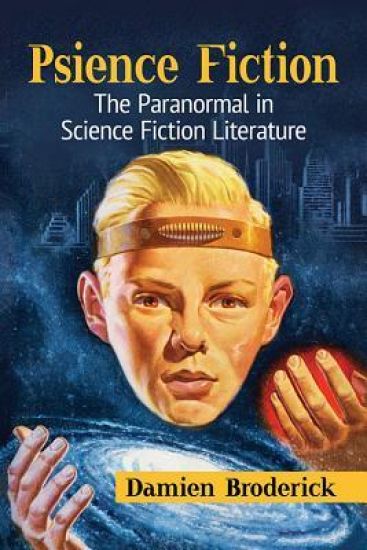
Psience Fiction

Psience Fiction

Damien Broderick

McFarland Co Inc
2018
pokkari
Science fiction has often been considered the literature of futuristic technology: fantastic warfare among the stars or ruinous apocalypses on Earth. The last century, however, saw, through John W. Campbell, the introduction of "psience fiction," which explores such themes of mental powers as telepathy, precognition of the future, teleportation, etc.--and symbolic machines that react to such forces. The author surveys this long-ignored literary shift through a series of influential novels and short stories published between the 1930s and the present. This discussion is framed by the sudden surge of interest in parapsychology and its absorption not only into the SF genre, but also into the real world through military experiments such as the Star Gate Program.
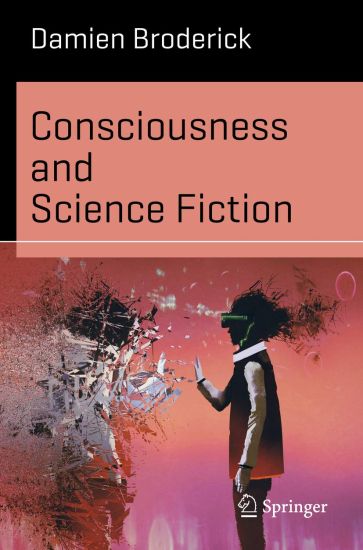
Consciousness and Science Fiction

Consciousness and Science Fiction

Damien Broderick

Springer Nature Switzerland AG
2018
nidottu
Science fiction explores the wonderful, baffling and wildly entertaining aspects of a universe unimaginably old and vast, and with a future even more immense. It reaches into that endless cosmos with the tools of rational investigation and storytelling. At the core of both science and science fiction is the engaged human mind--a consciousness that sees and feels and thinks and loves. But what is this mind, this aware and self-aware consciousness that seems unlike anything else we experience? What makes consciousness the Hard Problem of philosophy, still unsolved after millennia of probing? This book looks into the heart of this mystery - at the science and philosophy of consciousness and at many inspiring fictional examples - and finds strange, challenging answers.The book's content and entertaining style will appeal equally to science fiction enthusiasts and scholars, including cognitive and neuroscientists, as well as philosophers of mind. It is a refreshing romp through the science and science fiction of consciousness.
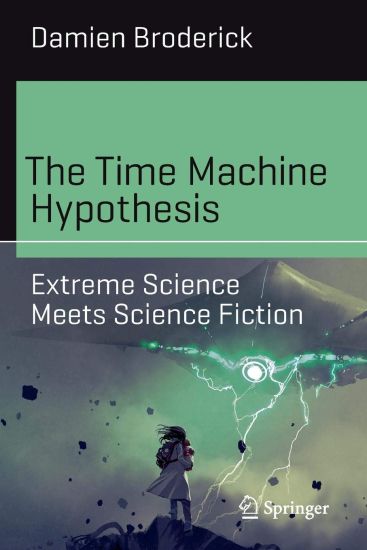
The Time Machine Hypothesis

The Time Machine Hypothesis

Damien Broderick

Springer Nature Switzerland AG
2019
nidottu
Every age has characteristic inventions that change the world. In the 19th century it was the steam engine and the train. For the 20th, electric and gasoline power, aircraft, nuclear weapons, even ventures into space. Today, the planet is awash with electronic business, chatter and virtual-reality entertainment so brilliant that the division between real and simulated is hard to discern. But one new idea from the 19th century has failed, so far, to enter reality—time travel, using machines to turn the time dimension into a two-way highway. Will it come true, as foreseen in science fiction? Might we expect visits to and from the future, sooner than from space? That is the Time Machine Hypothesis, examined here by futurist Damien Broderick, an award-winning writer and theorist of the genre of the future. Broderick homes in on the topic through the lens of science as well as fiction, exploring some fifty different time-travel scenarios and conundrums found in the science fiction literature and film.