Kirjojen hintavertailu. Mukana 11 244 527 kirjaa ja 12 kauppaa.

Kirjahaku

Etsi kirjoja tekijän nimen, kirjan nimen tai ISBN:n perusteella.

12 kirjaa tekijältä Dan Callahan

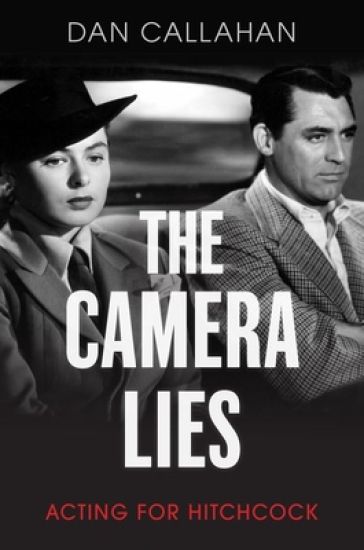
The Camera Lies

The Camera Lies

Dan Callahan

Oxford University Press Inc
2020
sidottu
Alfred Hitchcock is said to have once remarked, "Actors are cattle," a line that has stuck in the public consciousness ever since. For Hitchcock, acting was a matter of contrast and counterpoint, valuing subtlety and understatement over flashiness. He felt that the camera was duplicitous, and directed actors to look and act conversely. In The Camera Lies, author Dan Callahan spotlights the many nuances of Hitchcock's direction throughout his career, from Cary Grant in Notorious (1946) to Janet Leigh in Psycho (1960). Delving further, he examines the ways that sex and sexuality are presented through Hitchcock's characters, reflecting the director's own complex relationship with sexuality. Detailing the fluidity of acting - both what it means to act on film and how the process varies in each actor's career - Callahan examines the spectrum of treatment and direction Hitchcock provided well- and lesser-known actors alike, including Ingrid Bergman, Henry Kendall, Joan Barry, Robert Walker, Jessica Tandy, Kim Novak, and Tippi Hedren. As Hitchcock believed, the best actor was one who could "do nothing well" - but behind an outward indifference to his players was a sophisticated acting theorist who often drew out great performances. The Camera Lies unpacks Hitchcock's legacy both as a director who continuously taught audiences to distrust appearance, and as a man with an uncanny insight into the human capacity for deceit and misinterpretation.
The Art of American Screen Acting, 1912-1960
Some people claim that audiences go to the movies for the genre. Others say they go for the director. But most really go to see their favorite actors and actresses. This book explores the work of many of classic Hollywood's influential stars, such as James Cagney, Bette Davis, Cary Grant and Katharine Hepburn. These so-called "pre-Brando" entertainers, often dismissed as old fashioned, were part of an explosion of talent that ran from the late 1920s through the early 1950s. The author analyzes their compelling styles and their ability to capture audiences.
The Art of American Screen Acting, 1960 to Today
Modern screen acting in English is dominated by two key figures: Method acting guru Lee Strasberg--who taught the "the art of experiencing" over "the art of representing"--and English theater titan Laurence Olivier, who once said of the Method's immersive approach, "try acting, it's so much easier." This book explores in detail the work of such method actors as Al Pacino, Ellen Burstyn, Jack Nicholson and Jane Fonda, and charts the shift away from the more internally focused Strasberg-based acting of the 1970s, and towards the more "external" way of working, exemplified by the career of Meryl Streep in the 1980s.
Barbara Stanwyck

Barbara Stanwyck

Dan Callahan

UNIVERSITY PRESS OF MISSISSIPPI
2023
pokkari
Barbara Stanwyck (1907–1990) rose from the ranks of chorus girl to become one of Hollywood's most talented leading women—and America's highest-paid woman in the mid-1940s. Shuttled among foster homes as a child, she took a number of low-wage jobs while she determinedly made the connections that landed her in successful Broadway productions. Stanwyck then acted in a stream of high-quality films from the 1930s through the 1950s. Directors such as Cecil B. DeMille, Fritz Lang, and Frank Capra treasured her particular magic. A four-time Academy Award nominee, winner of three Emmys and a Golden Globe, she was honored with a Lifetime Achievement Award by the Academy. Dan Callahan considers both Stanwyck's life and her art, exploring her seminal collaborations with Capra in such great films as Ladies of Leisure, The Miracle Woman, and The Bitter Tea of General Yen; her Pre-Code movies Night Nurse and Baby Face; and her classic roles in Stella Dallas, Remember the Night, The Lady Eve, and Double Indemnity. After making more than eighty films in Hollywood, she revived her career by turning to television, where her role in the 1960s series The Big Valley renewed her immense popularity. Callahan examines Stanwyck's career in relation to the directors she worked with and the genres she worked in, leading up to her late-career triumphs in two films directed by Douglas Sirk, All I Desire and There's Always Tomorrow, and two outrageous westerns, The Furies and Forty Guns. The book positions Stanwyck where she belongs—at the very top of her profession—and offers a close, sympathetic reading of her performances in all their range and complexity.
Barbara Stanwyck

Barbara Stanwyck

Dan Callahan

University Press of Mississippi
2012
sidottu
Barbara Stanwyck (1907-1990) rose from the ranks of chorus girl to become one of Hollywood's most talented leading women-and America's highest paid woman in the mid-1940s. Shuttled among foster homes as a child, she took a number of low-wage jobs while she determinedly made the connections that landed her in successful Broadway productions. Stanwyck then acted in a stream of high-quality films from the 1930s through the 1950s. Directors such as Cecil B. DeMille, Fritz Lang, and Frank Capra treasured her particular magic. A four-time Academy Award nominee, winner of three Emmys and a Golden Globe, she was honored with a Lifetime Achievement Award by the Academy.Dan Callahan considers both Stanwyck's life and her art, exploring her seminal collaborations with Capra in such great films as Ladies of Leisure, The Miracle Woman, and The Bitter Tea of General Yen; her Pre-Code movies Night Nurse and Baby Face; and her classic roles in Stella Dallas, Remember the Night, The Lady Eve, and Double Indemnity. After making more than eighty films in Hollywood, she revived her career by turning to television, where her role in the 1960s series The Big Valley renewed her immense popularity.Callahan examines Stanwyck's career in relation to the directors she worked with and the genres she worked in, leading up to her late-career triumphs in two films directed by Douglas Sirk, All I Desire and There's Always Tomorrow, and two outrageous westerns, The Furies and Forty Guns. The book positions Stanwyck where she belongs-at the very top of her profession-and offers a close, sympathetic reading of her performances in all their range and complexity.
Bing and Billie and Frank and Ella and Judy and Barbra
Crosby, Holiday, Sinatra, Fitzgerald, Garland, and Streisand were the major interpreters of the American songbook, and this is the interlocking story of their lives and careers.Here is the epic tale of how these artists dominated American popular music over a fifty-year period, colourfully described like a roller coaster ride that gains momentum through the 1930s and ’40s, reaches a crest of magical creativity in the 1950s and early 1960s, and then crashes down by the early 1970s, a half century when the great American songbook dominated the airwaves and the fight for racial equality came to the forefront.Frank is still the king of the songbook, but Bing’s legacy is just as vital once you start listening to his unprecedented 1930s output. The legend of Billie grows by the year, and the basis of this should be appreciation and wonder for her own great artistry in the 1930s. Barbra is a living legend and still a commercial force to be reckoned with, the last exemplar of the songbook and its glories. All six of these singers reach out to us and show us new ways of expression and new ways to dream. Their song is largely ended but the melody lingers on.
That Was Something

That Was Something

Dan Callahan

Squares Rebels
2018
pokkari
Bobby Quinn has been haunted by two enigmatic people for most of his adult life: Ben Morrissey, a sexy Don Juan who becomes a famous photographer in late 1990s Manhattan, and Monika Lilac, a beautiful cinephile femme fatale who is consumed by her love for silent-era films. This is a story about romantic obsession and cinematic obsessiveness, and a portrait of young people falling in love and trying to make their mark before the party is over."That Was Something--a profound, delicate, emotionally involving novel--gripped my attention by accurately evoking certain lost moments in queer urban life. I admire the book's taut structure and tenderly direct diction: The Great Gatsby on poppers. In high-contrast, horny chiaroscuro, without clutter, Callahan documents the chemical reaction that occurs when gayness and bi-curiosity greet each other in the dark room." --Wayne Koestenbaum, author of The Queen's Throat and Jackie Under My Skin"Known for his superb books about the art of acting, Dan Callahan brings all his piercing insight to the tale of Robert, who yearns for photographer Ben Morrissey, who in turn has a yen for Monika Lilac--sometime blogger, silent-film devotee, and mistress of self-dramatization. That Was Something itself takes on the wild comedy and vivid emotions of a silent movie, as the characters swirl through the bars and parties and screening rooms of Manhattan 20 years ago, a world of artists and others obsessed with 'the important things: Love, Death, Love again.'" --Farran Smith Nehme, author of Missing ReelsDan Callahan is the author of three books. This is his first novel.