Have you ever wondered what Adam really said to Eve? Or what God said to Job? Learning Hebrew can be easy - and fun. This book shows you how to master the essentials of the language in clear, simple steps - starting right from scratch with the Hebrew alphabet on how to read passages from the Bible itself. There are simple exercises (including answers), a word list, and plenty of examples throughout. Whether you are studying in a group or by yourself, this book will make the words of the Bible come alive in a way you never imagined before. 'For learning Hebrew, the best way is to have an expert by your side. Here is the next best thing - Hebrew without such an aid and without tears! I commend the book warmly.' Lord Coggan (formerly Archbishop of Canterbury).
Aiming to provide a concise account of the Hebrew Bible, this text gives a brief account of the place of the Hebrew scriptures in Jewish life and thought, from the early Rabbinic period to the present day. This is followed by an outline of each of the 36 books of the Jewish canon, and a brief presentation of their contents, illustrated by quotations from scripture. The presentation follows the actual structure of the book.
Today the Islamic faith has exploded on the contemporary scene. On television and in newspapers Islam is depicted as playing a major role in world events. In this illuminating volume distinguished Muslim, Christian and Jewish writers explore the nature of the Islamic religion and its impact on a pluralistic society. In diverse ways they present a new and challenging vision of dialogue between the three monotheistic faiths in the modern world.
In this illuminating history, Dan Cohn-Sherbok traces the development of Jewish history from ancient times to the present day. Containing over 100 maps and 30 photographs, this is a comprehensive atlas of Jewish history designed for students and the general reader. It is ideally suited for those courses in Jewish or Biblical Studies, serving as a handy reference guide as well as a textbook.
In this illuminating history, Dan Cohn-Sherbok traces the development of Jewish history from ancient times to the present day. Containing over 100 maps and 30 photographs, this is a comprehensive atlas of Jewish history designed for students and the general reader. It is ideally suited for those courses in Jewish or Biblical Studies, serving as a handy reference guide as well as a textbook.
Fifty Key Jewish Thinkers is a panoramic survey of over 2,000 years of Jewish thought, religious and secular, ancient and modern. Now in its second edition, this essential reference guide contains new introductions to the lives and works of such thinkers as: Hannah Arendt, Immanuel Levinas, Judith Plaskow, Sigmund Freud, and Walter Benjamin.Also including fully updated guides to further reading on figures from the middle ages through to the twenty-first century, historical maps and a chronology placing the thinkers in context, this is an essential and affordable one-volume reference to a rich and complex tradition.
Fifty Key Jewish Thinkers is a panoramic survey of over 2,000 years of Jewish thought, religious and secular, ancient and modern. Now in its second edition, this essential reference guide contains new introductions to the lives and works of such thinkers as: Hannah Arendt, Immanuel Levinas, Judith Plaskow, Sigmund Freud, and Walter Benjamin.Also including fully updated guides to further reading on figures from the middle ages through to the twenty-first century, historical maps and a chronology placing the thinkers in context, this is an essential and affordable one-volume reference to a rich and complex tradition.
The Blackwell Dictionary of Judaica contains more than 7,000 concise entries and nearly half a million words on every aspect of Jewish history, civilization and religion. It will prove invaluable not only for students and teachers, but also for everyone who is interested in the fascinating richness of the Jewish tradition. In a single volume, the wealth of the Jewish heritage is uncovered in direct and simple words. This is a vital reference work for everyone who wishes to know about the development of Judaism from ancient times to the present day, and it deserves a place in every library and every Jewish home.
‘Dan Cohn-Sherbok has provided us with a magisterial overview of antisemitism . . . Whatever your religion, or your politics, Cohn-Sherbok’s Antisemitism is necessary reading.’ - The Most Reverend and Right Honourable Justin Welby, Archbishop of Canterbury‘A very readable overview on four millennia of Judaeophobia . . . a timely book and shows the flame of antisemitism continues to burn bright.’ - Rabbi Professor Walter HomolkaAntisemitism has featured in the history of Western civilization for over 3,000 years. Dan Cohn-Sherbok traces its origins and its manifestations, from political opposition to racial persecution to religious and philosophical justification for some of history’s most outrageous acts. Against this background of intolerance and persecution, Cohn-Sherbok describes Jewish emancipation from the late eighteenth century and its gradual transformation into the parallel political and nationalistic ideal of Zionism.Antisemitism: A World History of Prejudice offers a clear and readable account of why antisemitism has featured so strongly in world history, and provides extensive discussion of the issues that exist to this day. Unlike most studies of the subject, it does not focus exclusively on Christian antisemitism, but explores the origins of Arab and organized Communist antisemitism and Nazi racism.Brought right up to date with an exploration of how modern-day antisemitism ought to be defined in order to combat it, this revised edition is essential reading not only for history students and theologians, but anyone interested in learning about why the Jews have been hated for so long.
This is a comprehensive history of Jewish religion and philosophy, its traditions and practices, magnificently illustrated with over 500 photographs and paintings. It is an in-depth introduction to the religion and its rich cultural and spiritual heritage. It describes the different aspects of Orthodox and Reform, and of mysticism and kabbalah. This book highlights biblical teaching and traces its development across the centuries from earliest and rabbinic times to the present day. It presents all the festivals of the year, such as Yom Kippur, Hanukkah, Purim and Passover. It covers teachings about rites of passage including marriage, bar and bat mitzvahs. Blending authoritative information with superb pictures of Jewish life and culture, this book brings together a vast amount of knowledge for students and general readers. For nearly 4,000 years, Judaism has been a living monotheistic faith. This book offers an account of the faith, its core beliefs and practices, and the way of life of Jewish people today. The book is divided into three sections: Jewish Traditions covers the history of Jews from the biblical period to the present; Jewish Belief introduces the reader to the concept of God and his relationship with Israel as the chosen people; and Jewish Practice embraces all aspects of worship and personal piety. This comprehensive picture of Jewish life, thought and heritage, with its 500 stunning illustrations, is a fascinating reference guide to every aspect of this complex religion.
This is a concise introduction to the contemporary challenges and key issues facing Judaism. For nearly four millennia, Judaism was essentially a unified religious system based on shared traditions. Despite the emergence of various sub-groups through the centuries such as the Sadducees, Pharisees, Essenes, Karaites, Shabbateans and Hasadim, Jewry was united in the belief in a providential God who had chosen the Jews as his special people and given them a code of law. In the modern period, however, the Jewish religion has fragmented into a series of separate denominations with competing ideologies and theological views. Despite the creation of the State of Israel, the Jewish people are deeply divided concerning the most fundamental issues of belief and practice. "Judaism Today" gives an account of the nature of traditional Judaism, provides an introduction to the various divisions that currently exist in the Jewish world and identifies and discusses contemporary issues with which the Jewish faith engages in the twenty-first century. This refreshing new approach focuses on how Judaism is actually perceived and practised by Jews themselves and the problems currently facing Jews worldwide. These useful guides aim to introduce religions through the lens of contemporary issues, illustrated throughout with examples and case studies taken from lived religion. The perfect companion for the student of religion, each guide interprets the teachings of the religion in question in a modern context and applies them to modern day scenarios.
For nearly four millennia Judaism was essentially a unified religious system based on shared traditions. Despite the emergence of various sub-groups through the centuries such as the Sadducees, Pharisees, Essenes, Karaites, Shabbateans and Hasadim, Jewry was united in the belief in a providential God who had chosen the Jews as his special people and given them a code of law. In the modern period, however, the Jewish religion has fragmented into a series of separate denominations with competing ideologies and theological views. Despite the creation of the State of Israel, the Jewish people are deeply divided concerning the most fundamental issues of belief and practice. Judaism Today gives an account of the nature of traditional Judaism, provides an introduction to the various divisions that currently exist in the Jewish world and identifies and discusses contemporary issues with which the Jewish faith engages in the twenty-first century. This refreshing new approach focuses on how Judaism is actually perceived and practised by Jews themselves and the problems currently facing Jews worldwide.
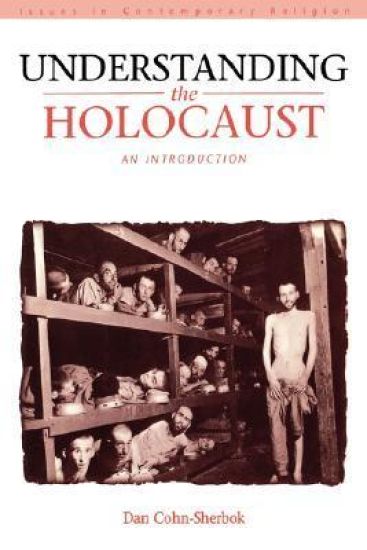
What is the Holocaust? Were Hitlet and his executioners sadistic psychopaths? Were ordinary Germans morally culpable for murdering millions of innocent victims? This volume seeks to explore these and other ethical, cultural and religious questions within a historical context. Beginning with the origin and growth of anti-Semitism, this historical survey continues with a consideration of the legacy of the Holocaust in the modern world. Designed as a book for students in colleges and universities, as well as for the general reader, Understanding the Holocaust details the key themes and events of the Holocaust and discusses their implications. Unlike other books on the subject it contains both a history of the Holocaust and extensive reflections on the social, religious and moral issues raised by the emergence of the Third Reich and its impact on subsequent history. The book also contains maps and illustrations related to the growth and development of Nazism and a lengthy biography. Rabbi Professor Dan Cihn-Sherbok received a doctorate in philosophy from Cambridge University and an honorary doctorate in divinity from the Hebrew Union College-Jewish Institute of Religion.He is Professor of Judaism at the University of Wales at Lampeter. His previous books include The Crucified Jew: Twenty Centuries of Christian Anti-Semitism (1992) and God and the Holocaust (1996).
Who are the Messianic Jews? What do they believe and practice? What is the Jewish community's reaction to the development of Messianic Judaism? In this pioneering study, Dan Cohn-Sherbok traces the development of the Messianic movement from ancient times to its transformation after World War II. Focusing on the nature of the movement today, the volume continues with a detailed examination of Messianic practices, and the place of Messianic Judaism within the contemporary Jewish community.
"The Dictionary of Jewish Biography" provides a rapid reference to those Jewish men and women who have, over the last four thousand years, contributed to the life, history and study of Judaism in all its facets. From Abraham to Saul Bellow, from Moses Maimonides to Woody Allen, from the Baal Shem Tov to Albert Einstein, this comprehensive dictionary of Jewish biographies provides a first point of entry into the fascinating richness of the Jewish heritage. Modelled on the highly acclaimed Dictionary of Christian Biography (Continuum 2001) and with the advice of leading Jewish scholars, the Dictionary of Jewish Biography provides a rapid reference to those Jewish men and women who have, over the last four thousand years, contributed to the life of the Jewish people and the history of the Jewish religion. This dictionary will prove essential for general readers interested in the evolution of Judaism from ancient times to the present day, a perfect study aid for students and teachers. Designed as an accessible reference tool, this volume is an indispensable guide for anyone interested in the history of the Jewish people - the uninitiated will become initiated; the curious will become informed; the informed will now have a handy reference tool. This panoramic bibliographic survey provides a unique guide to the leading figures of the past and present. Included are: Rabbinic Scholars, Key Religious Thinkers, Spiritual Leaders, Founders Of Religious Movements, Major Writers, Enlightenment Figures, Novelists And Journalists, Artists Scientists, Mystics, Israeli Politicians, Zionists, Musicians, Actors and Actresses, Film Stars, Famous Rabbis, Distinguished Cantors, Biblical Figures, Athletes, Economists, Architects, and Radicals and Heretics.
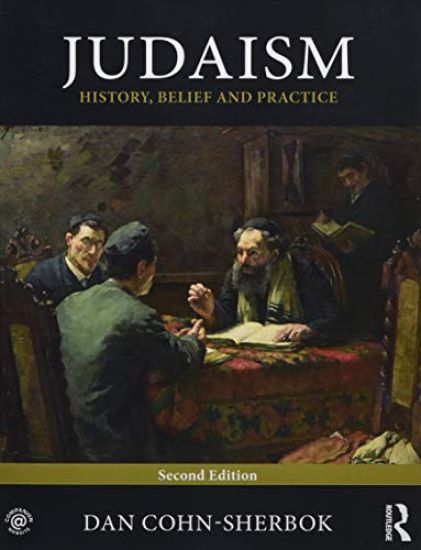
This newly revised all-encompassing textbook is a guide to the history, beliefs and practice of Judaism. Beginning with the ancient Near Eastern background, it covers early Israelite history, the emergence of classical rabbinic literature and the rise of medieval Judaism in Islamic and Christian lands. It also includes the early modern period and the development of Jewry in the nineteenth and twentieth centuries. Extracts from primary sources are used throughout to enliven the narrative and provide concrete examples of the rich variety of Jewish civilization.Specially designed to assist learning, Judaism:• Introduces texts and commentaries, including the Hebrew Bible, rabbinic texts, mystical literature, Jewish philosophy and Jewish theology• Provides the skills necessary to understand these step-by-step with the help of a companion website• Explains how to interpret the major events in nearly four thousand years of Jewish history• Supports study with discussion questions on the central historical and religious issues, and includes key reading for each chapter, an extensive glossary and index• Illustrates the development of Judaism, its concepts, observances and culture, with maps, photos, paintings and engravings• Links each chapter to a free companion website at www.routledge.com/cw/cohnsherbok which provides things to think about, things to do and tips for teachers as well as other online resources
This newly revised all-encompassing textbook is a guide to the history, beliefs and practice of Judaism. Beginning with the ancient Near Eastern background, it covers early Israelite history, the emergence of classical rabbinic literature and the rise of medieval Judaism in Islamic and Christian lands. It also includes the early modern period and the development of Jewry in the nineteenth and twentieth centuries. Extracts from primary sources are used throughout to enliven the narrative and provide concrete examples of the rich variety of Jewish civilization.Specially designed to assist learning, Judaism:• Introduces texts and commentaries, including the Hebrew Bible, rabbinic texts, mystical literature, Jewish philosophy and Jewish theology• Provides the skills necessary to understand these step-by-step with the help of a companion website• Explains how to interpret the major events in nearly four thousand years of Jewish history• Supports study with discussion questions on the central historical and religious issues, and includes key reading for each chapter, an extensive glossary and index• Illustrates the development of Judaism, its concepts, observances and culture, with maps, photos, paintings and engravings• Links each chapter to a free companion website at www.routledge.com/cw/cohnsherbok which provides things to think about, things to do and tips for teachers as well as other online resources
This is an exploration of the origins and development of Zionism, illustrating the theory and history of the Zionist movement and the creation of the state of Israel. In recent years, there has been an explosion of interest in Middle Eastern affairs. The conflict between Israel and the Palestinians is a constant theme on television and in newspapers. Yet there is considerable misunderstanding about the origins and ideology of the Zionist movement. This volume seeks to address these issues by providing a concise but comprehensive guide to the origins and development of Zionism from its inception in the nineteenth century until the creation of the Jewish state of Israel in 1948. Dan Cohn-Sherbok explores how, in the early stages of Zionism, a number of Jewish thinkers including religious Zionists, spiritual Zionists and secular Zionists formulated various theories about the need for a Jewish homeland. Illustrating the history of the Zionist movement up to the creation of Israel in 1948, the author also provides an extensive explanation of the various forms of anti-Zionism which emerged in the early history of the Zionist movement.
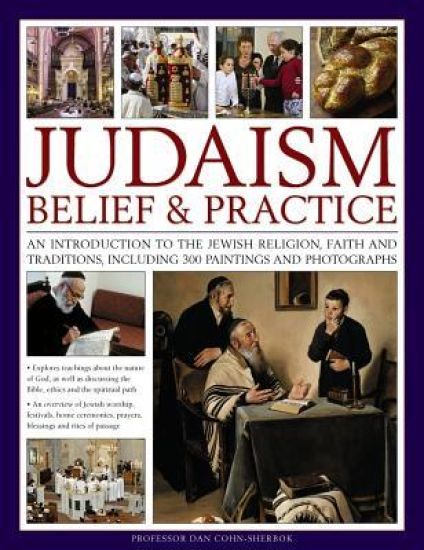
The Jewish religion is grounded in belief about the nature of God and his relation to the world, and this expertly written volume offers an accessible account of the Jewish faith, its core beliefs and practices. It introduces the reader to the God of the Jews, describing his transcendence, omnipotence and goodness, and his eternal covenant with Israel. The main festivals, celebrations and practices are explored in depth, including Sabbaths, home ceremonies and personal piety, as well as rites of passage and Jewish high days and holidays. With over 300 informative photographs, this is a fascinating guide to an immensely rich and complex religion.