Kirjojen hintavertailu. Mukana 12 259 671 kirjaa ja 12 kauppaa.

Kirjahaku

Etsi kirjoja tekijän nimen, kirjan nimen tai ISBN:n perusteella.

21 kirjaa tekijältä Dani Rodrik

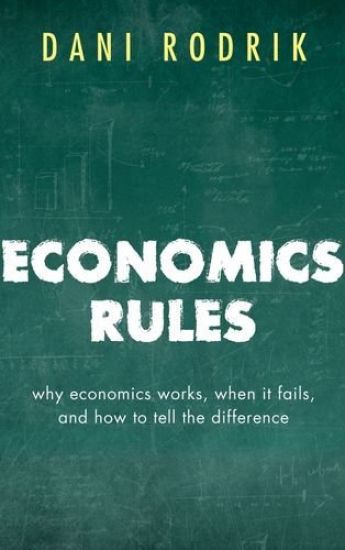
Economics Rules

Economics Rules

Dani Rodrik

Oxford University Press
2017
nidottu
The economics profession has become a favourite punching bag in the aftermath of the global financial crisis. Economists are widely reviled and their influence derided by the general public. Yet their services have never been in greater demand. To unravel the paradox, we need to understand both the strengths and weaknesses of economics. Dani Rodrik argues that the multiplicity of theoretical frameworks - what economists call 'models' that exist side by side is economics' great strength. Economists are trained to hold diverse, possibly contradictory models of the world in their minds. This is what allows them, when they do their job right, to comprehend the world, make useful suggestions for improving it, and to advance their stock of knowledge over time. In short, it is what makes economics a 'science' a different kind of science from physics or some other natural sciences, but a science nonetheless. But syncretism is not a comfortable state of mind, and economists often jettison it for misplaced confidence and arrogance, especially when they confront questions of public policy. Economists are prone to fads and fashions, and behave too often as if their discipline is about the search for the model that works always and everywhere, rather than a portfolio of models. Their training lets them down when it comes to navigating among diverse models and figuring out which one applies where. Ideology and political preferences frequently substitute for analysis in choosing among models. So the book offers both a defence and critique of economics. Economists' way of thinking about social phenomena has great advantages. But the flexible, contextual nature of economics is also its Achilles' heel in the hands of clumsy practitioners.
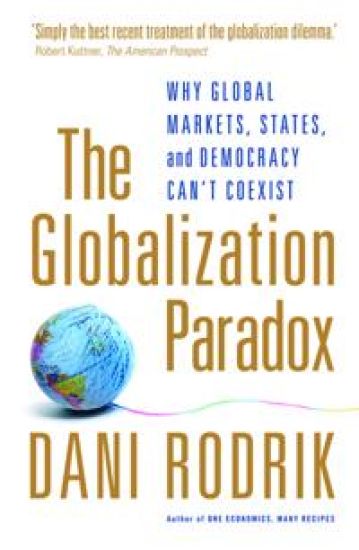
The Globalization Paradox

The Globalization Paradox

Dani Rodrik

Oxford University Press
2012
nidottu
For a century, economists have driven forward the cause of globalization in financial institutions, labour markets, and trade. Yet there have been consistent warning signs that a global economy and free trade might not always be advantageous. Where are the pressure points? What could be done about them? Dani Rodrik examines the back-story from its seventeenth-century origins through the milestones of the gold standard, the Bretton Woods Agreement, and the Washington Consensus, to the present day. Although economic globalization has enabled unprecedented levels of prosperity in advanced countries and has been a boon to hundreds of millions of poor workers in China and elsewhere in Asia, it is a concept that rests on shaky pillars, he contends. Its long-term sustainability is not a given. The heart of Rodrik's argument is a fundamental 'trilemma': that we cannot simultaneously pursue democracy, national self-determination, and economic globalization. Give too much power to governments, and you have protectionism. Give markets too much freedom, and you have an unstable world economy with little social and political support from those it is supposed to help. Rodrik argues for smart globalization, not maximum globalization.
Economics Rules: The Rights and Wrongs of the Dismal Science
In the wake of the financial crisis and the Great Recession, economics seems anything but a science. In this sharp, masterfully argued book, Dani Rodrik, a leading critic from within, takes a close look at economics to examine when it falls short and when it works, to give a surprisingly upbeat account of the discipline.Drawing on the history of the field and his deep experience as a practitioner, Rodrik argues that economics can be a powerful tool that improves the world--but only when economists abandon universal theories and focus on getting the context right. Economics Rules argues that the discipline's much-derided mathematical models are its true strength. Models are the tools that make economics a science.Too often, however, economists mistake a model for the model that applies everywhere and at all times. In six chapters that trace his discipline from Adam Smith to present-day work on globalization, Rodrik shows how diverse situations call for different models. Each model tells a partial story about how the world works. These stories offer wide-ranging, and sometimes contradictory, lessons--just as children's fables offer diverse morals.Whether the question concerns the rise of global inequality, the consequences of free trade, or the value of deficit spending, Rodrik explains how using the right models can deliver valuable new insights about social reality and public policy. Beyond the science, economics requires the craft to apply suitable models to the context.The 2008 collapse of Lehman Brothers challenged many economists' deepest assumptions about free markets. Rodrik reveals that economists' model toolkit is much richer than these free-market models. With pragmatic model selection, economists can develop successful antipoverty programs in Mexico, growth strategies in Africa, and intelligent remedies for domestic inequality.At once a forceful critique and defense of the discipline, Economics Rules charts a path toward a more humble but more effective science.
Economics Rules: The Rights and Wrongs of the Dismal Science
In the wake of the financial crisis and the Great Recession, economics seems anything but a science. In this sharp, masterfully argued book, Dani Rodrik, a leading critic from within, takes a close look at economics to examine when it falls short and when it works, to give a surprisingly upbeat account of the discipline.Drawing on the history of the field and his deep experience as a practitioner, Rodrik argues that economics can be a powerful tool that improves the world--but only when economists abandon universal theories and focus on getting the context right. Economics Rules argues that the discipline's much-derided mathematical models are its true strength. Models are the tools that make economics a science.Too often, however, economists mistake a model for the model that applies everywhere and at all times. In six chapters that trace his discipline from Adam Smith to present-day work on globalization, Rodrik shows how diverse situations call for different models. Each model tells a partial story about how the world works. These stories offer wide-ranging, and sometimes contradictory, lessons--just as children's fables offer diverse morals.Whether the question concerns the rise of global inequality, the consequences of free trade, or the value of deficit spending, Rodrik explains how using the right models can deliver valuable new insights about social reality and public policy. Beyond the science, economics requires the craft to apply suitable models to the context.The 2008 collapse of Lehman Brothers challenged many economists' deepest assumptions about free markets. Rodrik reveals that economists' model toolkit is much richer than these free-market models. With pragmatic model selection, economists can develop successful antipoverty programs in Mexico, growth strategies in Africa, and intelligent remedies for domestic inequality.At once a forceful critique and defense of the discipline, Economics Rules charts a path toward a more humble but more effective science.
One Economics, Many Recipes

One Economics, Many Recipes

Dani Rodrik

Princeton University Press
2009
pokkari
In One Economics, Many Recipes, leading economist Dani Rodrik argues that neither globalizers nor antiglobalizers have got it right. While economic globalization can be a boon for countries that are trying to dig out of poverty, success usually requires following policies that are tailored to local economic and political realities rather than obeying the dictates of the international globalization establishment. A definitive statement of Rodrik's original and influential perspective on economic growth and globalization, One Economics, Many Recipes shows how successful countries craft their own unique strategies--and what other countries can learn from them. To most proglobalizers, globalization is a source of economic salvation for developing nations, and to fully benefit from it nations must follow a universal set of rules designed by organizations such as the World Bank, the International Monetary Fund, and the World Trade Organization and enforced by international investors and capital markets. But to most antiglobalizers, such global rules spell nothing but trouble, and the more poor nations shield themselves from them, the better off they are. Rodrik rejects the simplifications of both sides, showing that poor countries get rich not by copying what Washington technocrats preach or what others have done, but by overcoming their own highly specific constraints. And, far from conflicting with economic science, this is exactly what good economics teaches.
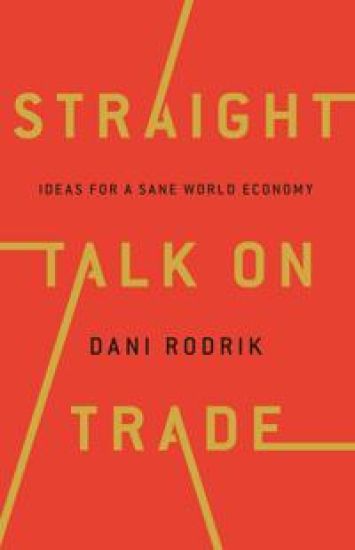
Straight Talk on Trade

Straight Talk on Trade

Dani Rodrik

Princeton University Press
2017
sidottu
An honest discussion of free trade and how nations can sensibly chart a path forward in today's global economyNot so long ago the nation-state seemed to be on its deathbed, condemned to irrelevance by the forces of globalization and technology. Now it is back with a vengeance, propelled by a groundswell of populists around the world. In Straight Talk on Trade, Dani Rodrik, an early and outspoken critic of economic globalization taken too far, goes beyond the populist backlash and offers a more reasoned explanation for why our elites' and technocrats' obsession with hyper-globalization made it more difficult for nations to achieve legitimate economic and social objectives at home: economic prosperity, financial stability, and equity.Rodrik takes globalization's cheerleaders to task, not for emphasizing economics over other values, but for practicing bad economics and ignoring the discipline's own nuances that should have called for caution. He makes a case for a pluralist world economy where nation-states retain sufficient autonomy to fashion their own social contracts and develop economic strategies tailored to their needs. Rather than calling for closed borders or defending protectionists, Rodrik shows how we can restore a sensible balance between national and global governance. Ranging over the recent experiences of advanced countries, the eurozone, and developing nations, Rodrik charts a way forward with new ideas about how to reconcile today's inequitable economic and technological trends with liberal democracy and social inclusion.Deftly navigating the tensions among globalization, national sovereignty, and democracy, Straight Talk on Trade presents an indispensable commentary on today's world economy and its dilemmas, and offers a visionary framework at a critical time when we need it most.
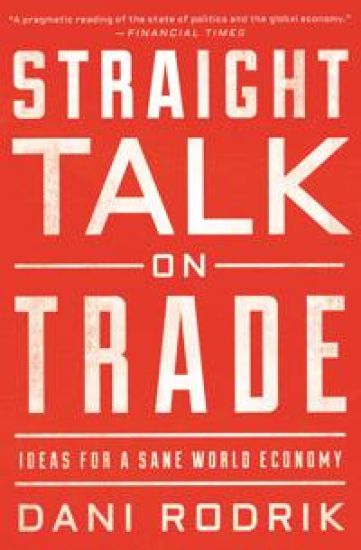
Straight Talk on Trade

Straight Talk on Trade

Dani Rodrik

Princeton University Press
2019
pokkari
An honest discussion of free trade and how nations can sensibly chart a path forward in today’s global economyNot so long ago the nation-state seemed to be on its deathbed, condemned to irrelevance by the forces of globalization and technology. Now it is back with a vengeance, propelled by a groundswell of populists around the world. In Straight Talk on Trade, Dani Rodrik, an early and outspoken critic of economic globalization taken too far, goes beyond the populist backlash and offers a more reasoned explanation for why our elites’ and technocrats’ obsession with hyper-globalization made it more difficult for nations to achieve legitimate economic and social objectives at home. Ranging over the recent experiences of advanced countries, the eurozone, and developing nations, Straight Talk on Trade charts a way forward with new ideas about how to reconcile today’s inequitable trends with liberal democracy and social inclusion.
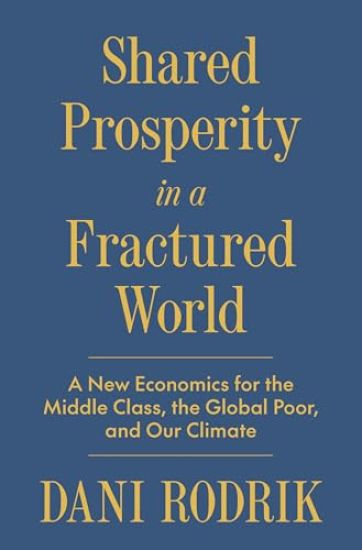
Shared Prosperity in a Fractured World

Shared Prosperity in a Fractured World

Dani Rodrik

PRINCETON UNIVERSITY PRESS
2025
sidottu
New, practical approaches to confronting today’s most daunting global issuesFighting climate change, saving democracy, and eradicating poverty are urgent global challenges, yet the world’s leaders continue to pursue outdated policies that focus on one while worsening the tradeoffs between each of them. Shared Prosperity in a Fractured World shows how the nations of the world can achieve all three objectives.Dani Rodrik provides a bold new vision of globalization, one in which we accelerate the green transition to achieve a sustainable planet, shore up the middle class to restore democracy’s foundations, and hasten economic revitalization in the developing world to put an end to poverty. The rising tide of authoritarianism has demonstrated our inability to alleviate economic anxieties. Economic nationalism has raised the specter of increased protectionism and deteriorating prospects for economic growth. And automation and other new technologies have undercut the advantages of low-cost, unskilled labor in manufacturing and export-oriented industrialization. Rodrik reveals how we can restore prosperity through new forms of collaborative public-private action—to promote renewables and green industries, middle-class jobs, and enhanced productivity in labor-absorbing services—even in the absence of global cooperation. He explains why this new kind of globalization must also recognize the legitimate desire of governments to pursue their economic, social, and security interests autonomously.Turning conventional economic wisdom on its head, Shared Prosperity in a Fractured World builds on practices that work while radically transforming those that don’t, presenting a grounded, clear-eyed approach to tackling the problems that affect us all, at home and around the world.
Has Globalization Gone Too Far?

Has Globalization Gone Too Far?

Dani Rodrik

The Peterson Institute for International Economics
1997
nidottu
Globalization is exposing social fissures between those with the education, skills, and mobility to flourish in an unfettered world market-the apparent "winners"-and those without. These apparent "losers" are increasingly anxious about their standards of living and their precarious place in an integrated world economy. The result is severe tension between the market and broad sectors of society, with governments caught in the middle. Compounding the very real problems that need to be addressed by all involved, the knee-jerk rhetoric of both sides threatens to crowd out rational debate. From the United States to Europe to Asia, positions are hardening. Dani Rodrik brings a clear and reasoned voice to these questions. Has Globalization Gone Too Far? takes an unblinking and objective look at the benefits-and risks-of international economic integration, and criticizes mainstream economists for downplaying its dangers. It also makes a unique and persuasive case that the "winners" have as much at stake from the possible consequences of social instability as the "losers." As Rodrik points out, "...social disintegration is not a spectator sport-those on the sidelines also get splashed with mud from the field.Ultimately, the deepening of social fissures can harm all." President Clinton read the book and it provided the conceptual basis for the trade/IMF portions of his State of the Union message in January 1998.
The New Global Economy and Developing Countries

The New Global Economy and Developing Countries

Dani Rodrik

Overseas Development Council,U.S.
1999
pokkari
Policy makers in the developing world are grappling with new dilemmas created by openness to trade and capital flows. What role, if any, remains for the state in promoting industrialization? Does openness worsen inequality, and if so, what can be done about it? What is the best way to handle turbulence from the world economy, especially the fickleness of international capital flows? In The New Global Economy and Developing Countries Dani Rodrik argues that successful integration into the world economy requires a complementary set of policies and institutions at home. Policy makers must reinforce their external strategy of liberalization with an internal strategy that gives the state substantial responsibility in building physical and human capital and mediating social conflicts.
Challenges to the World Bank and IMF
Bringing together some of the foremost authorities in their fields, this book is the result of work carried out on behalf of the G24, the world's only research effort devoting to furthering the interests of developing countries and bringing their needs to global attention. The book gives a voice to the developing nations of the world through its powerful essays and its fresh perspective.
Globalisaation paradoksi

Globalisaation paradoksi

Dani Rodrik

Eurooppalaisen filosofian seura
2016
nidottu
Vapaat ja avoimet kansainväliset markkinat eivät olleetkaan kuninkaantie kohti onnellista huomista. Sen sijaan globalisaatio loi entistä ennakoimattomamman maailman, jossa yritykset, palkansaajat ja muut taloudelliset toimijat saivat huomata olevansa entistä kasvottomampien taloudellisten voimien rusikoitavina.Harvardin yliopiston professori Dani Rodrik osoittaa, että liiallinen globalisaation voimaan luottamisen aika on ohi. Demokratia ja kansallinen itsemääräämisoikeus ajautuvat väistämättä ristiriitaan ylikansallisten taloudellisten voimien kanssa. Yksikään hallitus ei voi yhtä aikaa palvella sekä maailmantalouden vaateita että omaa kansaansa. Globalisaation paradoksi pyrkii hahmottelemaan kansainvälistä maailmaa, jossa demokratia ja talous eivät enää olisi ristiriidassa.
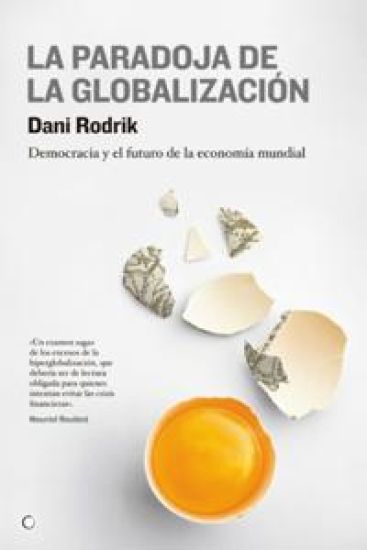
La paradoja de la globalización

La paradoja de la globalización

Dani Rodrik

Antoni Bosch Editor, S.A.
2022
nidottu
En esta crítica incisiva, Dani Rodrik combina el relato histórico con astutas observaciones que cuestionan la creencia de que el avance de la globalización es inevitable —e inevitablemente positivo— y argumenta que la globalización va acompañada necesariamente de tensiones muy graves.La paradoja de la globalización plantea un tema que ha adquirido, a raíz de la crisis del euro, una candente actualidad. Se trata del conflicto entre decisiones democráticas a escala de cada nación y decisiones tecnocráticas a escala supranacional. En el libro, el autor presenta un argumento a favor de un modelo de globalización atemperado, que sea respetuoso con las democracias nacionales y que esté fundamentado en un entramado muy elemental de reglas internacionales.Ahora que nos enfrentamos a unos desafíos globales tanto en el comercio, como en las finanzas como en los mercados laborales, la bien fundamentada propuesta de Rodrik muestra el camino hacia una prosperidad equilibrada y sostenible.
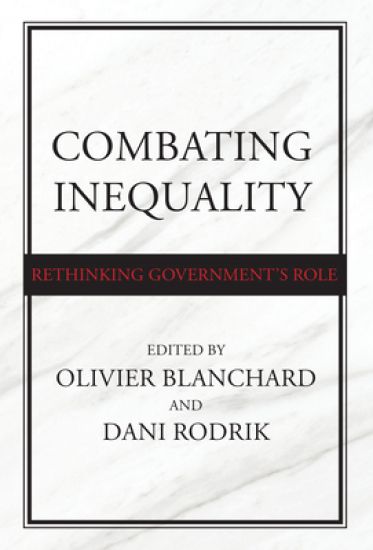
Combating Inequality

Combating Inequality

Olivier Blanchard; Dani Rodrik

MIT Press
2021
sidottu
Leading economists and policymakers consider what economic tools are most effective in reversing the rise in inequality.Economic inequality is the defining issue of our time. In the United States, the wealth share of the top 1% has risen from 25% in the late 1970s to around 40% today. The percentage of children earning more than their parents has fallen from 90% in the 1940s to around 50% today. In Combating Inequality, leading economists, many of them current or former policymakers, bring good news: we have the tools to reverse the rise in inequality. In their discussions, they consider which of these tools are the most effective at doing so.
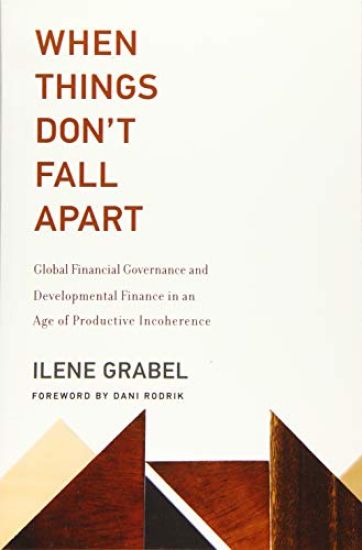
When Things Don't Fall Apart

When Things Don't Fall Apart

Ilene Grabel; Dani Rodrik

MIT Press
2019
pokkari
An account of the significant though gradual, uneven, disconnected, ad hoc, and pragmatic innovations in global financial governance and developmental finance induced by the global financial crisis.In When Things Don't Fall Apart, Ilene Grabel challenges the dominant view that the global financial crisis had little effect on global financial governance and developmental finance. Most observers discount all but grand, systemic ruptures in institutions and policy. Grabel argues instead that the global crisis induced inconsistent and ad hoc discontinuities in global financial governance and developmental finance that are now having profound effects on emerging market and developing economies. Grabel's chief normative claim is that the resulting incoherence in global financial governance is productive rather than debilitating. In the age of productive incoherence, a more complex, dense, fragmented, and pluripolar form of global financial governance is expanding possibilities for policy and institutional experimentation, policy space for economic and human development, financial stability and resilience, and financial inclusion. Grabel draws on key theoretical commitments of Albert Hirschman to cement the case for the productivity of incoherence. Inspired by Hirschman, Grabel demonstrates that meaningful change often emerges from disconnected, erratic, experimental, and inconsistent adjustments in institutions and policies as actors pragmatically manage in an evolving world. Grabel substantiates her claims with empirically rich case studies that explore the effects of recent crises on networks of financial governance (such as the G-20); transformations within the IMF; institutional innovations in liquidity support and project finance from the national to the transregional levels; and the "rebranding" of capital controls. Grabel concludes with a careful examination of the opportunities and risks associated with the evolutionary transformations underway.
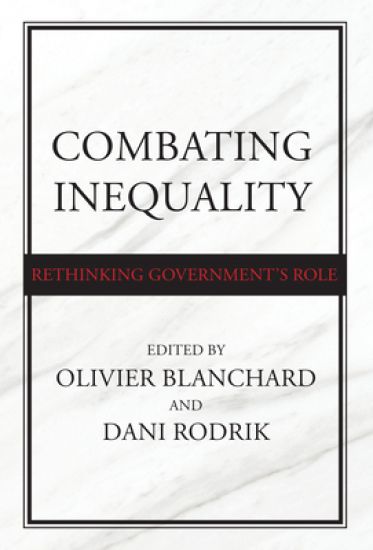
Combating Inequality

Combating Inequality

Olivier Blanchard; Dani Rodrik

MIT PRESS LTD
2023
nidottu
Leading economists and policymakers consider what economic tools are most effective in reversing the rise in inequality.Economic inequality is the defining issue of our time. In the United States, the wealth share of the top 1% has risen from 25% in the late 1970s to around 40% today. The percentage of children earning more than their parents has fallen from 90% in the 1940s to around 50% today. In Combating Inequality, leading economists, many of them current or former policymakers, bring good news: we have the tools to reverse the rise in inequality. In their discussions, they consider which of these tools are the most effective at doing so.The contributors express widespread agreement that we need to aim policies at economic inequality itself; deregulation and economic stimulus will not do the job. No longer does anyone ask, in relation to expanded social programs, “Can we pay for it?” And most believe that US taxes will have to rise—although they debate whether the progressivity should focus on the revenue side or the expenditure side, through broad-based taxes like the VAT or through a wealth tax aimed at the very top of the income scale. They also consider the philosophical aspects of inequality—whether it is bad in itself or because of its consequences; the risks and benefits of more radical interventions to change the nature of production and trade; and future policy directions.ContributorsDaron Acemoglu, Philippe Aghion, Danielle Allen, Ben Ansell, David Autor, Sheri Berman, Marianne Bertrand, Olivier Blanchard, Lucas Chancel, William Darity Jr., Peter Diamond, Christian Dustmann, David T. Ellwood, Richard Freeman, Caroline Freund, Jason Furman, Hilary Hoynes, Lawrence F. Katz, Wojciech Kopczuk, N. Gregory Mankiw, Nolan McCarty, Dani Rodrik, Jesse Rothstein, Emmanuel Saez, T. M. Scanlon, Heidi Shierholz, Tharman Shanmugaratnam, Stefanie Stantcheva, Michael Stynes, Laura D'Andrea Tyson, Philippe Van Parijs, Gabriel Zucman
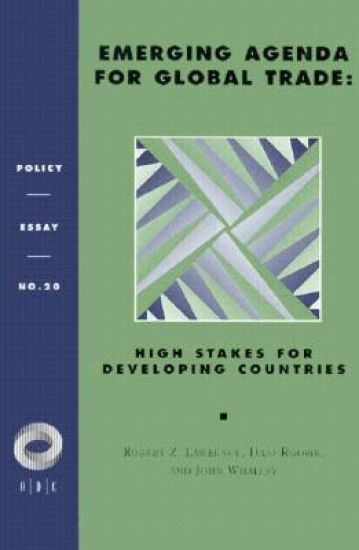
Emerging Agenda For Global Trade

Emerging Agenda For Global Trade

Robert Z. Lawrence; Dani Rodrik; John Whalley

Overseas Development Council,U.S.
1997
pokkari
This essay addresses the "new-new" issues on the emerging agenda for the global trade negotiations to follow the recently concluded Uruguay Round. The authors first examine the extent to which international rules in new trade areas are needed and then consider the three highest profile issues: competition policy, labor standards, and linking trade and environment. Robert Lawrence argues that if an international agreement on competition policy was possible, developing countries would derive considerable benefits. Dani Rodrik examines the evidence and concludes that labor standards-or lack thereof-have consequences for trade and foreign investment patterns. He then considers whether a social-safeguards approach can be made to work for labor standards and suggests that the risks of not negotiating such a clause outweigh the dangers of an inappropriately designed process. Finally, John Whalley argues that the central issue for trade and the environment is whether developing countries should be compensated for policies encouraging environmental restraint.
Towards a Better Global Economy

Towards a Better Global Economy

Franklin Allen; Jere R. Behrman; Nancy Birdsall; Shahrokh Fardoust; Dani Rodrik; Andrew Steer; Arvind Subramanian

Oxford University Press
2014
sidottu
Substantial progress in the fight against extreme poverty was made in the last two decades. But the slowdown in global economic growth and significant increases in income inequality in many developed and developing countries raise serious concerns about the continuation of this trend into the 21st century. The time has come to seriously think about how improvements in official global governance, coupled with and reinforced by rising activism of 'global citizens' can lead to welfare-enhancing and more equitable results for global citizens through better national and international policies. This book examines the factors that are most likely to facilitate the process of beneficial economic growth in low-, middle-, and high-income countries. It examines past, present, and future economic growth; demographic changes; the hyperglobalization of trade; the effect of finance on growth; climate change and resource depletion; and the sense of global citizenship and the need for global governance in order to draw longer-term implications, identify policy options for improving the lives of average citizens around the world, and make the case for the need to confront new challenges with truly global policy responses. The book documents how demographic changes, convergence, and competition are likely to bring about massive shifts in the sectoral and geographical composition of global output and employment, as the center of gravity of the global economy moves toward Asia and emerging economies elsewhere. It shows that the legacies of the 2008-09 crisis-high unemployment levels, massive excess capacities, and high debt levels-are likely to reduce the standard of living of millions of people in many countries over a long period of adjustment and that fluctuations in international trade, financial markets, and commodity prices, as well as the tendency of institutions at both the national and international level to favor the interests of the better-off and more powerful pose substantial risks for citizens of all countries. The chapters and their policy implications are intended to stimulate public interest and facilitate the exchange of ideas and policy dialogue.