Kirjojen hintavertailu. Mukana 11 342 296 kirjaa ja 12 kauppaa.

Kirjahaku

Etsi kirjoja tekijän nimen, kirjan nimen tai ISBN:n perusteella.

11 kirjaa tekijältä Daniel A. Bell

East Meets West

East Meets West

Daniel A. Bell

Princeton University Press
2000
pokkari
Is liberal democracy a universal ideal? Proponents of "Asian values" argue that it is a distinctive product of the Western experience and that Western powers shouldn't try to push human rights and democracy onto Asian states. Liberal democrats in the West typically counter by questioning the motives of Asian critics, arguing that Asian leaders are merely trying to rationalize human-rights violations and authoritarian rule. In this book--written as a dialogue between an American democrat named Demo and three East Asian critics--Daniel A. Bell attempts to chart a middle ground between the extremes of the international debate on human rights and democracy. Bell criticizes the use of "Asian values" to justify oppression, but also draws on East Asian cultural traditions and contributions by contemporary intellectuals in East Asia to identify some powerful challenges to Western-style liberal democracy. In the first part of the book, Bell makes use of colorful stories and examples to show that there is a need to take into account East Asian perspectives on human rights and democracy. The second part--a fictitious dialogue between Demo and Asian senior statesman Lee Kuan Yew--examines the pros and cons of implementing Western-style democracy in Singapore. The third part of the book is an argument for an as-yet-unrealized Confucian political institution that justifiably differs from Western-style liberal democracy. This is a thought-provoking defense of distinctively East Asian challenges to Western-style liberal democracy that will stimulate interest and debate among students of political theory, Asian studies, and international human rights.
Beyond Liberal Democracy

Beyond Liberal Democracy

Daniel A. Bell

Princeton University Press
2006
pokkari
Is liberal democracy appropriate for East Asia? In this provocative book, Daniel Bell argues for morally legitimate alternatives to Western-style liberal democracy in the region. Beyond Liberal Democracy, which continues the author's influential earlier work, is divided into three parts that correspond to the three main hallmarks of liberal democracy--human rights, democracy, and capitalism. These features have been modified substantially during their transmission to East Asian societies that have been shaped by nonliberal practices and values. Bell points to the dangers of implementing Western-style models and proposes alternative justifications and practices that may be more appropriate for East Asian societies. If human rights, democracy, and capitalism are to take root and produce beneficial outcomes in East Asia, Bell argues, they must be adjusted to contemporary East Asian political and economic realities and to the values of nonliberal East Asian political traditions such as Confucianism and Legalism. Local knowledge is therefore essential for realistic and morally informed contributions to debates on political reform in the region, as well as for mutual learning and enrichment of political theories. Beyond Liberal Democracy is indispensable reading for students and scholars of political theory, Asian studies, and human rights, as well as anyone concerned about China's political and economic future and how Western governments and organizations should engage with China.
China's New Confucianism

China's New Confucianism

Daniel A. Bell

Princeton University Press
2010
pokkari
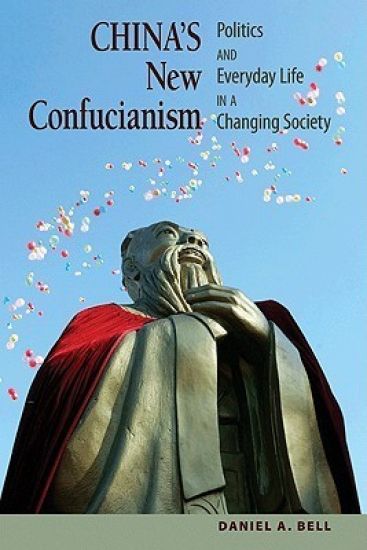
What is it like to be a Westerner teaching political philosophy in an officially Marxist state? Why do Chinese sex workers sing karaoke with their customers? And why do some Communist Party cadres get promoted if they care for their elderly parents? In this entertaining and illuminating book, one of the few Westerners to teach at a Chinese university draws on his personal experiences to paint an unexpected portrait of a society undergoing faster and more sweeping changes than anywhere else on earth. With a storyteller's eye for detail, Daniel Bell observes the rituals, routines, and tensions of daily life in China. China's New Confucianism makes the case that as the nation retreats from communism, it is embracing a new Confucianism that offers a compelling alternative to Western liberalism. Bell provides an insider's account of Chinese culture and, along the way, debunks a variety of stereotypes. He presents the startling argument that Confucian social hierarchy can actually contribute to economic equality in China. He covers such diverse social topics as sex, sports, and the treatment of domestic workers. He considers the 2008 Olympics in Beijing, wondering whether Chinese overcompetitiveness might be tempered by Confucian civility. And he looks at education in China, showing the ways Confucianism impacts his role as a political theorist and teacher. By examining the challenges that arise as China adapts ancient values to contemporary society, China's New Confucianism enriches the dialogue of possibilities available to this rapidly evolving nation. In a new preface, Bell discusses the challenges of promoting Confucianism in China and the West.
The China Model

The China Model

Daniel A. Bell

PRINCETON UNIVERSITY PRESS
2015
sidottu
Westerners tend to divide the political world into "good" democracies and "bad" authoritarian regimes. But the Chinese political model does not fit neatly in either category. Over the past three decades, China has evolved a political system that can best be described as "political meritocracy." The China Model seeks to understand the ideals and the reality of this unique political system. How do the ideals of political meritocracy set the standard for evaluating political progress (and regress) in China? How can China avoid the disadvantages of political meritocracy? And how can political meritocracy best be combined with democracy? Daniel Bell answers these questions and more. Opening with a critique of "one person, one vote" as a way of choosing top leaders, Bell argues that Chinese-style political meritocracy can help to remedy the key flaws of electoral democracy. He discusses the advantages and pitfalls of political meritocracy, distinguishes between different ways of combining meritocracy and democracy, and argues that China has evolved a model of democratic meritocracy that is morally desirable and politically stable. Bell summarizes and evaluates the "China model"--meritocracy at the top, experimentation in the middle, and democracy at the bottom--and its implications for the rest of the world. A timely and original book that will stir up interest and debate, The China Model looks at a political system that not only has had a long history in China, but could prove to be the most important political development of the twenty-first century.
The China Model

The China Model

Daniel A. Bell

Princeton University Press
2016
pokkari
Westerners tend to divide the political world into "good" democracies and "bad" authoritarian regimes. But the Chinese political model does not fit neatly in either category. Over the past three decades, China has evolved a political system that can best be described as "political meritocracy." The China Model seeks to understand the ideals and the reality of this unique political system. How do the ideals of political meritocracy set the standard for evaluating political progress (and regress) in China? How can China avoid the disadvantages of political meritocracy? And how can political meritocracy best be combined with democracy? Daniel Bell answers these questions and more. Opening with a critique of "one person, one vote" as a way of choosing top leaders, Bell argues that Chinese-style political meritocracy can help to remedy the key flaws of electoral democracy. He discusses the advantages and pitfalls of political meritocracy, distinguishes between different ways of combining meritocracy and democracy, and argues that China has evolved a model of democratic meritocracy that is morally desirable and politically stable. Bell summarizes and evaluates the "China model"--meritocracy at the top, experimentation in the middle, and democracy at the bottom--and its implications for the rest of the world. A timely and original book that will stir up interest and debate, The China Model looks at a political system that not only has had a long history in China, but could prove to be the most important political development of the twenty-first century.
The Dean of Shandong

The Dean of Shandong

Daniel A. Bell

PRINCETON UNIVERSITY PRESS
2023
sidottu
A Financial Times Best Book of the YearAn inside view of Chinese academia and what it reveals about China’s political systemOn January 1, 2017, Daniel Bell was appointed dean of the School of Political Science and Public Administration at Shandong University—the first foreign dean of a political science faculty in mainland China’s history. In The Dean of Shandong, Bell chronicles his experiences as what he calls “a minor bureaucrat,” offering an inside account of the workings of Chinese academia and what they reveal about China’s political system. It wasn’t all smooth sailing—Bell wryly recounts sporadic bungles and misunderstandings—but Bell’s post as dean provides a unique vantage point on China today.Bell, neither a Chinese citizen nor a member of the Chinese Communist Party, was appointed as dean because of his scholarly work on Confucianism—but soon found himself coping with a variety of issues having little to do with scholarship or Confucius. These include the importance of hair color and the prevalence of hair-dyeing among university administrators, both male and female; Shandong’s drinking culture, with endless toasts at every shared meal; and some unintended consequences of an intensely competitive academic meritocracy. As dean, he also confronts weightier matters: the role at the university of the Party secretary, the national anticorruption campaign and its effect on academia (Bell asks provocatively, “What’s wrong with corruption?”), and formal and informal modes of censorship. Considering both the revival of Confucianism in China over the last three decades and what he calls “the Communist comeback” since 2008, Bell predicts that China’s political future is likely to be determined by both Confucianism and Communism.
The Dean of Shandong

The Dean of Shandong

Daniel A. Bell

PRINCETON UNIVERSITY PRESS
2025
pokkari
A Financial Times Best Book of the YearAn inside view of Chinese academia and what it reveals about China’s political systemOn January 1, 2017, Daniel Bell was appointed dean of the School of Political Science and Public Administration at Shandong University—the first foreign dean of a political science faculty in mainland China’s history. In The Dean of Shandong, Bell chronicles his experiences as what he calls “a minor bureaucrat,” offering an inside account of the workings of Chinese academia and what they reveal about China’s political system. It wasn’t all smooth sailing—Bell wryly recounts sporadic bungles and misunderstandings—but Bell’s post as dean provides a unique vantage point on China today.Bell, neither a Chinese citizen nor a member of the Chinese Communist Party, was appointed as dean because of his scholarly work on Confucianism—but soon found himself coping with a variety of issues having little to do with scholarship or Confucius. These include the importance of hair color and the prevalence of hair-dyeing among university administrators, both male and female; Shandong’s drinking culture, with endless toasts at every shared meal; and some unintended consequences of an intensely competitive academic meritocracy. As dean, he also confronts weightier matters: the role at the university of the Party secretary, the national anticorruption campaign and its effect on academia (Bell asks provocatively, “What’s wrong with corruption?”), and formal and informal modes of censorship. Considering both the revival of Confucianism in China over the last three decades and what he calls “the Communist comeback” since 2008, Bell predicts that China’s political future is likely to be determined by both Confucianism and Communism.
Why Ancient Chinese Political Thought Matters

Why Ancient Chinese Political Thought Matters

Daniel A. Bell

PRINCETON UNIVERSITY PRESS
2026
sidottu
An entertaining introduction to ancient Chinese thinkers—and what they can teach us about today’s most pressing political questions in China and beyondChina’s most original, diverse, and fascinating political debates took place more than two millennia ago, but they have profoundly shaped Chinese political thinking and practice ever since and, remarkably, their influence on the country’s leaders is only growing today. Yet these timeless debates—which are very likely to influence the answers to such questions as whether China should use military force to take control of Taiwan—are still far too little understood in the West. In this enlightening and entertaining book, Daniel Bell, a leading expert on Chinese political thought, takes the greatest thinkers from China’s past—Confucius, Mencius, Xunzi, Shang Yang, Han Feizi, Zhuangzi, and Mozi—and puts them in dialogue with each other in modern settings. The result is a creative and engaging introduction to ancient Chinese political thought that reveals its relevance to the future of China and the rest of the world.Before China’s unification in 221 BCE, the brilliant political thinkers who founded Confucianism, Daoism, Legalism, and Mohism roamed from state to state, argued with each other, and tried to persuade rulers to follow their ideas. Bell draws on their debates—about such perennial issues as war, corruption, government involvement in family life, and whether the state should subsidize culture—to create vivid imaginative dialogues about important contemporary social and political controversies.China’s political thinking is rooted in its past. Understanding what ancient Chinese political thought can teach us about today’s critical debates is essential to understanding the future of China and the world.
The Winding Passage

The Winding Passage

Daniel A. Bell

University Press of America
1984
sidottu
Originally published by Abt Books in 1980, this book brings together most of Daniel Bell's best work in his second career as a sociologist. The essays deal with a diverse range of topics including technology and culture, religion and personal identity, the intellectual and society, and the validity of the concept of class.
Dekanen i Shandong : bekännelser av en lägre byråkrat på ett kinesiskt universitet
År 2017 utsågs den ka­nadensiske profes­sorn Daniel A. Bell till dekan för den statsvetenskapliga fakulteten vid Shandonguniversi­tetet - den första utlänning att nå en sådan position vid ett kinesiskt univer­sitet. I Dekanen i Shandong berät­tar han utifrån sina unika erfarenheter hur Ki­nas akademiska värld fungerar och vad det säger om landets politiska system i stort. »En skarpsynt och underhållande redo­­gö­­relse för hur det är att ver­ka inom det kinesiska politiska systemet.« Financial Times »... väver på ett underbart sätt samman Bells djupa kun­skaper om såväl kinesiskt tänkande och vardagsliv som landets politiska institutioner.« Los Angeles Review of Books »... ger läsare i väst en unik inblick i det nya Kina.« American Conservative »... förmedlar förstahandskunskap om att leva i en civili­sation som är omöjlig att finna i västmedier.« iAffairs »... nyttiga insikter om ideologi, politik och hur Kina bättre kan förstås. Mycket läsvärd och informativ.« International Affairs »En fantastisk bok ... en mycket underhållande och insiktsfull memoar ... en cool bok.« Sinica PodcastDaniel A. Bell, född i Montreal, Kanada, 1964, är professor i politisk teori vid ­University of Hong Kong och har under­visat i Kina sedan 2004. Han tjänstgjorde som dekan vid universitetet i Shandong 2017 2022. Tidigare har han publi­cerat böcker som Beyond Liberal Democracy (2007), China s New Confucia­nism (2008), The China Model (2015) och Just Hierarchy (med Wang Pei, 2020) samtliga på ­Princeton University Press. Hans arbeten har översatts till över 20 språk.»Hur mycket jag än skulle vilja berätta en glad eller inspire­rande historia om min tid som lägre byråkrat i Shandongpro­vinsen, så handlar berättelsen till stor del om sjabbel och missförstånd. Men min post som dekan har gett mig en unik utsiktspunkt för att studera den kinesiska akademin och ­Kinas politiska system. Den här boken är ett försök att ­dela med mig av vad jag har lärt mig under åren som dekan. Den är skriven i en självironisk och lekfull ton. Syftet är att förmedla de insikter jag fick via mina erfarenheter om den kinesiska akademins inre verksamhet och att dra slutsatser rörande Kinas bredare politiska system.Sanningen jag söker är inte självförståelse utan förståelse av Kina. Jag åberopar min personliga erfarenhet endast om den kastar ljus över det sociala och politiska livet i det samtida Kina, med dess motsägelser, mångfald och charm. Konfessionell uppriktighet är tänkt att skapa förståelse och sympati, inte för mig själv, utan för andra människor som jag mött under mina missöden.« Daniel A. Bell