Kirjojen hintavertailu. Mukana 11 699 587 kirjaa ja 12 kauppaa.

Kirjahaku

Etsi kirjoja tekijän nimen, kirjan nimen tai ISBN:n perusteella.

21 kirjaa tekijältä Daniel Barnett

Nightfall

Nightfall

Daniel Barnett

Independently Published
2020
pokkari
"Tomorrow died on the last morning of May. There were those who saw it happen, who watched the shadow fall, who felt the chop of the guillotine as the world lost its head. Everyone else witnessed only the aftermath, for the event itself lasted no longer than a moment. They stepped outside from windowless rooms, they climbed up from crowded subways, they pulled back the blinds to let in the sun, and found the nightmare waiting for them." But the dark is only the beginning. NIGHTFALL is the first volume of the NIGHTMARELAND CHRONICLES, an ongoing serialized adventure horror epic following one man's journey to reach his estranged daughter in a world claimed by eternal night.
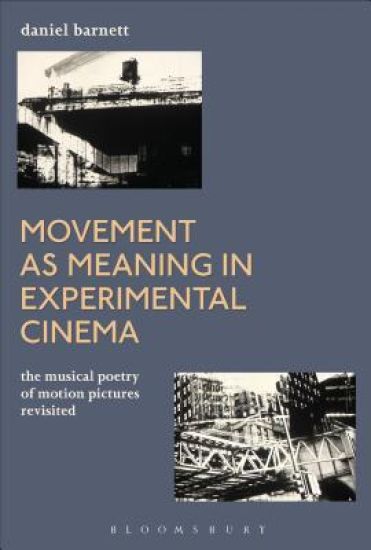
Movement as Meaning in Experimental Cinema

Movement as Meaning in Experimental Cinema

Daniel Barnett

Bloomsbury Academic USA
2017
sidottu
Movement as Meaning in Experimental Cinema offers sweeping and cogent arguments as to why analytic philosophers should take experimental cinema seriously as a medium for illuminating mechanisms of meaning in language. Using the analogy of the movie projector, Barnett deconstructs all communication acts into functions of interval, repetition and context. He describes how Wittgenstein's concepts of family resemblance and language games provide a dynamic perspective on the analysis of acts of reference. He then develops a hyper-simplified formula of movement as meaning to discuss, with true equivalence, the process of reference as it occurs in natural language, technical language, poetic language, painting, photography, music, and of course, cinema. Barnett then applies his analytic technique to an original perspective on cine-poetics based on Paul Valery's concept of omnivalence, and to a projection of how this style of analysis, derived from analog cinema, can help us clarify our view of the digital mediasphere and its relation to consciousness. Informed by the philosophy of Quine, Dennett, Merleau-Ponty as well as the later work of Wittgenstein, among others, he uses the film work of Stan Brakhage, Tony Conrad, A.K. Dewdney, Nathaniel Dorsky, Ken Jacobs, Owen Land, Saul Levine, Gregory Markopoulos Michael Snow, and the poetry of Basho, John Cage, John Cayley and Paul Valery to illustrate the power of his unique perspective on meaning.
Movement as Meaning in Experimental Cinema

Movement as Meaning in Experimental Cinema

Daniel Barnett

Bloomsbury Academic USA
2019
nidottu
Movement as Meaning in Experimental Cinema offers sweeping and cogent arguments as to why analytic philosophers should take experimental cinema seriously as a medium for illuminating mechanisms of meaning in language. Using the analogy of the movie projector, Barnett deconstructs all communication acts into functions of interval, repetition and context. He describes how Wittgenstein's concepts of family resemblance and language games provide a dynamic perspective on the analysis of acts of reference. He then develops a hyper-simplified formula of movement as meaning to discuss, with true equivalence, the process of reference as it occurs in natural language, technical language, poetic language, painting, photography, music, and of course, cinema. Barnett then applies his analytic technique to an original perspective on cine-poetics based on Paul Valery's concept of omnivalence, and to a projection of how this style of analysis, derived from analog cinema, can help us clarify our view of the digital mediasphere and its relation to consciousness. Informed by the philosophy of Quine, Dennett, Merleau-Ponty as well as the later work of Wittgenstein, among others, he uses the film work of Stan Brakhage, Tony Conrad, A.K. Dewdney, Nathaniel Dorsky, Ken Jacobs, Owen Land, Saul Levine, Gregory Markopoulos Michael Snow, and the poetry of Basho, John Cage, John Cayley and Paul Valery to illustrate the power of his unique perspective on meaning.

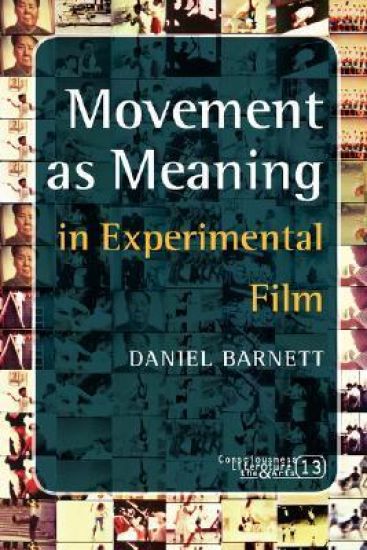
Movement as Meaning in Experimental Film

Movement as Meaning in Experimental Film

Daniel Barnett

Editions Rodopi B.V.
2008
nidottu
This book offers sweeping and cogent arguments as to why analytic philosophers should take experimental cinema seriously as a medium for illuminating mechanisms of meaning in language. Using the analogy of the movie projector, Barnett deconstructs all communication acts into functions of interval, repetition and context. He describes how Wittgenstein’s concepts of family resemblance and language games provide a dynamic perspective on the analysis of acts of reference. He then develops a hyper-simplified formula of movement as meaning to discuss, with true equivalence, the process of reference as it occurs in natural language, technical language, poetic language, painting, photography, music, and of course, cinema. Barnett then applies his analytic technique to an original perspective on cine-poetics based on Paul Valery’s concept of omnivalence, and to a projection of how this style of analysis, derived from analog cinema, can help us clarify our view of the digital mediasphere and its relation to consciousness. Informed by the philosophy of Quine, Dennett, Merleau-Ponty as well as the later work of Wittgenstein, among others, he uses the film work of Stan Brakhage, Tony Conrad, A.K. Dewdney, Nathaniel Dorsky, Ken Jacobs, Owen Land, Saul Levine, Gregory Markopoulos Michael Snow, and the poetry of Basho, John Cage, John Cayley and Paul Valery to illustrate the power of his unique perspective on meaning.