Kirjojen hintavertailu. Mukana 11 699 587 kirjaa ja 12 kauppaa.

Kirjahaku

Etsi kirjoja tekijän nimen, kirjan nimen tai ISBN:n perusteella.

26 kirjaa tekijältä Daniel Cohen

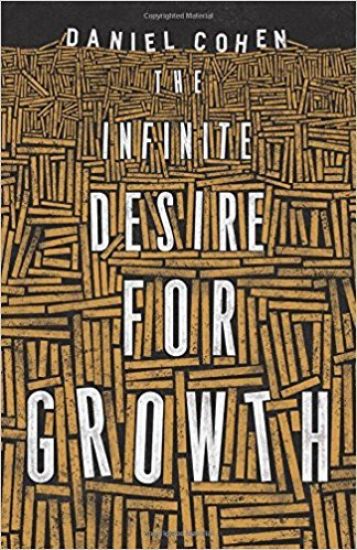
The Infinite Desire for Growth

The Infinite Desire for Growth

Daniel Cohen

PRINCETON UNIVERSITY PRESS
2018
sidottu
Why society’s expectation of economic growth is no longer realisticEconomic growth--and the hope of better things to come—is the religion of the modern world. Yet its prospects have become bleak, with crashes following booms in an endless cycle. In the United States, eighty percent of the population has seen no increase in purchasing power over the last thirty years and the situation is not much better elsewhere. The Infinite Desire for Growth spotlights the obsession with wanting more, and the global tensions that have arisen as a result. Amid finite resources, increasing populations, environmental degradation, and political unrest, the quest for new social and individual goals has never been so critical.Leading economist Daniel Cohen provides a whirlwind tour of the history of economic growth, from the early days of civilization to modern times, underscoring what is so unsettling today. The new digital economy is establishing a "zero-cost" production model, inexpensive software is taking over basic tasks, and years of exploiting the natural world have begun to backfire with deadly consequences. Working hard no longer guarantees social inclusion or income. Drawing on economics, anthropology, and psychology, and thinkers ranging from Rousseau to Keynes and Easterlin, Cohen examines how a future less dependent on material gain might be considered and, how, in a culture of competition, individual desires might be better attuned to the greater needs of society.At a time when wanting what we haven't got has become an obsession, The Infinite Desire for Growth explores the ways we might reinvent, for the twenty-first century, the old ideal of social progress.
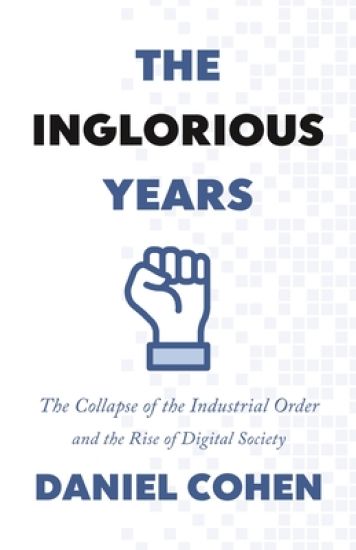
The Inglorious Years

The Inglorious Years

Daniel Cohen

PRINCETON UNIVERSITY PRESS
2021
sidottu
How populism is fueled by the demise of the industrial order and the emergence of a new digital society ruled by algorithmsIn the revolutionary excitement of the 1960s, young people around the world called for a radical shift away from the old industrial order, imagining a future of technological liberation and unfettered prosperity. Industrial society did collapse, and a digital economy has risen to take its place, yet many have been left feeling marginalized and deprived of the possibility of a better life. The Inglorious Years explores the many ways we have been let down by the rising tide of technology, showing how our new interconnectivity is not fulfilling its promise.In this revelatory book, economist Daniel Cohen describes how today's postindustrial society is transforming us all into sequences of data that can be manipulated by algorithms from anywhere on the planet. As yesterday's assembly line was replaced by working online, the leftist protests of the 1960s have given way to angry protests by the populist right. Cohen demonstrates how the digital economy creates the same mix of promises and disappointments as the old industrial order, and how it revives questions about society that are as relevant to us today as they were to the ancients.Brilliant and provocative, The Inglorious Years discusses what the new digital society holds in store for us, and reveals how can we once again regain control of our lives.
The Infinite Desire for Growth

The Infinite Desire for Growth

Daniel Cohen

Princeton University Press
2020
pokkari
Why society’s expectation of economic growth is no longer realisticEconomic growth—and the hope of better things to come—is the religion of the modern world. Yet its prospects have become bleak, with crashes following booms in an endless cycle. In the United States, eighty percent of the population has seen no increase in purchasing power over the last thirty years and the situation is not much better elsewhere. The Infinite Desire for Growth spotlights the obsession with wanting more, and the global tensions that have arisen as a result. Daniel Cohen provides a whirlwind tour of the history of economic growth, from the early days of civilization to modern times, underscoring what is so unsettling today. He examines how a future less dependent on material gain might be considered, and how, in a culture of competition, individual desires might be better attuned to the greater needs of society.
The Inglorious Years

The Inglorious Years

Daniel Cohen

PRINCETON UNIVERSITY PRESS
2023
pokkari
How populism is fueled by the demise of the industrial order and the emergence of a new digital society ruled by algorithmsIn the revolutionary excitement of the 1960s, young people around the world called for a radical shift away from the old industrial order, imagining a future of technological liberation and unfettered prosperity. Industrial society did collapse, and a digital economy has risen to take its place, yet many have been left feeling marginalized and deprived of the possibility of a better life. The Inglorious Years explores the many ways we have been let down by the rising tide of technology, showing how our new interconnectivity is not fulfilling its promise.In this revelatory book, economist Daniel Cohen describes how today's postindustrial society is transforming us all into sequences of data that can be manipulated by algorithms from anywhere on the planet. As yesterday's assembly line was replaced by working online, the leftist protests of the 1960s have given way to angry protests by the populist right. Cohen demonstrates how the digital economy creates the same mix of promises and disappointments as the old industrial order, and how it revives questions about society that are as relevant to us today as they were to the ancients.Brilliant and provocative, The Inglorious Years discusses what the new digital society holds in store for us, and reveals how can we once again regain control of our lives.
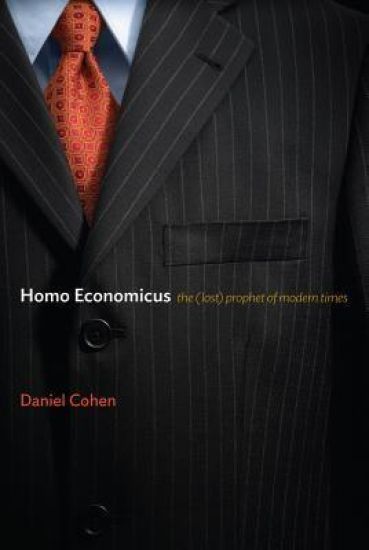
Homo Economicus

Homo Economicus

Daniel Cohen

Polity Press
2014
sidottu
The West has long defined the pursuit of happiness in economic terms but now, in the wake of the 2007-8 financial crisis, it is time to think again about what constitutes our happiness.In this wide-ranging new book, the leading economist Daniel Cohen traces our current malaise back to the rise of homo economicus: for the last 200 years, the modern world has defined happiness in terms of material gain. Homo economicus has cast aside its rivals, homo ethicus and homo empathicus, and spread its neo-Darwinian logic far and wide. Yet, instead of bringing happiness, homo economicus traps human beings in a world devoid of any ideals. We are left feeling empty and dissatisfied.Today more and more people are beginning to recognize that competition and material gain are not the only things that matter in life. The central paradox of our era is that we look to the economy to give direction to our world at the very time when social needs are migrating toward sectors that are hard to place within the scope of market logic. Health, education, scientific research, and the world of the Internet form the heart of our post-industrial societies, but none of these belong to the traditional economic mould. While human creativity is higher than ever, homo economicus imposes himself like a sad prophet, a killjoy of the new age.Drawing on a rich array of examples, Cohen explores the new digital and genetic revolutions and examines the limitations of homo economicus in our rapidly transforming world. As human beings have an extraordinary ability to adapt, he argues that we need to rebalance the relation between competition and cooperation in favour of the latter.This thought-provoking analysis of our contemporary predicament will be of great value to anyone interested in the relationship between what happens in our economies and our personal happiness.
Arguments and Metaphors in Philosophy

Arguments and Metaphors in Philosophy

Daniel Cohen

University Press of America
2004
nidottu
In this book, Daniel Cohen explores the connections between arguments and metaphors most pronounced in philosophy, because philosophical discourse is both thoroughly metaphorical and replete with argumentation. The metaphors we use for arguments, as well as the ways we use metaphors as arguments and in arguments, provides the basis for a tripartite theoretical framework for understanding and evaluating arguments. There are logical, rhetorical, and dialectical dimensions to arguments, each providing norms for conduct, vocabulary for evaluation, and criteria for success. In turn, the identified roles for arguments in general discourse can be applied to metaphors, helping to explain what they mean and how they work. Cohen covers the nature of arguments, their modes and structures, and the principles of their evaluation. He also addresses the nature of metaphors, their place in language and thought, and their connections to arguments, identifying and reconciling arguments' and metaphors' respective roles in philosophy.
The Labyrinth of the Heart

The Labyrinth of the Heart

Daniel Cohen

Wood Water
2011
pokkari
In these retellings, Daniel Cohen draws on ancient myths, ballads and tales with an insightful new twist, telling them against the conventional grain to act as a critique of men and society. His stories teach us much about ourselves, providing new insights into gender roles, especially those involving heroism today. We have a real need for magical champions, but not male heroes who dominate. Daniel reveals heroes who relate. These stories address men's relationships with women and each other, and their role in the natural world. They are designed to support men in using their talents and strengths to heal rather than harm, to find new and non-oppressive ways of behaving. The insights of feminism and Goddess spirituality shine through the stories.To Cohen, stories form a prism through which we see the world. We define our lives by the stories we tell ourselves and each other about our childhoods, friends, work, ambitions, and hopes. It is not the world of facts, he says, which gives us meaning, but the world of imagination, making stories supremely important. But his depth of understanding of the world brings to his tales many fine details that other storytellers might miss.Old stories, says Cohen, have great power, because they relate to matters that have remained important through many changes in society. That is why they have survived. Public stories help define our culture, telling us what is permissible and what is not, what and who are admired, and how we wish to treat each other.By changing the stories we tell we can change our understanding and behaviour. The stories in this remarkable little book are not presented here merely as teaching tools. These well-crafted tales have their own intrinsic value and their own life. They are told because they simply came bubbling up, insisting that they be heard, and would not let go of the author until he wrote them down and shared them with the world. Daniel Cohen's retellings of Greek and Celtic myths take my breath away and make my spine tingle, pointing the way to a transformation of the cultures of domination that have shaped our world, causing so much damage to all of us and the web of life.Carol P. Christ (author of Rebirth of the Goddess and She Who Changes.)Daniel draws on ancient texts, myths, ballads and tales with an insightful new twist, wry and uniquely his own.Robin Williamson (bard, storyteller, founder-member of the Incredible String Band.)These retellings are brave, beautiful and original, combining a genuine appreciation of the original myths and legends with a rigorous new system of ethics. Ronald Hutton (author of The Triumph of the Moon, The Pagan Religions of the Ancient British Isles, and many other books and articles.)I've read no better storyteller than Daniel Cohen. And my standards are high. I laugh with joy at his mysticism and perceptive wit, sigh with relief, find healing through his gifts. Francesca De Grandis (author of Bardic Alchemy: Enchanted Tales about the Quest for Goddess and Self.)This witty, insightful book inspires us to incubate myths in the rich ground of daily life and discover how they can still surprise us. Caitlin Matthews (author of Sophia, Goddess of Wisdom, King Arthur's Raid. Mabon and the Guardians of Celtic Britain, and many other books.)Cohen's stories teach us insights into gender roles, especially those involving heroism today. The author sees behind stories' seams through his critical eye and voice. These are long-polished re-viewing and re-insighting narratives of classical and late-European stories. They make me wish I had children to tell them to. Notes at the end explain starting points for these engaging narratives.William G. Doty (author of Myths: a Handbook, Myths of Masculinity, and other writings on myth.)This small but mould-shattering volume left me stunned and breathless many times over. Wildheart
Homo Numericus

Homo Numericus

Daniel Cohen

JOHN WILEY AND SONS LTD
2024
sidottu
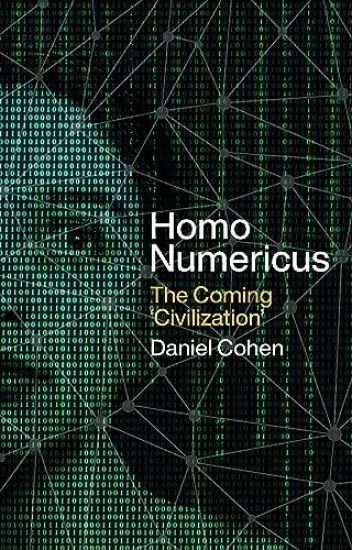
From Amazon to Tinder, from Google to Deliveroo, there is no facet of human life that the digital revolution has not streamlined and dematerialized. Its objective was to reduce costs by forgoing face-to-face interactions, and it was a direct result of the free-market shock of the 1980s, which sought to expand the marketplace seamlessly in every possible dimension. Today, we can be algorithmically entertained, educated, cared for, and courted in a way that was impossible in the old industrial society, where institutions structured the social world. Today, these institutions have been replaced by monetized virtual contact. As the industrial revolution did in the past, the digital revolution is creating a new economy and a new sensibility, bringing about a radical revaluation of society and its representations. While obsessed with the search for an efficient management of human relations, the new digital capitalism gives rise to an irrational and impulsive Homo numericus prone to an array of addictive behaviours and subjected to intensive forms of surveillance. Far from producing a new agora, social media produce a radicalization of public debate in which hate-filled speech directed against adversaries becomes the norm. But these outcomes are not inevitable. The digital revolution also offers an exciting path, one that leads to a world in which everyone deserves to be listened to and respected. It explores a new way of living that is historically unprecedented, that of a society based neither on individualism nor on the hierarchical model of earlier civilizations. Are we able to seize the new opportunities opened up by the digital revolution without succumbing to its dark side?
A Brief History of the Economy

A Brief History of the Economy

Daniel Cohen

JOHN WILEY AND SONS LTD
2025
sidottu
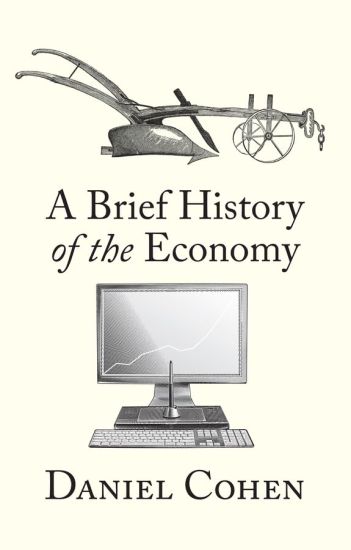
Economic growth is the religion of the modern world. It promises a solution to the most basic drama of our human existence: wanting what we don’t have. But we live at a time when the frenzied pursuit of economic growth is jeopardising the planet’s viability and our very survival as a species. How did we get to this point in human history? How did we allow the pursuit of growth to become the apotheosis of human development? To answer these questions, the distinguished economist Daniel Cohen takes us on a journey to understand human desire and the different registers on which it has expressed itself throughout history. He brings his panoramic grasp of the subject to bear on the key stages of social and economic development, from the Neolithic Revolution to the digital age. The ideas of the great economists – from Adam Smith and Marx to Schumpeter and Keynes – are situated in their historical contexts and explained clearly and concisely. The result is a triumph of ambition and brevity: a history of the economy in 150 pages. This book – the final work written by Daniel Cohen – will appeal to anyone interested in the economy and in the tension between a limited world and unlimited desires that lies at the heart of the great challenges we face today.