

Kirjahaku
Etsi kirjoja tekijän nimen, kirjan nimen tai ISBN:n perusteella.
8 kirjaa tekijältä Daniel F. Littlefield


American Indian and Alaska Native Newspapers and Periodicals, 1971-1985.
Daniel F. Littlefield
Greenwood Press
1986
sidottu
This resource guide brings the comprehensive bibliographic coverage of American Indian and Alaska Native publications up to the present time. It contains newspapers and periodicals edited or published by American Indians or Alaska Natives, as well as publications with the primary purpose of publishing information about contemporary Indians or Alaska Natives. This volume is the result of the first-hand examination of as many copies of each publication as possible, with the assistance of over thirty contributors. Titles are arranged alphabetically and include variant titles which are cross-referenced. Each entry contains an essay profile of the publication listed, and includes a discussion of its founding, intentions, editors, content, affiliations with tribes, organizations, or other groups, and demise. Following each profile is an information section which includes a bibliography and a list of sources for locating holding institutions. A succinct publication history appears at the end of each entry, with title changes and issue data, and full information on publishers and editors. Appendixes of titles listed by chronology and location are also provided, along with an index and list of contributors.
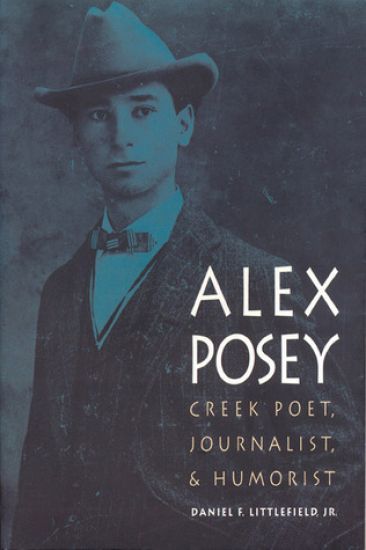
'A vivid portrait of a complex man in the volatile world of Oklahoma Indian life from 1873 to 1908 ...The book combines excellent historical scholarship with penetrating insight into a complicated personality and the turbulent politics of Indian Territory' - "Choice". '[A] splendid portrayal of Posey as a pacesetter in Indian literature and a cogent political force in expressing Creek public opinion about allotment, tribal termination, and the many Congressional restrictions placed on land ownership' - "Tulsa World". 'A well-researched biography, Alex Posey also provides fresh insight into the Creek nation and its society during the turmoil of the late 1800s and the turn of this century...A model for understanding other tribes' - "Journal of American History".Most of Alexander Posey's short and remarkable life was devoted to literary pursuits. Through a widely circulated satirical column published under the pseudonym "Fus Fixico", he did much to document and draw attention to conditions in Indian Territory. He rose to prominence among the Creeks and played a leading role as spokesman on a number of serious political issues. Daniel F. Littlefield Jr. has written the first full biography of Alexander Posey, a pioneer of American Indian literature and a shaper of public opinion. Daniel F. Littlefield Jr. is a professor of English at the University of Arkansas at Little Rock and director of the American Native Press Archives. He is the editor, with Carol A. Petty Hunter, of Alexander Posey's "Fus Fixico Letters" (Nebraska 1993).

Most of Alexander Posey's short and remarkable life was devoted to literary pursuits. Through a widely circulated satirical column published under the pseudonym Fus Fixico, he did much to document and draw attention to conditions in Indian Territory. He rose to prominence among the Creeks and played a leading role as spokesman on a number of serious political issues. Daniel F. Littlefield Jr. has written the first full biography of Alexander Posey, a pioneer of American Indian literature and a shaper of public opinion.

In 1898 after the murder of a white woman, two young Seminoles were chained and burned alive. Hiding behind a wall of silence and fearing reprisal for identifying their executioners, virtually the entire white community became involved with the ghastly execution.In this absorbing narrative Daniel F. Littlefield, Jr., captures the horror and details the events that incited this alarming act of mob violence and community complicity. Seminole Burning not only gives an account of a dramatic, violent event in Indian–white relations but also provides insights into the social, economic, and legal history of the times.Although occurring during the heyday of lynching in America, the execution of the young Seminoles proved to be not just another sad episode in the history of injustice. Apparently a vendetta organized by the extended family of the dead woman’s husband, it was orchestrated by landless whites, who for a week after her murder, had harassed and terrorized more than twenty Seminole men and boys in selecting victims.For having taken them out of Indian Territory and into Oklahoma for execution, the mob leaders became the target of federal authorities. In the first successful prosecution of lynchers in the Southwest, a special prosecutor revealed underlying motives for the crime and convicted six.Seminole Burning is not just the story of a lynching and an account of how landless Americans invaded Indian Territory. By placing this tragic case in context and against the large backdrop of history, Littlefield connects it to federal expansion of court jurisdiction, to federal attempts to dissolve land titles of the Five Civilized Tribes, and indeed to the establishing of the state of Oklahoma.

Because Seminoles held slaves in a confusing system that was markedly dissimilar to white society's, the federal government was challenged to identify which blacks in Florida were free and which were not. As claims by slave owners and slave hunters fell into conflict, the Seminoles' more relaxed form of enslavement threatened the overall institution. This discord was intensified by the Second Seminole War, in which slaves united with Seminoles to fight against the United States. In exchange for capitulation America proffered the coalition unfettered freedom in Indian Territory. In Florida the two societies were so closely linked that, when the government implemented its program of removal, Seminoles and African Americans were transported to Oklahoma together. However, once on their new lands Seminoles and blacks fell into strife with Creeks, who wanted control over both groups, and with Cherokees and Arkansans, who feared an enclave of free blacks near their borders. These disputes drove a wedge between the Seminoles and their black allies. Until the Civil War, blacks were hounded by slave claims that had followed them from the east and by raids of Creeks and white slavers from Arkan-sas. Many blacks were captured and sold. Others fled from Indian Territory and settled in Mexico. At the end of the Civil War free blacks and those of African descent who had remained unemancipated were adopted into the Seminole tribe under provisions of the Treaty of 1866. They began their role in the founding of what today is the modern Seminole Nation of Oklahoma. In a preface to this new edition Littlefield explains the continuing significance of this subject. Daniel F. Littlefield, Jr., a professor of English at the University of Arkansas, Little Rock, and director of American Native Press Archives, is the author of Seminole Burning: A Story of Racial Vengeance and editor, with James W. Parins, of Native American Writing in the Southeast: An Anthology, 1875-1935 (both from University Press of Mississippi).