Kirjojen hintavertailu. Mukana 11 244 527 kirjaa ja 12 kauppaa.

Kirjahaku

Etsi kirjoja tekijän nimen, kirjan nimen tai ISBN:n perusteella.

4 kirjaa tekijältä Daniel F. Robinson

The Moroccan Argan Trade

The Moroccan Argan Trade

Daniel F. Robinson

Routledge
2020
sidottu
This book provides one of the most detailed and comprehensive examinations of the Moroccan argan tree, the products derived from it and its cultural significance. The Moroccan argan trade is booming, but as the tree provides important ecological functions and plays an important role, both financially and culturally, for the Amazigh (Berber) people it has become a key topic of debate. This book thoroughly examines the production stories, benefits and impacts and provides a value-chain analysis which compares different cooperatives and approaches to production. It assesses the fair-trade approaches and attempts at sustainable production of the bio-trade resource. While being a vital source of income, the argan tree has a significant cultural importance to the Indigenous people and the book assesses the impact of the argan trade on their well-being, community and livelihoods. It examines Indigenous knowledge and intellectual property issues relating to the trade, as well as Berber-state law and politics. Assessing factors relating to legal and economic geography international trade, socio-cultural and human-nature relationships, the book provides a comprehensive analysis of the argan tree which will appeal to students, scholars and practitioners.
Biodiversity, Access and Benefit-Sharing

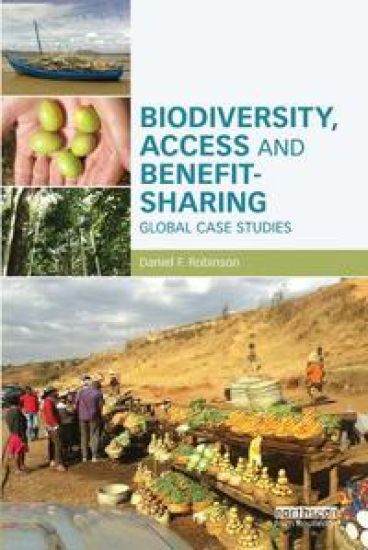
Biodiversity, Access and Benefit-Sharing

Daniel F. Robinson

Routledge
2014
sidottu
The Nagoya Protocol to the Convention on Biological Diversity (CBD) is rapidly receiving signatures and ratifications. Many countries are preparing to implement the protocol through national research permit systems and/or biodiversity laws. Yet there is still considerable confusion about how to implement the Protocol, regarding access and benefit-sharing (ABS) procedures, and minimal experience in many countries. This book seeks to remedy this gap in understanding by analysing a number of ABS case studies in light of the Nagoya Protocol. The case studies are wide-ranging, with examples of plants for medicinal, cosmetic, biotech and food products from or for development in Australia, North Africa, Madagascar, Switzerland, Thailand, USA and Oceania. These will encourage countries to develop national systems which maximise their benefits (both monetary and non-monetary) towards conservation and support for local communities that hold traditional knowledge. In addition, the author analyses new expectations raised by the Nagoya Protocol, such as the encouragement of the development of community protocols by indigenous and local communities. As a result, stakeholders and policy-makers will be able to learn the steps involved in establishing ABS agreements, issues that arise between stakeholders, and the types of benefits that might be realistic.
The Moroccan Argan Trade

The Moroccan Argan Trade

Daniel F. Robinson

TAYLOR FRANCIS LTD
2021
nidottu
This book provides one of the most detailed and comprehensive examinations of the Moroccan argan tree, the products derived from it and its cultural significance. The Moroccan argan trade is booming, but as the tree provides important ecological functions and plays an important role, both financially and culturally, for the Amazigh (Berber) people it has become a key topic of debate. This book thoroughly examines the production stories, benefits and impacts and provides a value-chain analysis which compares different cooperatives and approaches to production. It assesses the fair-trade approaches and attempts at sustainable production of the bio-trade resource. While being a vital source of income, the argan tree has a significant cultural importance to the Indigenous people and the book assesses the impact of the argan trade on their well-being, community and livelihoods. It examines Indigenous knowledge and intellectual property issues relating to the trade, as well as Berber-state law and politics. Assessing factors relating to legal and economic geography international trade, socio-cultural and human-nature relationships, the book provides a comprehensive analysis of the argan tree which will appeal to students, scholars and practitioners.
Biodiversity, Access and Benefit-Sharing

Biodiversity, Access and Benefit-Sharing

Daniel F. Robinson

Routledge
2017
nidottu
The Nagoya Protocol to the Convention on Biological Diversity (CBD) is rapidly receiving signatures and ratifications. Many countries are preparing to implement the protocol through national research permit systems and/or biodiversity laws. Yet there is still considerable confusion about how to implement the Protocol, regarding access and benefit-sharing (ABS) procedures, and minimal experience in many countries. This book seeks to remedy this gap in understanding by analysing a number of ABS case studies in light of the Nagoya Protocol. The case studies are wide-ranging, with examples of plants for medicinal, cosmetic, biotech and food products from or for development in Australia, North Africa, Madagascar, Switzerland, Thailand, USA and Oceania. These will encourage countries to develop national systems which maximise their benefits (both monetary and non-monetary) towards conservation and support for local communities that hold traditional knowledge. In addition, the author analyses new expectations raised by the Nagoya Protocol, such as the encouragement of the development of community protocols by indigenous and local communities. As a result, stakeholders and policy-makers will be able to learn the steps involved in establishing ABS agreements, issues that arise between stakeholders, and the types of benefits that might be realistic.