Kirjojen hintavertailu. Mukana 11 717 486 kirjaa ja 12 kauppaa.

Kirjahaku

Etsi kirjoja tekijän nimen, kirjan nimen tai ISBN:n perusteella.

5 kirjaa tekijältä Daniel F. Silva

Subjectivity and the Reproduction of Imperial Power
This book brings forth a new contribution to the study of imperialism and colonial discourse by theorizing the emergence and function of individual identity as product and producer of imperial power. While recent decades of theoretical reflections on imperialism have yielded important understandings of how the West has repeatedly reconsolidated its power, this book seeks to grasp the complex role of subjectivity in reformulating the terms of imperial domination from early modern European expansion to late capitalism. This entails approaching Empire as a constantly shifting system of differences and meanings as well as an ontological project, a mode of historical writing, and economy of desire that repeatedly envelops the subject into the realm of western power. The analysis of an array of literary texts and cultural artifacts is undertaken by means of a theoretically eclectic approach – drawing on psychoanalysis, post-structuralism, postcolonial theory, and Marxism – with the aim of forwarding current knowledge of Empire while also contributing to different branches of critical theory. In exploring the formation of imperial subjectivity in different historical moments, Silva raises new questions related to the signification of otherness in European expansion and colonial settlement, slavery and eugenics in post-independence Americas, and late capitalist circulation of bodies and commodities. The volume also covers a broad range of geo-cultural spaces in order to locate western power in time and space. This book’s diversity in terms of approach, historical scope, and cultural contexts makes it a useful tool for research and teaching among students and scholars of disciplines including Postcolonial Studies, Colonial History, Literature, and Globalization.
Subjectivity and the Reproduction of Imperial Power
This book brings forth a new contribution to the study of imperialism and colonial discourse by theorizing the emergence and function of individual identity as product and producer of imperial power. While recent decades of theoretical reflections on imperialism have yielded important understandings of how the West has repeatedly reconsolidated its power, this book seeks to grasp the complex role of subjectivity in reformulating the terms of imperial domination from early modern European expansion to late capitalism. This entails approaching Empire as a constantly shifting system of differences and meanings as well as an ontological project, a mode of historical writing, and economy of desire that repeatedly envelops the subject into the realm of western power. The analysis of an array of literary texts and cultural artifacts is undertaken by means of a theoretically eclectic approach – drawing on psychoanalysis, post-structuralism, postcolonial theory, and Marxism – with the aim of forwarding current knowledge of Empire while also contributing to different branches of critical theory. In exploring the formation of imperial subjectivity in different historical moments, Silva raises new questions related to the signification of otherness in European expansion and colonial settlement, slavery and eugenics in post-independence Americas, and late capitalist circulation of bodies and commodities. The volume also covers a broad range of geo-cultural spaces in order to locate western power in time and space. This book’s diversity in terms of approach, historical scope, and cultural contexts makes it a useful tool for research and teaching among students and scholars of disciplines including Postcolonial Studies, Colonial History, Literature, and Globalization.
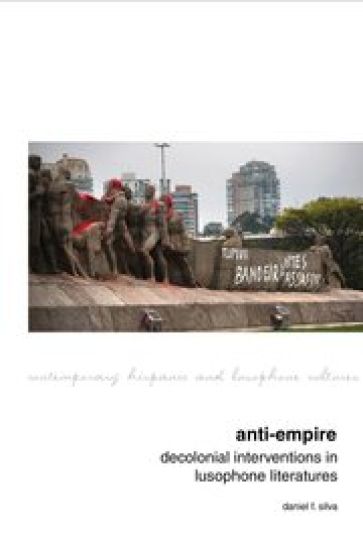
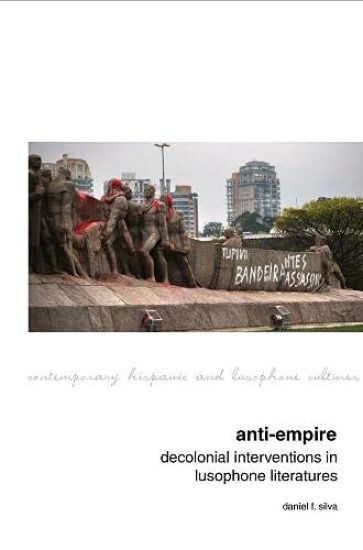
Anti-Empire: Decolonial Interventions in Lusophone Literatures

Anti-Empire: Decolonial Interventions in Lusophone Literatures

Daniel F. Silva

Liverpool University Press
2018
sidottu
An Open Access edition of this book is available on the Liverpool University Press website and through Knowledge Unlatched.Anti-Empire explores how different writers across Lusophone spaces have engaged with imperial and colonial power at its various levels of domination, while imagining alternatives to dominant discourses pertaining to race, ethnicity, culture, gender, sexuality, and class. Guided by a theoretically eclectic approach ranging from Psychoanalysis, Deconstruction, Postcolonial Theory, Queer Theory, and Critical Race Studies, Empire is explored as a spectrum of contemporary global power inaugurated by European expansion and propagated in the postcolonial present through economic, cultural, and political forces. Through the texts analysed, Anti-Empire offers in-depth interrogations of contemporary power in terms of racial politics, gender performance, socio-economic divisions, political structures, and the intersections of these facets of domination and hegemony. By way of grappling with Empire’s discursive field and charting new modes of producing meaning in opposition to that of Empire, the texts read from Brazil, Cabo Verde, East Timor, Portugal, and São Tomé and Príncipe open new inquiries for Postcolonial and Decolonial Studies while contributing theoretical debates to the study of Lusophone cultures.
Anti-Empire: Decolonial Interventions in Lusophone Literatures

Anti-Empire: Decolonial Interventions in Lusophone Literatures

Daniel F. Silva

LIVERPOOL UNIVERSITY PRESS
2021
nidottu
An Open Access edition of this book is available on the Liverpool University Press website and through Knowledge Unlatched.Anti-Empire explores how different writers across Lusophone spaces have engaged with imperial and colonial power at its various levels of domination, while imagining alternatives to dominant discourses pertaining to race, ethnicity, culture, gender, sexuality, and class. Guided by a theoretically eclectic approach ranging from Psychoanalysis, Deconstruction, Postcolonial Theory, Queer Theory, and Critical Race Studies, Empire is explored as a spectrum of contemporary global power inaugurated by European expansion and propagated in the postcolonial present through economic, cultural, and political forces. Through the texts analysed, Anti-Empire offers in-depth interrogations of contemporary power in terms of racial politics, gender performance, socio-economic divisions, political structures, and the intersections of these facets of domination and hegemony. By way of grappling with Empire’s discursive field and charting new modes of producing meaning in opposition to that of Empire, the texts read from Brazil, Cabo Verde, East Timor, Portugal, and São Tomé and Príncipe open new inquiries for Postcolonial and Decolonial Studies while contributing theoretical debates to the study of Lusophone cultures.
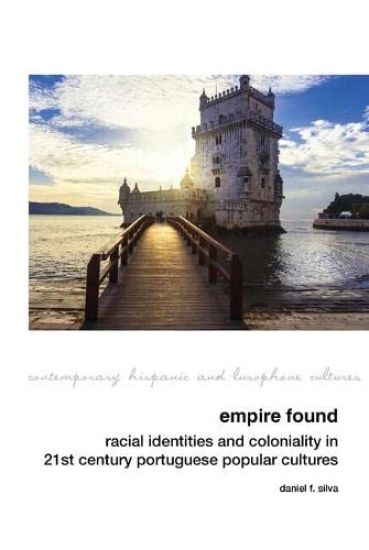
Empire Found

Empire Found

Daniel F. Silva

LIVERPOOL UNIVERSITY PRESS
2023
sidottu
An Open Access edition of this book is available on the Liverpool University Press website and the OAPEN library as part of the Opening the Future project with COPIM.Empire Found: Racial Identities and Coloniality in Twenty-First Century Portuguese Popular Cultures examines how the discourses and narratives of Portuguese imperial exceptionalism and Portuguese racial identity, developed during the last centuries of Portuguese settler colonialism continue to inform an array of cultural production and consumption in the four decades since decolonization. By examining a range of contemporary popular cultural production (literature, football, musical production, and celebrity culture) in critical conversation with intellectual production of the nineteenth and twentieth centuries, Empire Found examines how narratives of Portuguese racial hybridity and indeterminacy operate alongside ongoing structures of coloniality and white supremacy in the realms of cultural production. I argue that these implied or overt historical dialogues carried out through cultural production are integral to the very reproduction of the Portuguese nation-state apparatus, as well as its racial structures and claims to whiteness in the wake of decolonization and marginal integration into the European Union.