Kirjojen hintavertailu. Mukana 11 342 296 kirjaa ja 12 kauppaa.

Kirjahaku

Etsi kirjoja tekijän nimen, kirjan nimen tai ISBN:n perusteella.

5 kirjaa tekijältä Daniel H. Joyner

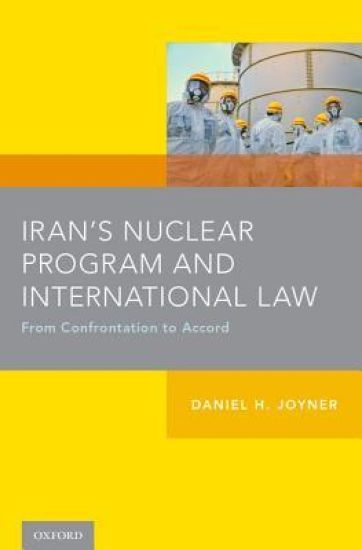
Iran's Nuclear Program and International Law

Iran's Nuclear Program and International Law

Daniel H. Joyner

Oxford University Press Inc
2016
nidottu
This book provides an international legal analysis of the most important questions regarding Iran's nuclear program since 2002. Setting these legal questions in their historical and diplomatic context, this book aims to clarify how the relevant sources of international law - including primarily the 1968 Nuclear Non-proliferation Treaty and IAEA treaty law - should be properly applied in the context of the Iran case. It provides an instructional case study of the application of these sources of international law, the lessons which can be applied to inform both the on-going legal and diplomatic dynamics surrounding the Iran nuclear dispute itself, as well as similar future cases. Some questions raised regard the watershed diplomatic accord reached between Iran and Western states in July, 2015, known as the Joint Comprehensive Program of Action. The answers will be of interests to diplomats and academics, as well as to anyone who is interested in understanding international law's application to this sensitive dispute in international relations.
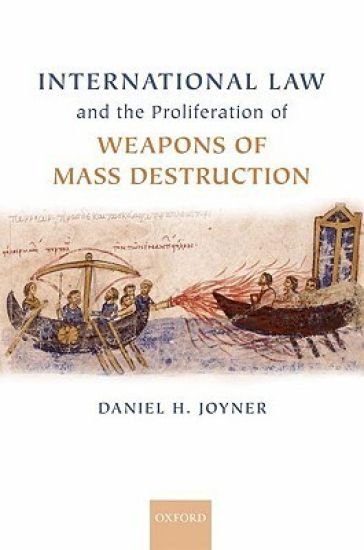
International Law and the Proliferation of Weapons of Mass Destruction
Proliferation of WMD technologies is by no means a new concern for the international community. Indeed, since the signing of the Nuclear Non-proliferation Treaty in 1968, tremendous energies have been expended upon diplomatic efforts to create a web of treaties and international organisations regulating the production and stockpiling of WMD sensitive materials within states, as well as their spread through the increasingly globalised channels of international trade to other states and non-state actors. However, the intervention in 2003 by Western powers in Iraq has served as an illustration of the importance of greater understanding of and attention to this area of law, as disagreements over its content and application have once again lead to a potentially destabilising armed intervention by members of the United Nations into the sovereign territory of another member state. Other ongoing disputes between states regarding the character of obligations assumed under non-proliferation treaty instruments, and the effect of international organisations' decisions in this area, form some of the most contentious and potentially destabilising issues of foreign policy concern for many states. This book provides a comprehensive analysis of international law and organisations in the area of WMD proliferation. It will serve both as a reference for understanding the law as it currently exists in its political and economic context, as well as an analysis of areas in which amendments to existing law and organisations are needed.
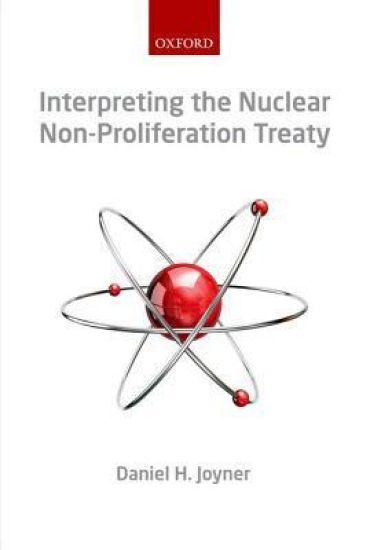
Interpreting the Nuclear Non-Proliferation Treaty

Interpreting the Nuclear Non-Proliferation Treaty

Daniel H. Joyner

Oxford University Press
2011
sidottu
The 1968 Nuclear Non-proliferation Treaty has proven the most complicated and controversial of all arms control treaties, both in principle and in practice. Statements of nuclear-weapon States from the Cold War to the present, led by the United States, show a disproportionate prioritization of the non-proliferation pillar of the Treaty, and an unwarranted underprioritization of the civilian energy development and disarmament pillars of the treaty. This book argues that the way in which nuclear-weapon States have interpreted the Treaty has laid the legal foundation for a number of policies related to trade in civilian nuclear energy technologies and nuclear weapons disarmament. These policies circumscribe the rights of non-nuclear-weapon States under Article IV of the Treaty by imposing conditions on the supply of civilian nuclear technologies. They also provide for the renewal and maintaintenance, and in some cases further development of the nuclear weapons arsenals of nuclear-weapon States. The book provides a legal analysis of this trend in treaty interpretation by nuclear-weapon States and the policies for which it has provided legal justification. It argues, through a close and systematic examination of the Treaty by reference to the rules of treaty interpretation found in the 1969 Vienna Convention on the Law of Treaties, that this disproportionate prioritization of the non-proliferation pillar of the Treaty leads to erroneous legal interpretations in light of the original balance of principles underlying the Treaty, prejudicing the legitimate legal interests of non-nuclear-weapon States.
Iran's Nuclear Program and International Law

Iran's Nuclear Program and International Law

Daniel H. Joyner

Oxford University Press Inc
2016
sidottu
This book provides an international legal analysis of the most important questions regarding Iran's nuclear program since 2002. Setting these legal questions in their historical and diplomatic context, this book aims to clarify how the relevant sources of international law - including primarily the 1968 Nuclear Non-proliferation Treaty and IAEA treaty law - should be properly applied in the context of the Iran case. It provides an instructional case study of the application of these sources of international law, the lessons which can be applied to inform both the on-going legal and diplomatic dynamics surrounding the Iran nuclear dispute itself, as well as similar future cases. Some questions raised regard the watershed diplomatic accord reached between Iran and Western states in July, 2015, known as the Joint Comprehensive Program of Action. The answers will be of interests to diplomats and academics, as well as to anyone who is interested in understanding international law's application to this sensitive dispute in international relations.
Interpreting the Nuclear Non-Proliferation Treaty

Interpreting the Nuclear Non-Proliferation Treaty

Daniel H. Joyner

Oxford University Press
2012
nidottu
The 1968 Nuclear Non-Proliferation Treaty has proven the most complicated and controversial of all arms control treaties, both in principle and in practice. Statements of nuclear-weapon States from the Cold War to the present, led by the United States, show a disproportionate prioritization of the non-proliferation pillar of the Treaty, and an unwarranted underprioritization of the civilian energy development and disarmament pillars of the treaty. This book argues that the way in which nuclear-weapon States have interpreted the Treaty has laid the legal foundation for a number of policies related to trade in civilian nuclear energy technologies and nuclear weapons disarmament. These policies circumscribe the rights of non-nuclear-weapon States under Article IV of the Treaty by imposing conditions on the supply of civilian nuclear technologies. They also provide for the renewal and maintaintenance, and in some cases further development of the nuclear weapons arsenals of nuclear-weapon States. The book provides a legal analysis of this trend in treaty interpretation by nuclear-weapon States and the policies for which it has provided legal justification. It argues, through a close and systematic examination of the Treaty by reference to the rules of treaty interpretation found in the 1969 Vienna Convention on the Law of Treaties, that this disproportionate prioritization of the non-proliferation pillar of the Treaty leads to erroneous legal interpretations of the Treaty, prejudicing the legitimate legal interests of non-nuclear-weapon States.