Kirjojen hintavertailu. Mukana 11 342 296 kirjaa ja 12 kauppaa.

Kirjahaku

Etsi kirjoja tekijän nimen, kirjan nimen tai ISBN:n perusteella.

16 kirjaa tekijältä Daniel Horowitz

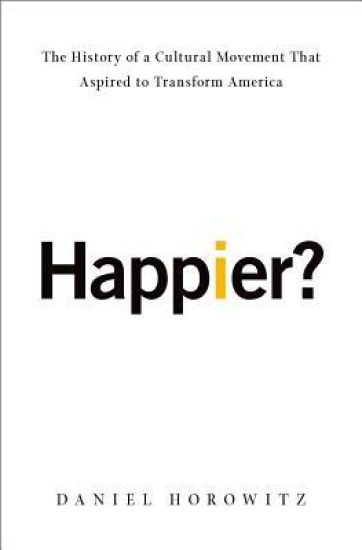
Happier?

Happier?

Daniel Horowitz

Oxford University Press Inc
2018
sidottu
When a cultural movement that began to take shape in the mid-twentieth century erupted into mainstream American culture in the late 1990s, it brought to the fore the idea that it is as important to improve one's own sense of pleasure as it is to manage depression and anxiety. Cultural historian Daniel Horowitz's research reveals that this change happened in the context of key events. World War II, the Holocaust, post-war prosperity, the rise of counter-culture, the crises of the 1970s, the presidency of Ronald Reagan, and the prime ministerships of Margaret Thatcher and David Cameron provided the important context for the development of the field today known as positive psychology. Happier? provides the first history of the origins, development, and impact of the way Americans -- and now many around the world -- shifted from mental illness to well-being as they pondered the human condition. This change, which came about from the fusing of knowledge drawn from Eastern spiritual traditions, behavioral economics, neuroscience, evolutionary biology, and cognitive psychology, has been led by scholars and academic entrepreneurs, as they wrestled with the implications of political events and forces such as neoliberalism and cultural conservatism, and a public eager for self-improvement. Linking the development of happiness studies and positive psychology with a broad series of social changes, including the emergence of new media and technologies like TED talks, blogs, web sites, and neuroscience, as well as the role of evangelical ministers, Oprah Winfrey's enterprises, and funding from government agencies and private foundations, Horowitz highlights the transfer of specialized knowledge into popular arenas. Along the way he shows how marketing triumphed, transforming academic disciplines and spirituality into saleable products. Ultimately, Happier? illuminates how positive psychology, one of the most influential academic fields of the late twentieth and early twenty-first centuries, infused American culture with captivating promises for a happier society.
Consuming Pleasures

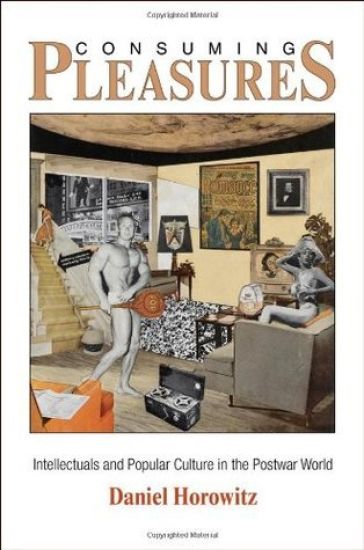
Consuming Pleasures

Daniel Horowitz

University of Pennsylvania Press
2012
sidottu
How is it that American intellectuals, who had for 150 years worried about the deleterious effects of affluence, more recently began to emphasize pleasure, playfulness, and symbolic exchange as the essence of a vibrant consumer culture? The New York intellectuals of the 1930s rejected any serious or analytical discussion, let alone appreciation, of popular culture, which they viewed as morally questionable. Beginning in the 1950s, however, new perspectives emerged outside and within the United States that challenged this dominant thinking. Consuming Pleasures reveals how a group of writers shifted attention from condemnation to critical appreciation, critiqued cultural hierarchies and moralistic approaches, and explored the symbolic processes by which individuals and groups communicate. Historian Daniel Horowitz traces the emergence of these new perspectives through a series of intellectual biographies. With writers and readers from the United States at the center, the story begins in Western Europe in the early 1950s and ends in the early 1970s, when American intellectuals increasingly appreciated the rich inventiveness of popular culture. Drawing on sources both familiar and newly discovered, this transnational intellectual history plays familiar works off each other in fresh ways. Among those whose work is featured are Jürgen Habermas, Roland Barthes, Umberto Eco, Walter Benjamin, C. L. R. James, David Riesman and Marshall McLuhan, Richard Hoggart, members of London's Independent Group, Stuart Hall, Paddy Whannel, Tom Wolfe, Herbert Gans, Susan Sontag, Reyner Banham, and Robert Venturi and Denise Scott Brown.
Entertaining Entrepreneurs

Entertaining Entrepreneurs

Daniel Horowitz

The University of North Carolina Press
2020
sidottu
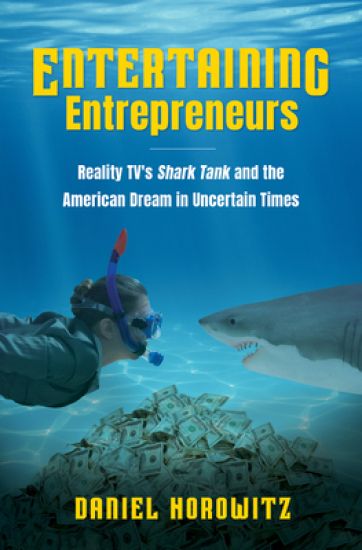
The Great Recession threatened the well-being of tens of millions of Americans, dramatically weakened the working class, hollowed out the middle class, and strengthened the position of the very wealthy. Against this backdrop, the hit reality show Shark Tank premiered in 2009. Featuring ambitious entrepreneurs chasing support from celebrity investors, the show offered a version of the American Dream that still seemed possible to many, where a bright idea and a well-honed pitch could lift a bootstrap business to new heights of success. More than a decade later, Shark Tank still airs regularly on multiple networks, and its formula has sparked imitators everywhere, from elite universities to elementary school classrooms. In Entertaining Entrepreneurs, Daniel Horowitz shows how Shark Tank's version of entrepreneurship disguises and distorts the opportunities and traps of capitalism. Digging into today's cult of the entrepreneur, Horowitz charts its rise from the rubble of economic crisis and its spread as a mainstay of American culture, and he explores its flawed view of what it really takes to succeed in business. Horowitz offers more than a look at one television phenomenon. He is the perfect guide to the portrayal of entrepreneurship in business school courses, pitch competitions, popular how-to books, and scholarly works, as well as the views of real-world venture capitalists.
Entertaining Entrepreneurs

Entertaining Entrepreneurs

Daniel Horowitz

The University of North Carolina Press
2020
pokkari
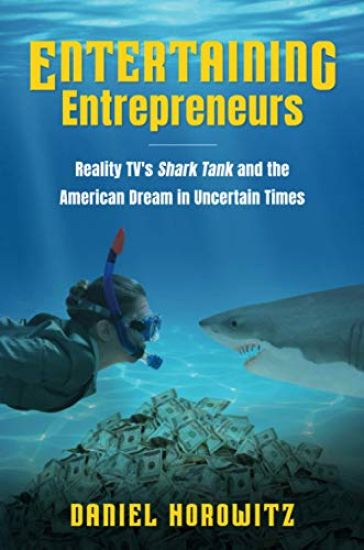
The Great Recession threatened the well-being of tens of millions of Americans, dramatically weakened the working class, hollowed out the middle class, and strengthened the position of the very wealthy. Against this backdrop, the hit reality show Shark Tank premiered in 2009. Featuring ambitious entrepreneurs chasing support from celebrity investors, the show offered a version of the American Dream that still seemed possible to many, where a bright idea and a well-honed pitch could lift a bootstrap business to new heights of success. More than a decade later, Shark Tank still airs regularly on multiple networks, and its formula has sparked imitators everywhere, from elite universities to elementary school classrooms. In Entertaining Entrepreneurs, Daniel Horowitz shows how Shark Tank's version of entrepreneurship disguises and distorts the opportunities and traps of capitalism. Digging into today's cult of the entrepreneur, Horowitz charts its rise from the rubble of economic crisis and its spread as a mainstay of American culture, and he explores its flawed view of what it really takes to succeed in business. Horowitz offers more than a look at one television phenomenon. He is the perfect guide to the portrayal of entrepreneurship in business school courses, pitch competitions, popular how-to books, and scholarly works, as well as the views of real-world venture capitalists.
American Dreams, American Nightmares

American Dreams, American Nightmares

Daniel Horowitz

THE UNIVERSITY OF NORTH CAROLINA PRESS
2022
sidottu
Two decades punctuated by the financial crisis of the Great Recession and the public health crisis of COVID-19 have powerfully reshaped housing in America. By integrating social, economic, intellectual, and cultural histories, this illuminating work shows how powerful forces have both reflected and catalyzed shifts in the way Americans conceptualize what a house is for, in an era that has laid bare the larger structures and inequities of the economy. Daniel Horowitz casts an expansive net over a wide range of materials and sources. He shows how journalists and anthropologists have explored the impact of global economic forces on housing, while filmmakers have depicted the home as a theater where danger lurks as elites gamble with the fates of the less fortunate. Real estate workshops and popular TV networks like HGTV teach home buyers how to flip—or flop—while online platforms like Airbnb make it possible to play house in someone else's home. And as the COVID pandemic took hold, many who had never imagined living out every moment at home found themselves cocooned there thanks to corporations like Amazon, Zoom, and Netflix.
American Dreams, American Nightmares

American Dreams, American Nightmares

Daniel Horowitz

THE UNIVERSITY OF NORTH CAROLINA PRESS
2022
pokkari
Two decades punctuated by the financial crisis of the Great Recession and the public health crisis of COVID-19 have powerfully reshaped housing in America. By integrating social, economic, intellectual, and cultural histories, this illuminating work shows how powerful forces have both reflected and catalyzed shifts in the way Americans conceptualize what a house is for, in an era that has laid bare the larger structures and inequities of the economy. Daniel Horowitz casts an expansive net over a wide range of materials and sources. He shows how journalists and anthropologists have explored the impact of global economic forces on housing, while filmmakers have depicted the home as a theater where danger lurks as elites gamble with the fates of the less fortunate. Real estate workshops and popular TV networks like HGTV teach home buyers how to flip—or flop—while online platforms like Airbnb make it possible to play house in someone else's home. And as the COVID pandemic took hold, many who had never imagined living out every moment at home found themselves cocooned there thanks to corporations like Amazon, Zoom, and Netflix.
Bear with Me: A Cultural History of Famous Bears in America
From teddy bears and Winnie-the-Pooh to Smokey Bear, Yogi Bear, and Cocaine Bear, American popular culture has been fascinated with real and fictional bears for more than two centuries. Bears are ubiquitous, appearing in advertisements, as logos for sports teams, and as central characters in children's books, cartoons, movies, and video games. In Bear With Me, Daniel Horowitz presents a vibrant history of the pedestrian and celebrity bears who have captured our imaginations and infiltrated our everyday lives. He shows that bears' ability to represent and evoke both terror and comfort makes them well-suited for their omnipresence. Today, cultural depictions of bears largely encompass examples of human-bear relationships, reciprocity, and emotional engagement. Reminders that climate change threatens the lives of polar bears engender feelings of empathy, while news of bear attacks drives us to fascinated fear. Whether examining the subculture of gay bears or the deadly consequences of anthropomorphizing animals, Horowitz charts the complexities and depth of American culture's unique and enduring relationship with bears.
Bear with Me: A Cultural History of Famous Bears in America
From teddy bears and Winnie-the-Pooh to Smokey Bear, Yogi Bear, and Cocaine Bear, American popular culture has been fascinated with real and fictional bears for more than two centuries. Bears are ubiquitous, appearing in advertisements, as logos for sports teams, and as central characters in children's books, cartoons, movies, and video games. In Bear With Me, Daniel Horowitz presents a vibrant history of the pedestrian and celebrity bears who have captured our imaginations and infiltrated our everyday lives. He shows that bears' ability to represent and evoke both terror and comfort makes them well-suited for their omnipresence. Today, cultural depictions of bears largely encompass examples of human-bear relationships, reciprocity, and emotional engagement. Reminders that climate change threatens the lives of polar bears engender feelings of empathy, while news of bear attacks drives us to fascinated fear. Whether examining the subculture of gay bears or the deadly consequences of anthropomorphizing animals, Horowitz charts the complexities and depth of American culture's unique and enduring relationship with bears.
becuz (black & white)

becuz (black & white)

Daniel Horowitz

Createspace Independent Publishing Platform
2015
nidottu
becuz is a little narration of an ego death and a bunch of people you meet. now in black and white to save some bucks. do you find yourself asking "why?" trying to lose 5 pounds fast or make a quick buck or day hooking or losing track of your authentic self? well it's me here, the emotion machine and i'd like to set some things straight and also introduce you to some of my friends. when doctor Freud invented emotions in the 1890s he had no idea how popular they'd become. oh, well here comes my physical trainer dr. Beef: he said do you ever feel what you'd call a "negative sensation?" do you ever resent yr body, which can get in the way of goodtimes? do you ever wish instead of piece of aching fishy flesh you were simply a brain in a yellowgreen jar of vinegar? you've had a body almost yr whole life and what of it? you barely use the thing. when yr in the shower you only scrub the highlights. of course you remember the honeymoon years, when u figured out locomotion and the uh particular brand of acupressure if-you-know-what-i-mean? that's what the book's about. what's on the idiot box? oh, him? we keep him there because he has become addicted to corners. the news: is man a bad species? see more at 11. are we all insane? or just Charlie? but can get off the television and just speak about the "intimate act" for a moment? the tippy top on the haunted hay ride called "human experience." yesterday i saw a hit flick called "while i'm naked" in the genre of "help i'm a teenage werewolf/alcoholic " and it got me thinking. i took my very illustrated kama sutra off the wall and then you may have noticed i never came back. . . okay it's me the emotion machine speaking now you may have noticed my exhaust has turned black. no it does not mean i have not decided on the new pope. it's much worse. yes, it's me, the emotion machine. do you feel it yet? i have a scale model of the human heart in my office but i think there was a mistake at the factory cuz the coin slot seems a tad too big. but let me tell you about my predecessor, The Poet: he faked his death. and then he didn't move eat drink blink or speak for 70 years until he died.
Betty Friedan and the Making of the Feminine Mystique

Betty Friedan and the Making of the Feminine Mystique

Daniel Horowitz

University of Massachusetts Press
2000
nidottu
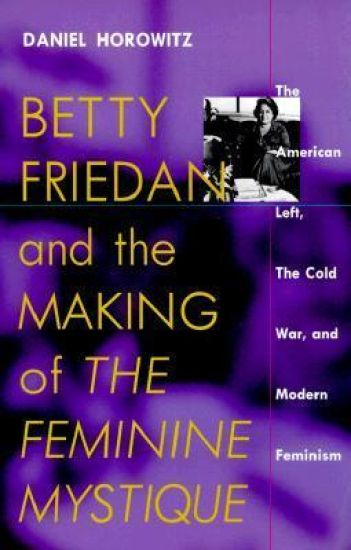
This biography of Betty Friedan traces the development of her feminist outlook from her childhood in Illinois to her marriage. Horowitz offers a reading of ""The Feminine Mystique"" and argues that the roots of Friedan's feminism run deeper than she has led us to believe. The links between the ""Popular Front"" of feminism of the ""Old Left"" and the ""New Left"" feminism of the 1960s is delineated, thereby casting doubt on the claims of novelty that many have made about social movements of the 1960s. He illuminates important details by mining everything from her papers while a student as Smith College, to her articles for the labour press. Horowitz advances the historiography with descriptions of women's experiences of left-wing politics and culture in the 1940s and 1950s and by limning Friedan's place within that context.
The Anxieties of Affluence

The Anxieties of Affluence

Daniel Horowitz

University of Massachusetts Press
2005
nidottu
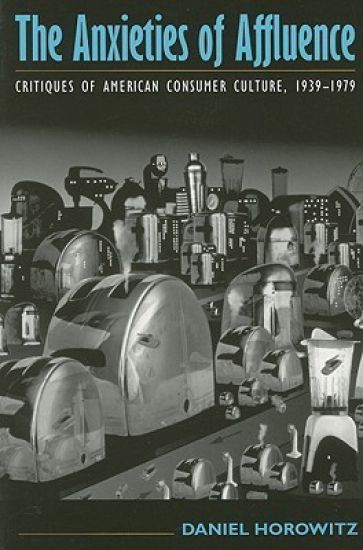
A wide-ranging exploration of conflicting American attitudes toward affluence This book charts the reactions of prominent American writers to the unprecedented prosperity of the decades following World War II. It begins with an examination of Lewis Mumford's war-time call for ""democratic"" consumption and concludes with an analysis of the origins of President Jimmy Carter's ""malaise"" speech of 1979. Between these bookends, Daniel Horowitz documents a broad range of competing views, each in its own way reflective of a deep-seated ambivalence toward consumer culture.
On the Cusp

On the Cusp

Daniel Horowitz

University of Massachusetts Press
2015
sidottu
How did the 1950s become “The Sixties”? This is the question at the heart of Daniel Horowitz’s On the Cusp. Part personal memoir, part collective biography, and part cultural history, the book illuminates the dynamics of social and political change through the experiences of a small, and admittedly privileged, generational cohort. A Jewish “townie” from New Haven when he entered Yale College in fall 1956, Horowitz reconstructs the undergraduate career of the class of 1960 and follows its story into the next decade. He begins by looking at curricular and extracurricular life on the all-male campus, then ranges beyond the confines of Yale to larger contexts, including the local drama of urban renewal, the lingering shadow of McCarthyism, and decolonization movements around the world.He ponders the role of the university in protecting the prerogatives of class while fostering social mobility, and examines the growing significance of race and gender in American politics and culture, spurred by a convergence of the personal and the political. Along the way he traces the political evolution of his classmates, left and right, as Cold War imperatives lose force and public attention shifts to the civil rights movement and the war in Vietnam. Throughout Horowitz draws on a broad range of sources, including personal interviews, writings by classmates, reunion books, issues of the Yale Daily News, and other undergraduate publications, as well as his own letters and college papers. The end product is a work consistent with much of Horowitz’s previously published scholarship on postwar America, further exposing the undercurrent of discontent and dissent that ran just beneath the surface of the so-called Cold War consensus.
On the Cusp

On the Cusp

Daniel Horowitz

University of Massachusetts Press
2015
nidottu
How did the 1950s become “The Sixties”? This is the question at the heart of Daniel Horowitz’s On the Cusp. Part personal memoir, part collective biography, and part cultural history, the book illuminates the dynamics of social and political change through the experiences of a small, and admittedly privileged, generational cohort. A Jewish “townie” from New Haven when he entered Yale College in fall 1956, Horowitz reconstructs the undergraduate career of the class of 1960 and follows its story into the next decade. He begins by looking at curricular and extracurricular life on the all-male campus, then ranges beyond the confines of Yale to larger contexts, including the local drama of urban renewal, the lingering shadow of McCarthyism, and decolonization movements around the world.He ponders the role of the university in protecting the prerogatives of class while fostering social mobility, and examines the growing significance of race and gender in American politics and culture, spurred by a convergence of the personal and the political. Along the way he traces the political evolution of his classmates, left and right, as Cold War imperatives lose force and public attention shifts to the civil rights movement and the war in Vietnam. Throughout Horowitz draws on a broad range of sources, including personal interviews, writings by classmates, reunion books, issues of the Yale Daily News, and other undergraduate publications, as well as his own letters and college papers. The end product is a work consistent with much of Horowitz’s previously published scholarship on postwar America, further exposing the undercurrent of discontent and dissent that ran just beneath the surface of the so-called Cold War consensus.
Leibowitz or God's Absence

Leibowitz or God's Absence

Daniel Horowitz

Academic Studies Press
2022
sidottu
As a scientist, philosopher and scholar in Jewish thought, Yeshayahu Leibowitz was one of the most noteworthy thinkers in the twentieth century. He was endowed with a remarkable intellect and was knowledgeable across a variety of fields. Born in Riga (Latvia) in 1903, he later immigrated to Israel, where he taught organic chemistry, biochemistry, neurology, biology, neurophysiology, philosophy and Jewish thought at Haifa and Jerusalem University. He was Chief Editor of the Hebrew encyclopedia, where he wrote about scientific, philosophical, historical and religious topics. Leibowitz was an orthodox Jew, but rejected the notion of divine intervention in nature or history. So what was actually Leibowitz’ belief? This volume explores his belief system.
On Retirement

On Retirement

Daniel Horowitz

NEW YORK UNIVERSITY PRESS
2026
sidottu
How longer lives, greater prosperity, and policy shifts are reshaping aging and retirement Once considered a period of frailty and physical decline, aging and retirement has transformed into a chapter of continued vitality and growth for many Americans. Indeed, medical advancements and government policies opened opportunities for people to live longer and healthier lives, leading to the rise of public discussions over aging and retirement. On Retirement offers a multi-faceted exploration of how and why retirement, aging, and longevity have emerged as prominent issues in the United States. Written from the perspective of a retired historian, the book assesses the factors that have shaped popular discussions about retirement and aging, from dramatic increases in life expectancy to shifting government policies. The book explores movies, print and new media, senior housing, how-to books, aging organizations, to examine how writers and entrepreneurs have seen and promoted long lives. While popular advice books and media often enforce self-governance narratives to achieve a "successful" retirement, Daniel Horowitz examines how this success is often only accessible through expensive and time-consuming avenues. Moreover, he assesses the socioeconomic and existential challenges most Americans encounter as they age, shaping the choices available to them post-retirement. Ultimately, the volume assesses that while popular "self-help" perspectives on longevity are shaped by an obsessive interest in doing so successfully, they have failed to account for how dramatic inequalities shape American experiences with retirement. Providing an expansive look into the history of retirement and the profound issues and fears of seniors surrounding finance, health, and longevity, On Retirement examines the changing demographics that have allowed people to live longer and healthier lives and offers a critical assessment of self-governance perspectives within popular retirement advice.