Kirjojen hintavertailu. Mukana 11 342 296 kirjaa ja 12 kauppaa.

Kirjahaku

Etsi kirjoja tekijän nimen, kirjan nimen tai ISBN:n perusteella.

9 kirjaa tekijältä Daniel Koehler

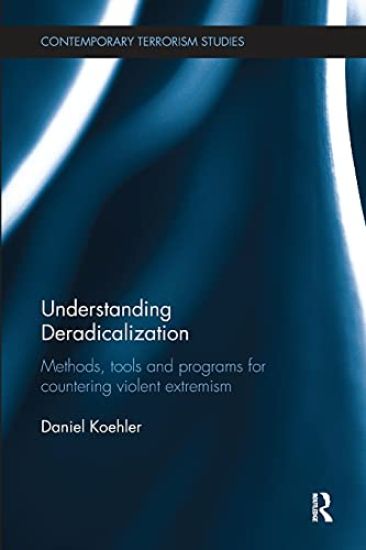
Understanding Deradicalization

Understanding Deradicalization

Daniel Koehler

CRC Press Inc
2017
nidottu
This book provides a comprehensive guide to the different aspects of deradicalization theories, programs and methods.It analyzes the practical and theoretical aspects of deradicalization programs and the methods being employed to bring extremists and terrorist back to a non-violent life. The book includes in-depth case studies on programs and former extremists, including interviews with former German neo-Nazis and families of Jihadists who have received deradicalization counselling. Using a coherent theory of radicalization and deradicalization, it integrates existing programs into a typology and methodology regarding the effects and concepts behind deradicalization. In addition, a current state of the art assessment of deradicalization programs around the world provides a collection of programs and landscapes worldwide. It thereby functions as a unique guide for practitioners and policymakers in need of evaluation or construction of such programs, as well as a resource pool for academics interested in research about deradicalization programs and processes. The major aim of this book is to consolidate the existing scholarship on deradicalization and to move the field forward by proposing a coherent theory of deradicalization, including ways to measure effectiveness, standard methods and procedures, different actors of such programs and cooperation on national and international level. In essence, this work enables the reader to identify how, when and why deradicalization programs work, how they can be built and structured, and to identify their limitations.This book will be of interest to students of radicalisation, counter-terrorism, radical Islam, criminology, security studies and IR.
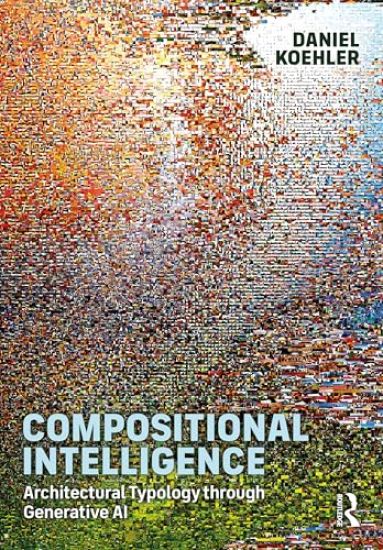
Compositional Intelligence

Compositional Intelligence

Daniel Koehler

TAYLOR FRANCIS LTD
2025
nidottu
Given the extensive data sources represented by urban environments, this book investigates the potential of architecting for cities using large-scale models – the technological underpinning of Generative AI. Koehler examines Large Language Models (LLMs) in relation to architectural questions of typology – those critical junctures where architecture engages with the city itself. Typology becomes the interface between an AI model and its modeled audiences, represented languages, and scales of operation.The investigation reveals how LLMs represent a fundamental shift from comprehending discrete elements to understanding entire languages – introducing a stochastic perspective that transforms how we read and shape urban reality. At the heart of this framework lies the concept of “inductive types” – threshold interfaces that superpose multiple value regimes and actively reconfigure themselves in response to changing urban conditions. By treating architecture as a form of representational materialism rather than a fixed language, designers can engage with complex urban systems while maintaining critical agency.This approach envisions architecture as an embedding of languages, where buildings become processors of information that compute through their spatial arrangements. The synthetic knowledge produced by LLMs enables access to plural values and stakeholder perspectives, allowing architects to participate in broader material ecologies through computational superposition rather than traditional dialectical methods.Providing a robust theoretical framework as well as practical insights into how architects can adapt their notational tools and design processes to embrace AI, this will be an essential read for any practicing or researching architect or urban designer interested in the implications of AI on the built environment.
Compositional Intelligence

Compositional Intelligence

Daniel Koehler

TAYLOR FRANCIS LTD
2025
sidottu
*With a foreword by Mario Carpo*Given the extensive data sources represented by urban environments, this book investigates the potential of architecting for cities using large-scale models – the technological underpinning of Generative AI. Koehler examines Large Language Models (LLMs) in relation to architectural questions of typology – those critical junctures where architecture engages with the city itself. Typology becomes the interface between an AI model and its modeled audiences, represented languages, and scales of operation.The investigation reveals how LLMs represent a fundamental shift from comprehending discrete elements to understanding entire languages – introducing a stochastic perspective that transforms how we read and shape urban reality. At the heart of this framework lies the concept of “inductive types” – threshold interfaces that superpose multiple value regimes and actively reconfigure themselves in response to changing urban conditions. By treating architecture as a form of representational materialism rather than a fixed language, designers can engage with complex urban systems while maintaining critical agency.This approach envisions architecture as an embedding of languages, where buildings become processors of information that compute through their spatial arrangements. The synthetic knowledge produced by LLMs enables access to plural values and stakeholder perspectives, allowing architects to participate in broader material ecologies through computational superposition rather than traditional dialectical methods.Providing a robust theoretical framework as well as practical insights into how architects can adapt their notational tools and design processes to embrace AI, this will be an essential read for any practicing or researching architect or urban designer interested in the implications of AI on the built environment.
From Traitor to Zealot

From Traitor to Zealot

Daniel Koehler

Cambridge University Press
2023
pokkari
What makes a neo-Nazi become a convinced anti-fascist or a radical left-winger become a devout Salafist? How do they manage to fit into their new environment and gain acceptance as a former enemy? The people featured in this book made highly puzzling journeys, first venturing into extremist milieus and then deciding to switch to the opposite side. By using their extraordinary life-stories and their own narratives, this book provides the first in-depth analysis of how and why people move between seemingly opposing extremist environments that can sometimes overlap and influence each other. It aims to understand how these extremists manage to convince their new group that they can be trusted, which also allows us to dive deep into the psychology of extremism and terrorism. This fascinating work will be of immense value to those studying radicalization and counter-radicalization in terrorism studies, social psychology and political science.
From Traitor to Zealot

From Traitor to Zealot

Daniel Koehler

Cambridge University Press
2021
sidottu
What makes a neo-Nazi become a convinced anti-fascist or a radical left-winger become a devout Salafist? How do they manage to fit into their new environment and gain acceptance as a former enemy? The people featured in this book made highly puzzling journeys, first venturing into extremist milieus and then deciding to switch to the opposite side. By using their extraordinary life-stories and their own narratives, this book provides the first in-depth analysis of how and why people move between seemingly opposing extremist environments that can sometimes overlap and influence each other. It aims to understand how these extremists manage to convince their new group that they can be trusted, which also allows us to dive deep into the psychology of extremism and terrorism. This fascinating work will be of immense value to those studying radicalization and counter-radicalization in terrorism studies, social psychology and political science.
Understanding Deradicalization

Understanding Deradicalization

Daniel Koehler

Routledge
2016
sidottu
This book provides a comprehensive guide to the different aspects of deradicalization theories, programs and methods.It analyzes the practical and theoretical aspects of deradicalization programs and the methods being employed to bring extremists and terrorist back to a non-violent life. The book includes in-depth case studies on programs and former extremists, including interviews with former German neo-Nazis and families of Jihadists who have received deradicalization counselling. Using a coherent theory of radicalization and deradicalization, it integrates existing programs into a typology and methodology regarding the effects and concepts behind deradicalization. In addition, a current state of the art assessment of deradicalization programs around the world provides a collection of programs and landscapes worldwide. It thereby functions as a unique guide for practitioners and policymakers in need of evaluation or construction of such programs, as well as a resource pool for academics interested in research about deradicalization programs and processes. The major aim of this book is to consolidate the existing scholarship on deradicalization and to move the field forward by proposing a coherent theory of deradicalization, including ways to measure effectiveness, standard methods and procedures, different actors of such programs and cooperation on national and international level. In essence, this work enables the reader to identify how, when and why deradicalization programs work, how they can be built and structured, and to identify their limitations.This book will be of interest to students of radicalisation, counter-terrorism, radical Islam, criminology, security studies and IR.
Right-Wing Terrorism in the 21st Century
This book is the first comprehensive academic study of German right-wing terrorism since the early 1960s available in the English language. It offers a unique in-depth analysis of German violent, extremist right-wing movements, terrorist events, groups, networks and individuals. In addition, the book discusses the so-called ‘National Socialist Underground’ (NSU) terror cell, which was uncovered in late 2011 by the authorities. The NSU had been active for over a decade and had killed at least ten people, as well as executing numerous bombings and bank robberies. With an examination of the group’s support network and the reasons behind the failure of the German authorities, this book sheds light on right-wing terrorist group structures, tactics and target groups in Germany. The book also contains a complete list of all the German right-wing terrorist groups and incidents since the Second World War. Based on the most detailed dataset of right-wing terrorism in Germany, this book offers highly valuable insights into this specific form of political violence and terrorism, which has been widely neglected in international terrorism research.
Right-Wing Terrorism in the 21st Century
This book is the first comprehensive academic study of German right-wing terrorism since the early 1960s available in the English language. It offers a unique in-depth analysis of German violent, extremist right-wing movements, terrorist events, groups, networks and individuals. In addition, the book discusses the so-called ‘National Socialist Underground’ (NSU) terror cell, which was uncovered in late 2011 by the authorities. The NSU had been active for over a decade and had killed at least ten people, as well as executing numerous bombings and bank robberies. With an examination of the group’s support network and the reasons behind the failure of the German authorities, this book sheds light on right-wing terrorist group structures, tactics and target groups in Germany. The book also contains a complete list of all the German right-wing terrorist groups and incidents since the Second World War. Based on the most detailed dataset of right-wing terrorism in Germany, this book offers highly valuable insights into this specific form of political violence and terrorism, which has been widely neglected in international terrorism research.