Kirjojen hintavertailu. Mukana 11 534 761 kirjaa ja 12 kauppaa.

Kirjahaku

Etsi kirjoja tekijän nimen, kirjan nimen tai ISBN:n perusteella.

2 kirjaa tekijältä Daniel L. Byman

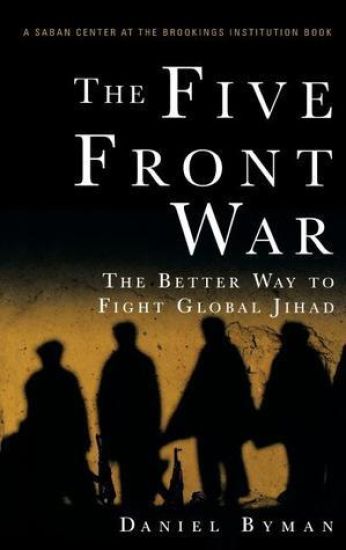
The Five Front War

The Five Front War

Daniel L. Byman

John Wiley Sons Inc
2007
sidottu
A comprehensive look at the War on Terror and the best way to a safer future Scholar Daniel Byman offers a new approach to fighting the war on terrorism. He convincingly argues that two of the main solutions to terrorism offered by politicians-military intervention and the democratization of the Arab world-shouldn't even be our top priorities. Instead, he presents a fresh way to face intelligence and law enforcement challenges ahead: conduct counterinsurgency operations, undermine al-Qaeda's ideology, selectively push for reforms, and build key lasting alliances. Daniel Byman (Washington, DC) directs the Security Studies Program and the Center for Peace and Security Studies at Georgetown University. He is a Senior Fellow at the Saban Center for Middle East Policy at the Brookings Institution and also served on the 9/11 Commission. He regularly writes about terrorism and the Middle East for the Washington Post, Slate, and other publications.

Keeping the Peace

Keeping the Peace

Daniel L. Byman

Johns Hopkins University Press
2002
pokkari
What strategies can a government use to end violent ethnic conflicts in the long term? Under what conditions do these strategies work best, and what are their limitations? Are there some ethnic conflicts that governments simply cannot solve? Drawing on an intimate knowledge of the Middle East as well as the experiences of trouble spots in Asia, Africa, and Europe, political scientist and RAND analyst Daniel Byman examines how government policies can affect-and, in some cases, prevent-the recurrence of violent ethnic conflict. Byman identifies and describes five key strategies: coercing groups and leaders, coopting key elites, changing group identities, implementing power sharing systems, and partitioning states. After weighing the strengths and weaknesses of each of these internal solutions, he also considers the benefits and risks of outside intervention. But Byman's prescription is tempered with realism. "Even under the best circumstances," he concludes, "no single strategy is sufficient to keep the peace after a bloody ethnic war. Only the optimal combination of multiple strategies, implemented in the proper sequence, will ensure success."