Kirjojen hintavertailu. Mukana 11 244 527 kirjaa ja 12 kauppaa.

Kirjahaku

Etsi kirjoja tekijän nimen, kirjan nimen tai ISBN:n perusteella.

5 kirjaa tekijältä Daniel L. Everett

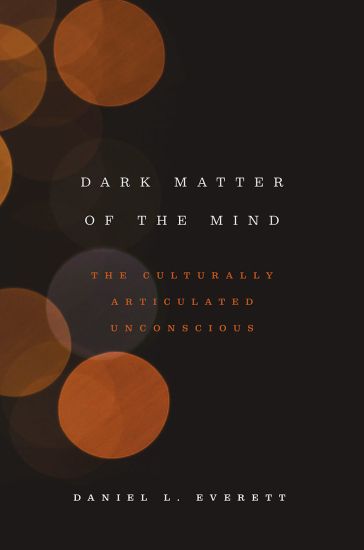
Dark Matter of the Mind

Dark Matter of the Mind

Daniel L. Everett

University of Chicago Press
2017
nidottu
Is it in our nature to be altruistic, or evil, to make art, use tools, or create language? Is it in our nature to think in any particular way? For Daniel L. Everett, the answer is a resounding no: it isn't in our nature to do any of these things because human nature does not exist at least not as we usually think of it. Flying in the face of major trends in Evolutionary Psychology and related fields, he offers a provocative and compelling argument in this book that the only thing humans are hardwired for is freedom: freedom from evolutionary instinct and freedom to adapt to a variety of environmental and cultural contexts. Everett sketches a blank-slate picture of human cognition that focuses not on what is in the mind but, rather, what the mind is in namely, culture. He draws on years of field research among the Amazonian people of the Piraha in order to carefully scrutinize various theories of cognitive instinct, including Noam Chomsky's foundational concept of universal grammar, Freud's notions of unconscious forces, Adolf Bastian's psychic unity of mankind, and works on massive modularity by evolutionary psychologists such as Leda Cosmides, John Tooby, Jerry Fodor, and Steven Pinker. Illuminating unique characteristics of the Piraha language, he demonstrates just how differently various cultures can make us think and how vital culture is to our cognitive flexibility. Outlining the ways culture and individual psychology operate symbiotically, he posits a Buddhist-like conception of the cultural self as a set of experiences united by various apperceptions, episodic memories, ranked values, knowledge structures, and social roles and not, in any shape or form, biological instinct. The result is fascinating portrait of the "dark matter of the mind," one that shows that our greatest evolutionary adaptation is adaptability itself.
Don't Sleep, There Are Snakes: Life and Language in the Amazonian Jungle
Part passionate memoir, part scientific exploration, a life-changing tale set among a small tribe of Amazonian Indians in Brazil that offers a riveting look into the nature of language, thought, and life itself. "Immensely interesting and deeply moving.... One of the best books I have read."--Lucy Dodwell, New Scientist A riveting account of the astonishing experiences and discoveries made by linguist Daniel Everett while he lived with the Pirah , a small tribe of Amazonian Indians in central Brazil. Daniel Everett arrived among the Pirah with his wife and three young children hoping to convert the tribe to Christianity. Everett quickly became obsessed with their language and its cultural and linguistic implications. The Pirah have no counting system, no fixed terms for color, no concept of war, and no personal property. Everett was so impressed with their peaceful way of life that he eventually lost faith in the God he'd hoped to introduce to them, and instead devoted his life to the science of linguistics.
Language: The Cultural Tool

Language: The Cultural Tool

Daniel L. Everett

VINTAGE
2012
nidottu
"The most important--and provocative--anthropological fieldwork ever undertaken." --Tom Wolfe For years, the prevailing opinion among academics has been that language is embedded in our genes, existing as an innate and instinctual part of us. In this bold and provocative study, linguist Daniel Everett argues that, like other tools, language was invented by humans and can be reinvented or lost. He shows how the evolution of different language forms--that is, different grammar--reflects how language is influenced by human societies and experiences, and how it expresses their great variety. Combining anthropology, primatology, computer science, philosophy, linguistics, psychology, and his own pioneering research with the Amazonian Pirah , and using insights from many different languages and cultures, Everett presents an unprecedented elucidation of this society-defined nature of language. In doing so, he also gives us a new understanding of how we think and who we are.
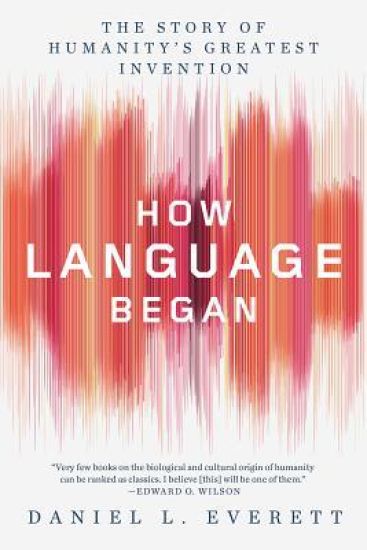
How Language Began: The Story of Humanity's Greatest Invention

How Language Began: The Story of Humanity's Greatest Invention

Daniel L. Everett

Liveright Publishing Corporation
2017
sidottu
Mankind has a distinct advantage over other terrestrial species: we talk to one another. But how did we acquire the most advanced form of communication on Earth? Daniel L. Everett, a "bombshell" linguist and "instant folk hero" (Tom Wolfe, Harper's), provides in this sweeping history a comprehensive examination of the evolutionary story of language, from the earliest speaking attempts by hominids to the more than seven thousand languages that exist today.Although fossil hunters and linguists have brought us closer to unearthing the true origins of language, Daniel Everett's discoveries have upended the contemporary linguistic world, reverberating far beyond academic circles. While conducting field research in the Amazonian rainforest, Everett came across an age-old language nestled amongst a tribe of hunter-gatherers. Challenging long-standing principles in the field, Everett now builds on the theory that language was not intrinsic to our species. In order to truly understand its origins, a more interdisciplinary approach is needed--one that accounts as much for our propensity for culture as it does our biological makeup.Language began, Everett theorizes, with Homo Erectus, who catalyzed words through culturally invented symbols. Early humans, as their brains grew larger, incorporated gestures and voice intonations to communicate, all of which built on each other for 60,000 generations. Tracing crucial shifts and developments across the ages, Everett breaks down every component of speech, from harnessing control of more than a hundred respiratory muscles in the larynx and diaphragm, to mastering the use of the tongue. Moving on from biology to execution, Everett explores why elements such as grammar and storytelling are not nearly as critical to language as one might suspect.In the book's final section, Cultural Evolution of Language, Everett takes the ever-debated "language gap" to task, delving into the chasm that separates "us" from "the animals." He approaches the subject from various disciplines, including anthropology, neuroscience, and archaeology, to reveal that it was social complexity, as well as cultural, physiological, and neurological superiority, that allowed humans--with our clawless hands, breakable bones, and soft skin--to become the apex predator. How Language Began ultimately explains what we know, what we'd like to know, and what we likely never will know about how humans went from mere communication to language. Based on nearly forty years of fieldwork, Everett debunks long-held theories by some of history's greatest thinkers, from Plato to Chomsky. The result is an invaluable study of what makes us human.
How Language Began

How Language Began

Daniel L. Everett

Liveright Publishing Corporation
2019
nidottu
At the time of its publication, How Language Began received high acclaim for capturing the fascinating history of mankind's most incredible creation. Deemed a "bombshell" linguist and "instant folk hero" by Tom Wolfe (Harper's), Daniel L. Everett posits that the near- 7,000 languages that exist today are not only the product of one million years of evolution but also have allowed us to become Earth's apex predator. Tracing 60,000 generations, Everett debunks long- held theories across a spectrum of disciplines to affi rm the idea that we are not born with an instinct for language. Woven with anecdotes of his nearly forty years of fi eldwork amongst Amazonian hunter- gatherers, this is a "completely enthralling" (Spectator) exploration of our humanity and a landmark study of what makes us human. "[An] ambitious text. . . . Everett's amiable tone, and especially his captivating anecdotes . . ., will help the neophyte along."-- New York Times Book Review