Kirjojen hintavertailu. Mukana 11 244 527 kirjaa ja 12 kauppaa.

Kirjahaku

Etsi kirjoja tekijän nimen, kirjan nimen tai ISBN:n perusteella.

5 kirjaa tekijältä Daniel M. Gross

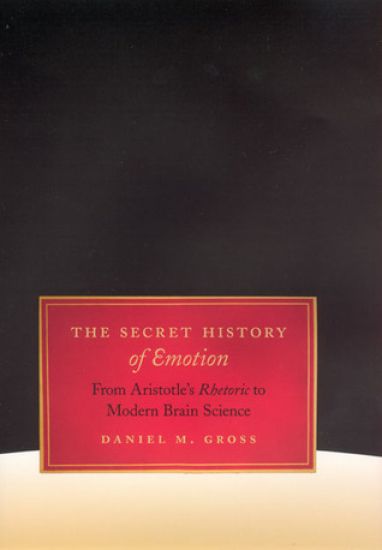
The Secret History of Emotion

The Secret History of Emotion

Daniel M. Gross

University of Chicago Press
2006
sidottu
Princess Diana's death was a tragedy that provoked mourning across the globe; the death of a homeless person, more often than not, is met with apathy. How can we account for this uneven distribution of emotion? Can it simply be explained by the prevailing scientific understanding? Uncovering a rich tradition beginning with Aristotle, Daniel M. Gross' "The Secret History of Emotion" offers a counterpoint to the way we generally understand emotions today. Through a radical rereading of Aristotle, Seneca, Thomas Hobbes, Sarah Fielding, and Judith Butler, among others, Gross reveals a persistent intellectual current that considers emotions as psychosocial phenomena. The Roman Stoics, for instance, offer insight into the reasons political passions are distributed to some people but not to others. Contemporary theorists like Judith Butler, meanwhile, explain to us how psyches are shaped by power. To supplement his argument, Gross also provides a history and critique of the dominant modern view of emotions, expressed in Darwinism and neurobiology, in which they are considered organic, personal feelings independent of social circumstances. The result is a convincing work that rescues the study of the passions from science and returns it to the humanities and the art of rhetoric.
The Secret History of Emotion

The Secret History of Emotion

Daniel M. Gross

University of Chicago Press
2007
nidottu
Through a radical rereading of Aristotle, Seneca, Thomas Hobbes, Sarah Fielding, and Judith Butler, among others, Daniel Gross' "The Secret History of Emotion" reveals a persistent intellectual current that considers emotions as psychosocial phenomena. The Roman Stoics, for instance, offer insight into the reasons why political passions are distributed to some people but not to others. Contemporary theorists such as Judith Butler, meanwhile, explain to us how psyches are shaped by power. To supplement his argument, Gross also provides a history and critique of the dominant modern view of emotions, expressed in Darwinism and neurobiology, in which they are considered organic, personal feelings independent of social circumstances. The result is a convincing work that rescues the study of the passions from science and returns it to the humanities and the art of rhetoric. "The Secret History of Emotion" offers a counterpoint to the way we generally understand emotions today.
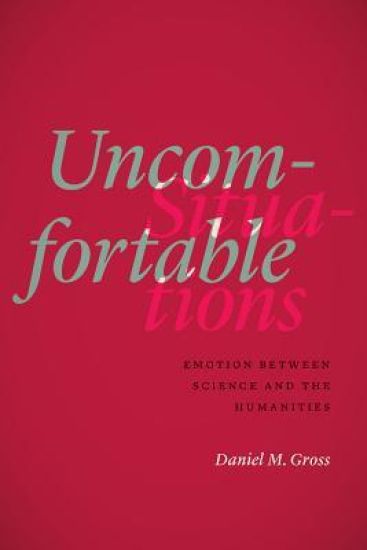
Uncomfortable Situations

Uncomfortable Situations

Daniel M. Gross

University of Chicago Press
2017
sidottu
What is a hostile environment? How exactly can feelings be mixed? What on earth might it mean when someone writes that he was "happily situated" as a slave? The answers, of course, depend upon whom you ask. Science and the humanities typically offer two different paradigms for thinking about emotion--the first rooted in brain and biology, the second in a social world. With rhetoric as a field guide, Uncomfortable Situations establishes common ground between these two paradigms, focusing on a theory of situated emotion. Daniel M. Gross anchors the argument in Charles Darwin, whose work on emotion has been misunderstood across the disciplines as it has been shoehorned into the perceived science-humanities divide. Then Gross turns to sentimental literature as the single best domain for studying emotional situations. There's lost composure (Sterne), bearing up (Equiano), environmental hostility (Radcliffe), and feeling mixed (Austen). Rounding out the book, an epilogue written with ecological neuroscientist Stephanie Preston provides a different kind of cross-disciplinary collaboration. Uncomfortable Situations is a conciliatory work across science and the humanities--a groundbreaking model for future studies.
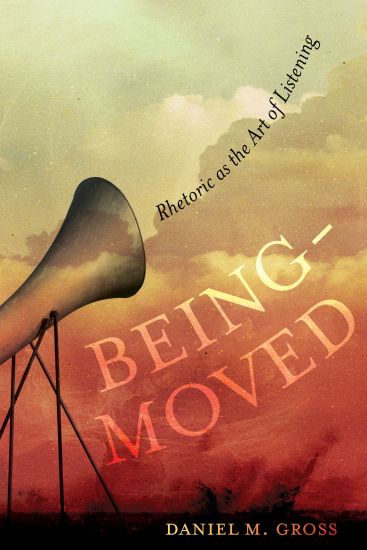
Being-Moved

Being-Moved

Daniel M. Gross

University of California Press
2020
sidottu
If rhetoric is the art of speaking, who is listening? In Being-Moved, Daniel M. Gross provides an answer, showing when and where the art of speaking parted ways with the art of listening – and what happens when they intersect once again. Much in the history of rhetoric must be rethought along the way. And much of this rethinking pivots around Martin Heidegger’s early lectures on Aristotle’s Rhetoric where his famous topic, Being, gives way to being-moved. The results, Gross goes on to show, are profound. Listening to the gods, listening to the world around us, and even listening to one another in the classroom – all of these experiences become different when rhetoric is reoriented from the voice to the ear.
Being-Moved

Being-Moved

Daniel M. Gross

University of California Press
2020
pokkari
If rhetoric is the art of speaking, who is listening? In Being-Moved, Daniel M. Gross provides an answer, showing when and where the art of speaking parted ways with the art of listening – and what happens when they intersect once again. Much in the history of rhetoric must be rethought along the way. And much of this rethinking pivots around Martin Heidegger’s early lectures on Aristotle’s Rhetoric where his famous topic, Being, gives way to being-moved. The results, Gross goes on to show, are profound. Listening to the gods, listening to the world around us, and even listening to one another in the classroom – all of these experiences become different when rhetoric is reoriented from the voice to the ear.