Kirjojen hintavertailu. Mukana 12 016 292 kirjaa ja 12 kauppaa.

Kirjahaku

Etsi kirjoja tekijän nimen, kirjan nimen tai ISBN:n perusteella.

49 kirjaa tekijältä Daniel Miller

The Dialectics of Shopping

The Dialectics of Shopping

Daniel Miller

University of Chicago Press
2001
sidottu
Shopping is generally considered to be a pleasurable activity. But in reality it can often be complicated and frustrating. Daniel Miller explores the many contradictions faced by shoppers on a typical street in London, and in the process offers a sophisticated examination of the way we shop, and what it reveals about our relationships to our families and communities, as well as to the environment and the economy as a whole.Miller's companions are mostly women who confront these contradictions as they shop. They placate their children with items that combine nutrition with taste or usefulness with style. They decide between shopping at the local store or at the impersonal, but less expensive, mall. They tell of their sympathy for environmental concerns but somehow avoid much ethical shopping. They are faced with a selection of shops whose shifts and mergers often reveal extraordinary stories of their own. Filled with entertaining—and thoroughly familiar—stories of shoppers and shops, this book will interest scholars across a broad range of disciplines.

The Dialectics of Shopping

The Dialectics of Shopping

Daniel Miller

University of Chicago Press
2001
nidottu
Shopping is generally considered to be a pleasurable activity. But in reality it can often be complicated and frustrating. Daniel Miller explores the many contradictions faced by shoppers on a typical street in London, and in the process offers a sophisticated examination of the way we shop, and what it reveals about our relationships to our families and communities, as well as to the environment and the economy as a whole.Miller's companions are mostly women who confront these contradictions as they shop. They placate their children with items that combine nutrition with taste or usefulness with style. They decide between shopping at the local store or at the impersonal, but less expensive, mall. They tell of their sympathy for environmental concerns but somehow avoid much ethical shopping. They are faced with a selection of shops whose shifts and mergers often reveal extraordinary stories of their own. Filled with entertaining—and thoroughly familiar—stories of shoppers and shops, this book will interest scholars across a broad range of disciplines.

Animal Ethics and Theology

Animal Ethics and Theology

Daniel Miller

Routledge
2011
sidottu
In this book, Daniel K. Miller articulates a new vision of human and animal relationships based on the foundational love ethic within Christianity. Framed around Jesus’ parable of the Good Samaritan, Animal Ethics and Theology thoughtfully examines the shortcomings of utilitarian and rights-based approaches to animal ethics. By considering the question of animals within the Christian concept of neighbourly love, Miller provides an alternative narrative for understanding the complex relationships that humans have with other animals. This book addresses significant theological questions such as: Does being created in the image of God present a meaningful distinction between humans and other animals? What does it mean for humans to have dominion (Gen. 1:28) over animals? Is meat eating a moral problem for Christians? In addition to drawing out the significance of Christian theology for field of animal ethics this book also engages environmental and feminist ethics. Miller brings a theological perspective to such questions as: Should care for animals be distinguished from care for the environment, and what role should human emotions play in our ethical dealings with other animals? As the title suggests, this book provides fresh insight into the theological significance of human relationships with other animals.
Artefacts as Categories

Artefacts as Categories

Daniel Miller

Cambridge University Press
2009
pokkari
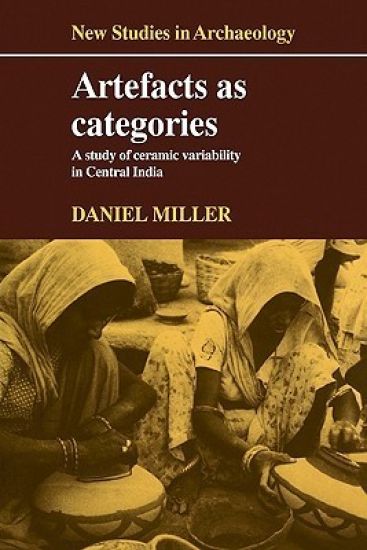
The aim of Artefacts as Categories is to ask what we can learn about a society from the variability of the objects it produces. Dr Miller presents a comprehensive analysis of the pottery produced in a single village in central India, drawing together and analysing a whole range of aspects - technology, function, design, symbolism and ideology - that are usually studied separately. Using the concepts of 'pragmatics', 'framing' and 'ideology', the author points to the insufficiency of many ethnographic accounts of symbolism and underlines the need to consider both the social positioning of the interpreter and the context of the interpretation when looking at artefacts. His invigorating study cogently questions many assumptions in material culture studies and offers a whole range of fresh explanations. Archaeologists in particular will welcome the discussion of familiar materials such as pottery rim shapes, body forms and decoration. However, the book will have a broad appeal to researchers in cultural studies, social anthropology and psychology and will attract all those interested in the problem of relating objects and society.
Material Culture and Mass Consumerism

Material Culture and Mass Consumerism

Daniel Miller

JOHN WILEY AND SONS LTD
1997
nidottu
Exploring materialism and social relationships in modern culture Material Culture and Mass Consumption offers an in-depth exploration of objects, objectification, ideology, and materialism in modern society. Drawing from Hegel, Marx, Munn, and Simmel, the discussion delves into the physicality of the material world and attempts to understand materialism as a form of cultural expression. Targeting mass production as the root of mass consumption, rather than the result, this book positions material goods at odds with genuine social interaction and questions these relationships from the abstract to the intensely specific.
A Theory of Shopping

A Theory of Shopping

Daniel Miller

Polity Press
1998
sidottu
A Theory of Shopping offers a highly original perspective on one of our most basic everyday activities - shopping. We commonly assume that shopping is primarily concerned with individuals and materialism. But Miller rejects this assumption and follows the surprising route of analysing shopping by means of an analogy with anthropological studies of sacrificial ritual. He argues that the act of purchasing goods is almost always linked to other social relations, and most especially those based on love and care. The ethnographic sections of the book are based on a year's study of shopping on a street in North London. This provides the basis for a sensitive description of the issues the shopper confronts when making decisions as to what to buy. Miller develops a theory to account for these observations, arguing that shopping typically consists of three major stages which reflect the three key stages of many rites of sacrifice. In both shopping and sacrifice the ultimate intention is to constitute others as desiring subjects. Finally the book examines certain historical shifts in both subjects and objects of devotion, in particular, ideals of gender and love. This treatment of shopping from the perspective of comparative anthropology represents a highly innovative approach to one of the most familiar tasks of our daily lives. Written in a clear and accessible manner, this book will be of interest to students and academics in anthropology, sociology and cultural studies, as well as anybody who wants to consider more deeply the nature of their own everyday activities.
Theory of Shopping

Theory of Shopping

Daniel Miller

Blackwell Publishers
1998
pokkari
A Theory of Shopping offers a highly original perspective on one of our most basic everyday activities -- shopping. We commonly assume that shopping is primarily concerned with individuals and materialism.
The Comfort of Things

The Comfort of Things

Daniel Miller

Polity Press
2008
sidottu
What do we know about ordinary people in our towns and cities, about what really matters to them and how they organize their lives today? This book visits an ordinary street and looks into thirty households. It reveals the aspirations and frustrations, the tragedies and accomplishments that are played out behind the doors. It focuses on the things that matter to these people, which quite often turn out to be material things – their house, the dog, their music, the Christmas decorations. These are the means by which they express who they have become, and relationships to objects turn out to be central to their relationships with other people – children, lovers, brothers and friends. If this is a typical street in a modern city like London, then what kind of society is this? It’s not a community, nor a neighbourhood, nor is it a collection of isolated individuals. It isn’t dominated by the family. We assume that social life is corrupted by materialism, made superficial and individualistic by a surfeit of consumer goods, but this is misleading. If the street isn’t any of these things, then what is it? This brilliant and revealing portrayal of a street in modern London, written by one the most prominent anthropologists, shows how much is to be gained when we stop lamenting what we think we used to be and focus instead on what we are now becoming. It reveals the forms by which ordinary people make sense of their lives, and the ways in which objects become our companions in the daily struggle to make life meaningful.
The Comfort of Things

The Comfort of Things

Daniel Miller

Polity Press
2009
nidottu
What do we know about ordinary people in our towns and cities, about what really matters to them and how they organize their lives today? This book visits an ordinary street and looks into thirty households. It reveals the aspirations and frustrations, the tragedies and accomplishments that are played out behind the doors. It focuses on the things that matter to these people, which quite often turn out to be material things – their house, the dog, their music, the Christmas decorations. These are the means by which they express who they have become, and relationships to objects turn out to be central to their relationships with other people – children, lovers, brothers and friends. If this is a typical street in a modern city like London, then what kind of society is this? It’s not a community, nor a neighbourhood, nor is it a collection of isolated individuals. It isn’t dominated by the family. We assume that social life is corrupted by materialism, made superficial and individualistic by a surfeit of consumer goods, but this is misleading. If the street isn’t any of these things, then what is it? This brilliant and revealing portrayal of a street in modern London, written by one the most prominent anthropologists, shows how much is to be gained when we stop lamenting what we think we used to be and focus instead on what we are now becoming. It reveals the forms by which ordinary people make sense of their lives, and the ways in which objects become our companions in the daily struggle to make life meaningful.
Stuff

Stuff

Daniel Miller

Polity Press
2009
sidottu
Things make us just as much as we make things. And yet, unlike the study of languages or places, there is no discipline devoted to the study of material things. This book shows why it is time to acknowledge and confront this neglect and how much we can learn from focusing our attention on stuff. The book opens with a critique of the concept of superficiality as applied to clothing. It presents the theories that are required to understand the way we are created by material as well as social relations. It takes us inside the very private worlds of our home possessions and our processes of accommodating. It considers issues of materiality in relation to the media, as well as the implications of such an approach in relation, for example, to poverty. Finally, the book considers objects which we use to define what it is to be alive and how we use objects to cope with death. Based on more than thirty years of research in the Caribbean, India, London and elsewhere, Stuff is nothing less than a manifesto for the study of material culture and a new way of looking at the objects that surround us and make up so much of our social and personal life.
Stuff

Stuff

Daniel Miller

Polity Press
2009
nidottu
Things make us just as much as we make things. And yet, unlike the study of languages or places, there is no discipline devoted to the study of material things. This book shows why it is time to acknowledge and confront this neglect and how much we can learn from focusing our attention on stuff. The book opens with a critique of the concept of superficiality as applied to clothing. It presents the theories that are required to understand the way we are created by material as well as social relations. It takes us inside the very private worlds of our home possessions and our processes of accommodating. It considers issues of materiality in relation to the media, as well as the implications of such an approach in relation, for example, to poverty. Finally, the book considers objects which we use to define what it is to be alive and how we use objects to cope with death. Based on more than thirty years of research in the Caribbean, India, London and elsewhere, Stuff is nothing less than a manifesto for the study of material culture and a new way of looking at the objects that surround us and make up so much of our social and personal life.
Tales from Facebook

Tales from Facebook

Daniel Miller

Polity Press
2011
sidottu
Facebook is now used by nearly 500 million people throughout the world, many of whom spend several hours a day on this site. Once the preserve of youth, the largest increase in usage today is amongst the older sections of the population. Yet until now there has been no major study of the impact of these social networking sites upon the lives of their users. This book demonstrates that it can be profound. The tales in this book reveal how Facebook can become the means by which people find and cultivate relationships, but can also be instrumental in breaking up marriage. They reveal how Facebook can bring back the lives of people isolated in their homes by illness or age, by shyness or failure, but equally Facebook can devastate privacy and create scandal. We discover why some people believe that the truth of another person lies more in what you see online than face-to-face. We also see how Facebook has become a vehicle for business, the church, sex and memorialisation. After a century in which we have assumed social networking and community to be in decline, Facebook has suddenly hugely expanded our social relationships, challenging the central assumptions of social science. It demonstrates one of the main tenets of anthropology - that individuals have always been social networking sites. This book examines in detail how Facebook transforms the lives of particular individuals, but it also presents a general theory of Facebook as culture and considers the likely consequences of social networking in the future.
Tales from Facebook

Tales from Facebook

Daniel Miller

Polity Press
2011
nidottu
Facebook is now used by nearly 500 million people throughout the world, many of whom spend several hours a day on this site. Once the preserve of youth, the largest increase in usage today is amongst the older sections of the population. Yet until now there has been no major study of the impact of these social networking sites upon the lives of their users. This book demonstrates that it can be profound. The tales in this book reveal how Facebook can become the means by which people find and cultivate relationships, but can also be instrumental in breaking up marriage. They reveal how Facebook can bring back the lives of people isolated in their homes by illness or age, by shyness or failure, but equally Facebook can devastate privacy and create scandal. We discover why some people believe that the truth of another person lies more in what you see online than face-to-face. We also see how Facebook has become a vehicle for business, the church, sex and memorialisation. After a century in which we have assumed social networking and community to be in decline, Facebook has suddenly hugely expanded our social relationships, challenging the central assumptions of social science. It demonstrates one of the main tenets of anthropology - that individuals have always been social networking sites. This book examines in detail how Facebook transforms the lives of particular individuals, but it also presents a general theory of Facebook as culture and considers the likely consequences of social networking in the future.
Consumption and Its Consequences

Consumption and Its Consequences

Daniel Miller

Polity Press
2012
sidottu
This is a book for those looking for different answers to some of today's most fundamental questions. What is a consumer society? Does being a consumer make us less authentic or more materialistic? How and why do we shop? How should we understand the economy? Is our seemingly insatiable desire for goods destroying the planet? Can we reconcile curbs on consumption with goals such as reducing poverty and social inequality? Miller responds to these questions by proposing feasible and, where possible, currently available alternatives, drawn mainly from his own original ethnographic research. Here you will find shopping analysed as a technology of love, clothing that sidesteps politics in tackling issues of immigration. There is an alternative theory of value that does not assume the economy is intelligent, scientific, moral or immoral. We see Coca-Cola as an example of localization, not globalization. We learn why the response to climate change will work only when we reverse our assumptions about the impact of consumption on citizens. Given the evidence that consumption is now central to the way we create and maintain our core values and relationships, the conclusions differ dramatically from conventional and accepted views as to its consequences for humanity and the planet.
Consumption and Its Consequences

Consumption and Its Consequences

Daniel Miller

Polity Press
2012
nidottu
This is a book for those looking for different answers to some of today's most fundamental questions. What is a consumer society? Does being a consumer make us less authentic or more materialistic? How and why do we shop? How should we understand the economy? Is our seemingly insatiable desire for goods destroying the planet? Can we reconcile curbs on consumption with goals such as reducing poverty and social inequality? Miller responds to these questions by proposing feasible and, where possible, currently available alternatives, drawn mainly from his own original ethnographic research. Here you will find shopping analysed as a technology of love, clothing that sidesteps politics in tackling issues of immigration. There is an alternative theory of value that does not assume the economy is intelligent, scientific, moral or immoral. We see Coca-Cola as an example of localization, not globalization. We learn why the response to climate change will work only when we reverse our assumptions about the impact of consumption on citizens. Given the evidence that consumption is now central to the way we create and maintain our core values and relationships, the conclusions differ dramatically from conventional and accepted views as to its consequences for humanity and the planet.
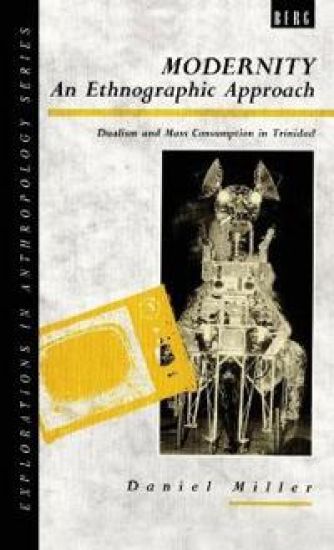
Modernity - An Ethnographic Approach

Modernity - An Ethnographic Approach

Daniel Miller

Berg Publishers
1994
sidottu
From cultural studies, sociology, media studies, gender studies and elsewhere there have been a spate of books recently which have attempted to characterize the state of modernity. Many of these have also argued that what is required is an ethnographic work to determine how far these supposed trends actually apply to a given population. This book explicitly accepts this challenge and, in so doing, demonstrates the potential of modern anthropology studies. It starts by summarizing some debates on modernity and then argues that the Caribbean island of Trinidad is particularly apt for such a study given the origins of its population in slavery and indentured labour, both forms of extreme social rupture. The particular focus of this book is on mass consumption and the way goods and imported images such as soap opera have been used to express and develop a number of key contradictions of modernity. It will be of interest to anthropologists looking for a new potential for the discipline, as well as students in other fields who will be interested in the new contribution of anthropology to their debates.
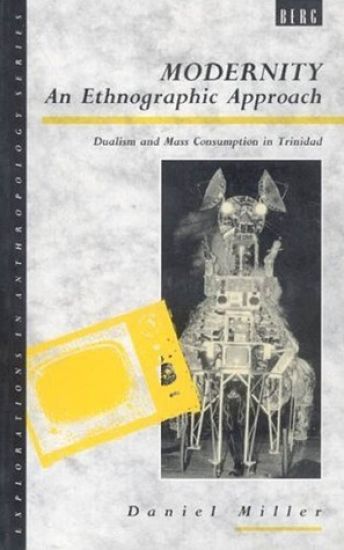
Modernity - An Ethnographic Approach

Modernity - An Ethnographic Approach

Daniel Miller

Berg Publishers
1994
nidottu
From cultural studies, sociology, media studies, gender studies and elsewhere there have been a spate of books recently which have attempted to characterize the state of modernity. Many of these have also argued that what is required is an ethnographic work to determine how far these supposed trends actually apply to a given population. This book explicitly accepts this challenge and, in so doing, demonstrates the potential of modern anthropology studies. It starts by summarizing some debates on modernity and then argues that the Caribbean island of Trinidad is particularly apt for such a study given the origins of its population in slavery and indentured labour, both forms of extreme social rupture. The particular focus of this book is on mass consumption and the way goods and imported images such as soap opera have been used to express and develop a number of key contradictions of modernity. It will be of interest to anthropologists looking for a new potential for the discipline, as well as students in other fields who will be interested in the new contribution of anthropology to their debates.
Animal Ethics and Theology

Animal Ethics and Theology

Daniel Miller

Routledge
2018
nidottu
In this book, Daniel K. Miller articulates a new vision of human and animal relationships based on the foundational love ethic within Christianity. Framed around Jesus’ parable of the Good Samaritan, Animal Ethics and Theology thoughtfully examines the shortcomings of utilitarian and rights-based approaches to animal ethics. By considering the question of animals within the Christian concept of neighbourly love, Miller provides an alternative narrative for understanding the complex relationships that humans have with other animals. This book addresses significant theological questions such as: Does being created in the image of God present a meaningful distinction between humans and other animals? What does it mean for humans to have dominion (Gen. 1:28) over animals? Is meat eating a moral problem for Christians? In addition to drawing out the significance of Christian theology for field of animal ethics this book also engages environmental and feminist ethics. Miller brings a theological perspective to such questions as: Should care for animals be distinguished from care for the environment, and what role should human emotions play in our ethical dealings with other animals? As the title suggests, this book provides fresh insight into the theological significance of human relationships with other animals.
Early German American Newspapers

Early German American Newspapers

Daniel Miller

Palala Press
2018
pokkari
This work has been selected by scholars as being culturally important, and is part of the knowledge base of civilization as we know it. This work was reproduced from the original artifact, and remains as true to the original work as possible. Therefore, you will see the original copyright references, library stamps (as most of these works have been housed in our most important libraries around the world), and other notations in the work.This work is in the public domain in the United States of America, and possibly other nations. Within the United States, you may freely copy and distribute this work, as no entity (individual or corporate) has a copyright on the body of the work.As a reproduction of a historical artifact, this work may contain missing or blurred pages, poor pictures, errant marks, etc. Scholars believe, and we concur, that this work is important enough to be preserved, reproduced, and made generally available to the public. We appreciate your support of the preservation process, and thank you for being an important part of keeping this knowledge alive and relevant.