Kirjojen hintavertailu. Mukana 11 699 587 kirjaa ja 12 kauppaa.

Kirjahaku

Etsi kirjoja tekijän nimen, kirjan nimen tai ISBN:n perusteella.

3 kirjaa tekijältä Daniel Oberhaus

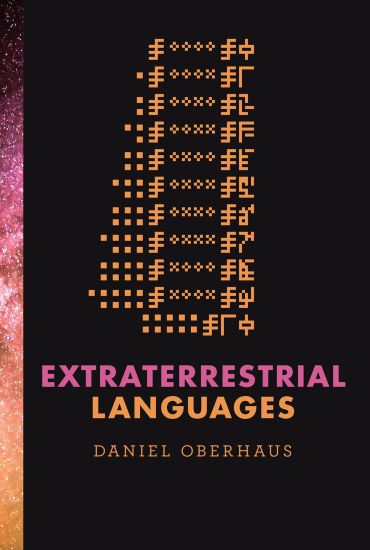
Extraterrestrial Languages

Extraterrestrial Languages

Daniel Oberhaus

MIT Press
2019
sidottu
If we send a message into space, will extraterrestrial beings receive it? Will they understand?The endlessly fascinating question of whether we are alone in the universe has always been accompanied by another, more complicated one: if there is extraterrestrial life, how would we communicate with it? In this book, Daniel Oberhaus leads readers on a quest for extraterrestrial communication. Exploring Earthlings' various attempts to reach out to non-Earthlings over the centuries, he poses some not entirely answerable questions: If we send a message into space, will extraterrestrial beings receive it? Will they understand? What languages will they (and we) speak? Is there not only a universal grammar (as Noam Chomsky has posited), but also a grammar of the universe? Oberhaus describes, among other things, a late-nineteenth-century idea to communicate with Martians via Morse code and mirrors; the emergence in the twentieth century of SETI (the search for extraterrestrial intelligence), CETI (communication with extraterrestrial intelligence), and finally METI (messaging extraterrestrial intelligence); the one-way space voyage of Ella, an artificial intelligence agent that can play cards, tell fortunes, and recite poetry; and the launching of a theremin concert for aliens. He considers media used in attempts at extraterrestrial communication, from microwave systems to plaques on spacecrafts to formal logic, and discusses attempts to formulate a language for our message, including the Astraglossa and two generations of Lincos (lingua cosmica).The chosen medium for interstellar communication reveals much about the technological sophistication of the civilization that sends it, Oberhaus observes, but even more interesting is the information embedded in the message itself. In Extraterrestrial Languages, he considers how philosophy, linguistics, mathematics, science, and art have informed the design or limited the effectiveness of our interstellar messaging.

The Silicon Shrink

The Silicon Shrink

Daniel Oberhaus

MIT PRESS LTD
2025
sidottu
Why the race to apply AI in psychiatry is so dangerous, and how to understand the new tech-driven psychiatric paradigm.AI psychiatrists promise to detect mental disorders with superhuman accuracy, provide affordable therapy for those who can’t afford or can’t access treatment, and even invent new psychiatric drugs. But the hype obscures an unnerving reality. In The Silicon Shrink, Daniel Oberhaus tells the inside story of how the quest to use AI in psychiatry has created the conditions to turn the world into an asylum. Most of these systems, he writes, have vanishingly little evidence that they improve patient outcomes, but the risks they pose have less to do with technological shortcomings than the application of deeply flawed psychiatric models of mental disorder at unprecedented scale. Oberhaus became interested in the subject of mental health after tragically losing his sister to suicide. In the book, he argues that these new, ostensibly therapeutic technologies already pose significant risks to vulnerable people, and they won’t stop there. These new breeds of AI systems are creating a psychiatric surveillance economy in which the emotions, behavior, and cognition of everyday people are subtly manipulated by psychologically savvy algorithms that have escaped the clinic. Oberhaus also introduces readers to the concept of “swipe psychology,” which is quickly establishing itself as the dominant mode of diagnosing and treating mental disorders. It is not too late to change course, but to do so means we must reckon with the nature of mental illness, the limits of technology, and what it means to be human.
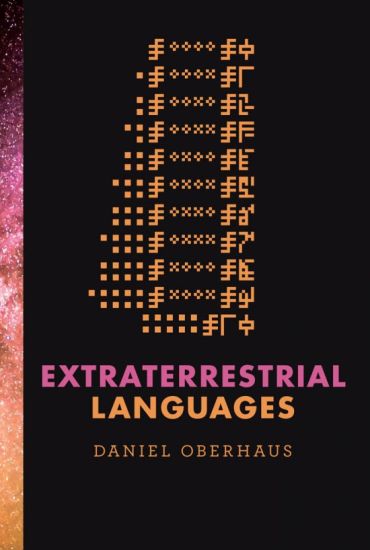
Extraterrestrial Languages

Extraterrestrial Languages

Daniel Oberhaus

MIT PRESS LTD
2024
nidottu
If we send a message into space, will extraterrestrial beings receive it? Will they understand?The endlessly fascinating question of whether we are alone in the universe has always been accompanied by another, more complicated one: if there is extraterrestrial life, how would we communicate with it? In this book, Daniel Oberhaus leads readers on a quest for extraterrestrial communication. Exploring Earthlings' various attempts to reach out to non-Earthlings over the centuries, he poses some not entirely answerable questions: If we send a message into space, will extraterrestrial beings receive it? Will they understand? What languages will they (and we) speak? Is there not only a universal grammar (as Noam Chomsky has posited), but also a grammar of the universe?Oberhaus describes, among other things, a late-nineteenth-century idea to communicate with Martians via Morse code and mirrors; the emergence in the twentieth century of SETI (the search for extraterrestrial intelligence), CETI (communication with extraterrestrial intelligence), and finally METI (messaging extraterrestrial intelligence); the one-way space voyage of Ella, an artificial intelligence agent that can play cards, tell fortunes, and recite poetry; and the launching of a theremin concert for aliens. He considers media used in attempts at extraterrestrial communication, from microwave systems to plaques on spacecrafts to formal logic, and discusses attempts to formulate a language for our message, including the Astraglossa and two generations of Lincos (lingua cosmica).The chosen medium for interstellar communication reveals much about the technological sophistication of the civilization that sends it, Oberhaus observes, but even more interesting is the information embedded in the message itself. In Extraterrestrial Languages, he considers how philosophy, linguistics, mathematics, science, and art have informed the design or limited the effectiveness of our interstellar messaging.