Kirjojen hintavertailu. Mukana 11 342 296 kirjaa ja 12 kauppaa.

Kirjahaku

Etsi kirjoja tekijän nimen, kirjan nimen tai ISBN:n perusteella.

22 kirjaa tekijältä Daniel Ogden

The Oxford Handbook of Heracles

The Oxford Handbook of Heracles

Daniel Ogden

Oxford University Press Inc
2021
sidottu
Heracles is the quintessential ancient Greek hero. The rich and massive tradition associated with him encompasses myths of all kinds: quest myths, monster-fights, world-foundational myths, aetiological myths, philosophical myths, allegorical myths, and more. It informs and is informed by every genre and variety of Classical literature. The figure of Heracles opens windows onto numerous aspects of ancient religion, including those of cult, syncretism, Christian reception, the relationship between gods and heroes, and the intersection of religion with politics. The Oxford Handbook of Heracles is the first large-scale guide to Heracles, his myth-cycle the Twelve Labors, and, to the pervasive impact of the hero upon Greek and Roman culture. The first half of the volume is devoted to the lucid exposition and analysis of the ancient evidence, literary and iconographic, for Heracles' life and deeds. In the second half, the Heracles tradition is analyzed from a range of thematic perspectives, including the contrasting projections of the figure across the major literary genres and in art; the ways in which Greek communities and even Roman emperors exploited the figure in the fashioning of their own identities and for political advantage; his cult in Greece and Rome and its syncretism with that of the Phoenician Melqart; and Heracles' reception in later Western tradition. Presenting, in 39 chapters, the authoritative work of international experts in a clear and well-structured format, this volume provides a convenient reference tool for scholars and offers an accessible starting-point for students.
Magic, Witchcraft and Ghosts in the Greek and Roman Worlds

Magic, Witchcraft and Ghosts in the Greek and Roman Worlds

Daniel Ogden

Oxford University Press Inc
2009
nidottu
In a culture where the supernatural possessed an immediacy now strange to us, magic was of great importance both in the literary and mythic tradition and in ritual practice. Recently, ancient magic has hit a high in popularity, both as an area of scholarly inquiry and as one of general, popular interest. In Magic, Witchcraft, and Ghosts in the Greek and Roman Worlds Daniel Ogden presents three hundred texts in new translations, along with brief but explicit commentaries. This is the first book in the field to unite extensive selections from both literary and documentary sources. Alongside descriptions of sorcerers, witches, and ghosts in the works of ancient writers, it reproduces curse tablets, spells from ancient magical recipe books, and inscriptions from magical amulets. Each translation is followed by a commentary that puts it in context within ancient culture and connects the passage to related passages in this volume. Authors include the well known (Sophocles, Herodotus, Plato, Aristotle, Virgil, Pliny) and the less familiar, and extend across the whole of Greco-Roman antiquity. The second edition includes a new preface, an updated bibliography, and new source-passages, such as the earliest use of the word "mage" in Greek" (fr. Aeschylus' Persians ), a werewolf tale (Aesop's Fables), and excerpts from the most systematic account of ancient legislation against magic (Theodosian Code).
Greek Bastardy in the Classical and Hellenistic Periods
Societies are defined at their margins. In the ancient Greek world bastards were often marginal, their affinities being with the female, the alien, the servile, the poor, and the sick. The study of bastardy in ancient Greece is therefore of an importance that goes far beyond the subject's intrinsic interest, and provides insights into the structure of Greek society as a whole. This is the first full-length book on the subject, and it reviews the major evidence from Athens, Sparta, Gortyn, and Hellenistic Egypt, as well as collating and analysing fragmentary evidence from the other Greek states. Dr Ogden shows how attitudes towards legitimacy differed across the various city states, and analyses their developments across time. He also advances new interpretations of more familiar problems of Athenian bastardy, such as Pericles' citizenship law. The book should interest historians of a wide range of social topics - from law and the economy to the study of women in antiquity and sexuality.
The Dragon in the West

The Dragon in the West

Daniel Ogden

Oxford University Press
2021
sidottu
An exploration of how the image and idea of the dragon has evolved through history How did the dragon get its wings? Everyone in the modern West has a clear idea of what a dragon looks like and of the sorts of stories it inhabits, not least devotees of the fantasies of J. R. R. Tolkien, J. K. Rowling, and George R. R. Martin. A cross between a snake and some fearsome mammal, often sporting colossal wings, they live in caves, lie on treasure, maraud, and breathe fire. They are extraordinarily powerful, but even so, ultimately defeated in their battles with humans. What is the origin of this creature? The Dragon in the West is the first serious and substantial account in any language of the evolution of the modern dragon from its ancient forebears. Daniel Ogden's detailed exploration begins with the drakon of Greek myth and the draco of the dragon-loving Romans, and a look at the ancient world's female dragons. It brings the story forwards though Christian writings, medieval illustrated manuscripts, and the lives of dragon-duelling saints, before concluding with a study of dragons found in the medieval Germanic world, including those of the Anglo-Saxon Beowulf and the Norse sagas.
The Werewolf in the Ancient World

The Werewolf in the Ancient World

Daniel Ogden

Oxford University Press
2021
sidottu
In a moonlit graveyard somewhere in southern Italy, a soldier removes his clothes in readiness to transform himself into a wolf. He depends upon the clothes to recover his human shape, and so he magically turns them to stone, but his secret is revealed when, back in human form, he is seen to carry a wound identical to that recently dealt to a marauding wolf. In Arcadia a man named Damarchus accidentally tastes the flesh of a human sacrifice and is transformed into a wolf for nine years. At Temesa Polites is stoned to death for raping a local girl, only to return to terrorize the people of the city in the form of a demon in a wolfskin. Tales of the werewolf are by now well established as a rich sub-strand of the popular horror genre; less widely known is just how far back in time their provenance lies. These are just some of the werewolf tales that survive from the Graeco-Roman world, and this is the first book in any language to be devoted to their study. It shows how in antiquity werewolves thrived in a story-world shared by witches, ghosts, demons, and soul-flyers, and argues for the primary role of story-telling-as opposed to rites of passage-in the ancient world's general conceptualization of the werewolf. It also seeks to demonstrate how the comparison of equally intriguing medieval tales can be used to fill in gaps in our knowledge of werewolf stories in the ancient world, thereby shedding new light on the origins of the modern phenomenon. All ancient texts bearing upon the subject have been integrated into the discussion in new English translations, so that the book provides not only an accessible overview for a broad readership of all levels of familiarity with ancient languages, but also a comprehensive sourcebook for the ancient werewolf for the purposes of research and study.
Drakon

Drakon

Daniel Ogden

Oxford University Press
2013
sidottu
Drakon: Dragon Myth and Serpent Cult in the Greek and Roman Worlds is the first substantial survey to be focally devoted to the 'dragon' or the supernatural serpent, the drakon or draco, in Greek and Roman myth and religion. Almost every major myth cycle of the Greek and Roman worlds featured a dragon-fight at its heart, including the sagas of Heracles, Jason, Perseus, Cadmus, and Odysseus. Asclepius, the single most beloved and influential of the pagan gods from the late Classical period until Late Antiquity, was often manifest as a giant serpent and even in his humanoid aspect carried a serpent on his staff. Detailed and authoritative, but lucidly presented, this volume incorporates analyses of all of antiquity's major dragon-slaying myths, and offers comprehensive accounts of the rich sources, literary and iconographic. Ogden also explores matters of cult and the initially paradoxical association of dragons and serpents with the most benign of deities, not only those of health and healing, like Asclepius and Hygieia, but also those of wealth and good luck, such as Zeus Meilichios and Agathos Daimon. The concluding chapter considers the roles of both pagan dragon-slaying narratives and pagan serpent cults in shaping the beginnings of the tradition of the saintly dragon- and serpent-slaying tales we cherish still, the tradition that culminates in our own stories of Saints George and Patrick.
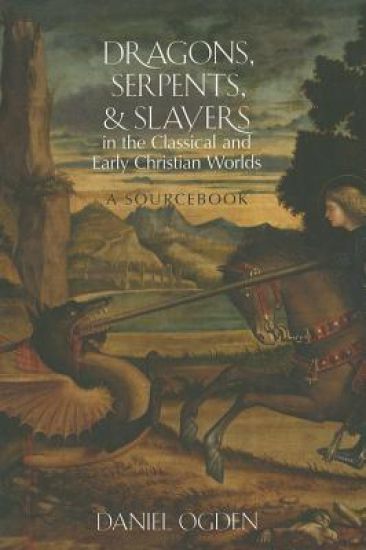
Dragons, Serpents, and Slayers in the Classical and Early Christian Worlds
Stories about dragons, serpents, and their slayers make up a rich and varied tradition within ancient mythology and folklore. In this sourcebook, Daniel Ogden presents a comprehensive and easily accessible collection of dragon myths from Greek, Roman, and early Christian sources. Some of the dragons featured are well known: the Hydra, slain by Heracles; the Dragon of Colchis, the guardian of the golden fleece overcome by Jason and Medea; and the great sea-serpent from which Perseus rescues Andromeda. But the less well known dragons are often equally enthralling, like the Dragon of Thespiae, which Menestratus slays by feeding himself to it in armor covered in fish-hooks, or the lamias of Libya, who entice young men into their striking-range by wiggling their tails, shaped like beautiful women, at them. The texts are arranged in such a way as to allow readers to witness the continuity of and evolution in dragon stories between the Classical and Christian worlds, and to understand the genesis of saintly dragon-slaying stories of the sort now characteristically associated with St George, whose earliest dragon-fight concludes the volume. All texts, a considerable number of which have not previously been available in English, are offered in new translations and accompanied by lucid commentaries that place the source-passages into their mythical, folkloric, literary, and cultural contexts. A sampling of the ancient iconography of dragons and an appendix on dragon slaying myths from the ancient Near East and India, particularly those with a bearing upon the Greco-Roman material, are also included. This volume promises to be the most authoritative sourcebook on this perennially fascinating and influential body of ancient myth.
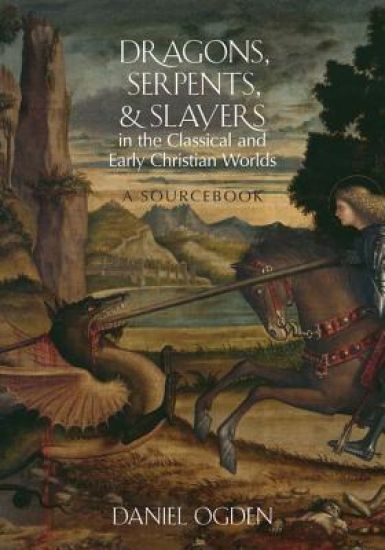
Dragons, Serpents, and Slayers in the Classical and Early Christian Worlds
Stories about dragons, serpents, and their slayers make up a rich and varied tradition within ancient mythology and folklore. In this sourcebook, Daniel Ogden presents a comprehensive and easily accessible collection of dragon myths from Greek, Roman, and early Christian sources. Some of the dragons featured are well known: the Hydra, slain by Heracles; the Dragon of Colchis, the guardian of the golden fleece overcome by Jason and Medea; and the great sea-serpent from which Perseus rescues Andromeda. But the less well known dragons are often equally enthralling, like the Dragon of Thespiae, which Menestratus slays by feeding himself to it in armor covered in fish-hooks, or the lamias of Libya, who entice young men into their striking-range by wiggling their tails, shaped like beautiful women, at them. The texts are arranged in such a way as to allow readers to witness the continuity of and evolution in dragon stories between the Classical and Christian worlds, and to understand the genesis of saintly dragon-slaying stories of the sort now characteristically associated with St George, whose earliest dragon-fight concludes the volume. All texts, a considerable number of which have not previously been available in English, are offered in new translations and accompanied by lucid commentaries that place the source-passages into their mythical, folkloric, literary, and cultural contexts. A sampling of the ancient iconography of dragons and an appendix on dragon slaying myths from the ancient Near East and India, particularly those with a bearing upon the Greco-Roman material, are also included. This volume promises to be the most authoritative sourcebook on this perennially fascinating and influential body of ancient myth.
Pausanias of Sparta

Pausanias of Sparta

Daniel Ogden

YALE UNIVERSITY PRESS
2026
sidottu
The story of Pausanias, the general who defeated the Persians invading Greece and changed the course of history Weaving together ancient sources, Daniel Ogden tells the gripping story of the enigmatic and controversial Spartan regent to an underage king. Pausanias (ca. 505–ca. 467 BCE) would never have come to power had the Persians not annihilated the Greek forces at Thermopylae in 480 BCE, killing his uncle Leonidas. The next year, Greek forces under the new regent’s command crushed the Persians at the decisive Battle of Plataea. It was a brilliant victory for Pausanias, but his heroic reputation swiftly declined. He was accused of tyrannical ambition, treachery, rape, and murder and came to a grisly and ghostly end, starved to death in Sparta’s temple of Athena. In this meticulously researched book—the first full-length biography of Pausanias in English—Ogden searches for the truth behind the ancient stories. Was Pausanias merely misunderstood and misrepresented, or was he an egotist in thrall to his own achievement? Despite Pausanias’s dark demise, Ogden hails his greatest achievement: by defeating the Persians he ensured the future of Classical Greece culture and the development of Western civilization as we know it.
Perseus

Perseus

Daniel Ogden

Routledge
2008
sidottu
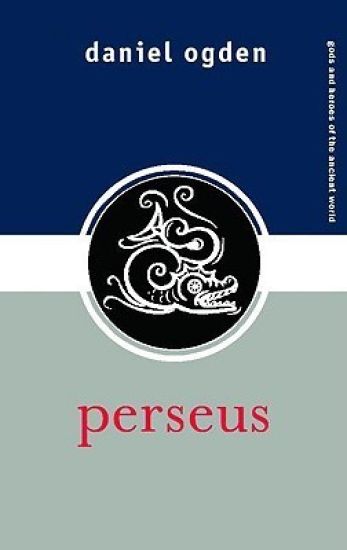
The son of Zeus, Perseus belongs in the first rank of Greek heroes. Indeed to some he was a greater hero even than Heracles. With the help of Hermes and Athena he slew the Gorgon Medusa, conquered a mighty sea monster and won the hand of the beautiful princess Andromeda. This volume tells of his enduring myth, it's rendering in art and literature, and its reception through the Roman period and up to the modern day.This is the first scholarly book in English devoted to Perseus' myth in its entirety for over a century. With information drawn from a diverse range of sources as well as varied illustrations, the volume illuminates the importance of the Perseus myth throughout the ages.
Perseus

Perseus

Daniel Ogden

Routledge
2008
nidottu
The son of Zeus, Perseus belongs in the first rank of Greek heroes. Indeed to some he was a greater hero even than Heracles. With the help of Hermes and Athena he slew the Gorgon Medusa, conquered a mighty sea monster and won the hand of the beautiful princess Andromeda. This volume tells of his enduring myth, it's rendering in art and literature, and its reception through the Roman period and up to the modern day.This is the first scholarly book in English devoted to Perseus' myth in its entirety for over a century. With information drawn from a diverse range of sources as well as varied illustrations, the volume illuminates the importance of the Perseus myth throughout the ages.
Greek and Roman Necromancy

Greek and Roman Necromancy

Daniel Ogden

Princeton University Press
2004
pokkari
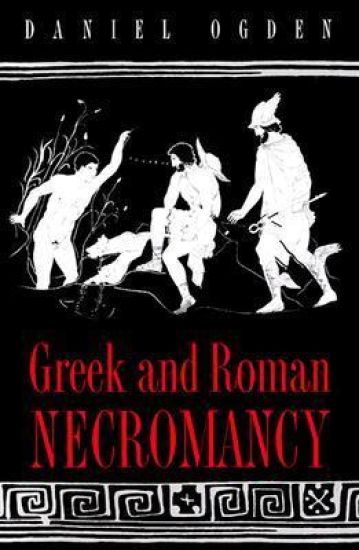
In classical antiquity, there was much interest in necromancy--the consultation of the dead for divination. People could seek knowledge from the dead by sleeping on tombs, visiting oracles, and attempting to reanimate corpses and skulls. Ranging over many of the lands in which Greek and Roman civilizations flourished, including Egypt, from the Greek archaic period through the late Roman empire, this book is the first comprehensive survey of the subject ever published in any language. Daniel Ogden surveys the places, performers, and techniques of necromancy as well as the reasons for turning to it. He investigates the cave-based sites of oracles of the dead at Heracleia Pontica and Tainaron, as well as the oracles at the Acheron and Avernus, which probably consisted of lakeside precincts. He argues that the Acheron oracle has been long misidentified, and considers in detail the traditions attached to each site. Readers meet the personnel--real or imagined--of ancient necromancy: ghosts, zombies, the earliest vampires, evocators, sorcerers, shamans, Persian magi, Chaldaeans, Egyptians, Roman emperors, and witches from Circe to Medea. Ogden explains the technologies used to evocate or reanimate the dead and to compel them to disgorge their secrets. He concludes by examining ancient beliefs about ghosts and their wisdom--beliefs that underpinned and justified the practice of necromancy. The first of its kind and filled with information, this volume will be of central importance to those interested in the rapidly expanding, inherently fascinating, and intellectually exciting subjects of ghosts and magic in antiquity.
The Crooked Kings of Ancient Greece

The Crooked Kings of Ancient Greece

Daniel Ogden

Bristol Classical Press
1997
sidottu
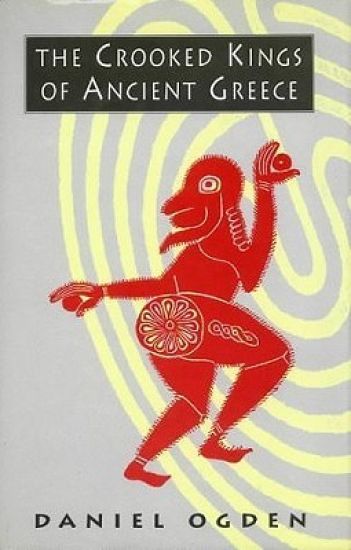
By comparing traditional narratives concerning archaic colonists and tyrants, Ogden shows that monarchic rulers in archaic Greece were often paradoxically conceptualized as deformed scapegoats or as evil malformed babies of sinister birth. This way of thinking helped to explain their extraordinary power, for they embodied in their twisted limbs a terrible pollution that enabled them to overthrow their communities. The author considers a diverse range of related themes, including the myth of Oedipus, the fables of Aesop, the meanings attached to monkeys, pigs and mice, demonic cooks, the characters of early farce, Spartan hairstyles, and the beginnings of Greek democracy and ostracism at Athens.
Alexander the Great

Alexander the Great

Daniel Ogden

University of Exeter Press
2011
nidottu
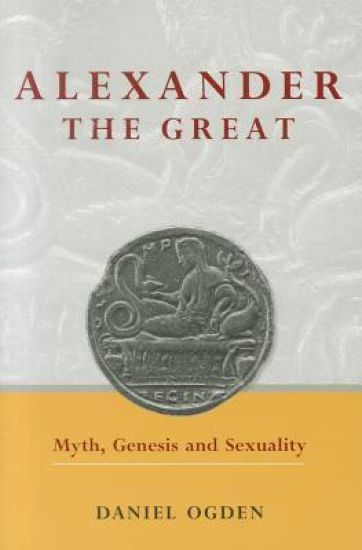
What are ancient texts saying to us when they describe Alexander the Great’s romantic relationship with his wife Barsine, or comment on his homosexual relationship with Hephaestion? What did it mean when the ancient writers told that Alexander had been sired by a thunderbolt or by a gigantic snake? What did it mean when they represented his mother Olympias as a witch? These questions and others are addressed in Alexander the Great: Myth and Sexuality. In this book, Daniel Ogden discusses the mythologizing of procreation and sex in the ancient traditions surrounding Alexander. From the author's Introduction: 'A quick review of [...] chapter titles will suggest that the first half [...] answers the title's promise of 'myth' and the second half that of 'sexuality', but in fact the entire volume is devoted to what may be termed 'myth' of one sort or another. Its central and unifying subject is the mythologizing of procreation and sex in the traditions surrounding the figure of Alexander the Great: accordingly, it comprises both treatments of the narratives spun around his own siring and birth on the one hand, and treatments of the narratives spun around the king's own procreative and sexual career on the other. A significant amount of this mythologizing [...] took root in Alexander's own age. The remainder of it is the product of subsequent tradition, a tradition that was evidently in vigorous development already within a few years of Alexander's death.'
Aristomenes of Messene

Aristomenes of Messene

Daniel Ogden

Classical Press of Wales
2004
sidottu
The legends of Aristomenes, hero of the Messenian resistance to Sparta, were designed to excite, gratify and amuse. Yet they remain almost unknown even to specialist ancient historians. This book, the first monograph to be devoted to Aristomenes, redirects attention to his adventures, which at times resemble those of King Arthur, Robin Hood and even Sinbad the Sailor. The book goes beyond the question of the historicity of Aristomenes, and examines the meaning and symbolism of the stories in their own right. The study will be welcomed by those with an interest in the history of Sparta, in Pausanias (our principal source for the tales), and in Greek traditional narrative. Famously, Sparta tried to suppress the identity and self-confidence of its Messenian helots. Yet here are stories which give access to the imagination of this long-muted but ultimately liberated people.
The Tyrants of Corinth

The Tyrants of Corinth

Daniel Ogden

TAYLOR FRANCIS LTD
2024
sidottu
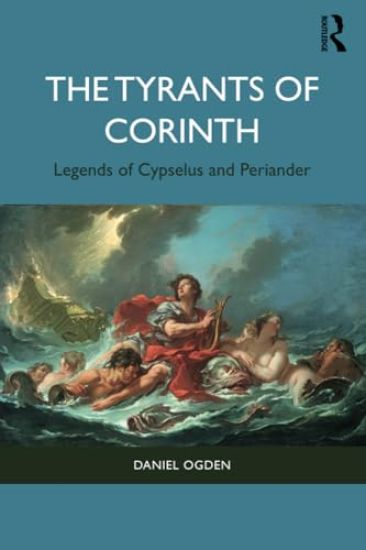
The Tyrants of Corinth is the first monograph in English devoted to the archaic tyranny of Corinth and the engaging legends of Cypselus and Periander, which embrace such themes as hidden babies, animal helpers, arbitrary violence, necrophilia and vengeful ghosts.This detailed study of the ancient sources for the Corinthian tyrants analyses the tales associated with them comprehensively from the perspective of folklore and traditional narrative, including the miraculous birth and deliverance of Cypselus, Periander’s consultation of the ghost of his wife, Melissa, at the Acheron Oracle of the Dead and the saving of the bard Arion from the sea by a dolphin. Any lingering notions that the tales retain historical content are dispelled; Ogden’s radical approach considers all the major episodes associated with both men to be entirely fictive. This allows for reinterpretation of individual details in the tales and for the recovery of lost storylines and symbolism lurking beneath the narrative that our ancient sources preserve for us. All the major sources are supplied in new translations in a convenient appendix, and brief consideration is also given to the tales’ modern reception.The Tyrants of Corinth is suitable for scholars working on Greek tyranny, Greek history and mythology more broadly, and folklore, while also speaking accessibly to undergraduates encountering the history of Archaic Greece for the first time.
The Tyrants of Corinth

The Tyrants of Corinth

Daniel Ogden

TAYLOR FRANCIS LTD
2024
nidottu
The Tyrants of Corinth is the first monograph in English devoted to the archaic tyranny of Corinth and the engaging legends of Cypselus and Periander, which embrace such themes as hidden babies, animal helpers, arbitrary violence, necrophilia and vengeful ghosts.This detailed study of the ancient sources for the Corinthian tyrants analyses the tales associated with them comprehensively from the perspective of folklore and traditional narrative, including the miraculous birth and deliverance of Cypselus, Periander’s consultation of the ghost of his wife, Melissa, at the Acheron Oracle of the Dead and the saving of the bard Arion from the sea by a dolphin. Any lingering notions that the tales retain historical content are dispelled; Ogden’s radical approach considers all the major episodes associated with both men to be entirely fictive. This allows for reinterpretation of individual details in the tales and for the recovery of lost storylines and symbolism lurking beneath the narrative that our ancient sources preserve for us. All the major sources are supplied in new translations in a convenient appendix, and brief consideration is also given to the tales’ modern reception.The Tyrants of Corinth is suitable for scholars working on Greek tyranny, Greek history and mythology more broadly, and folklore, while also speaking accessibly to undergraduates encountering the history of Archaic Greece for the first time.
The Legend of Seleucus

The Legend of Seleucus

Daniel Ogden

Cambridge University Press
2017
sidottu
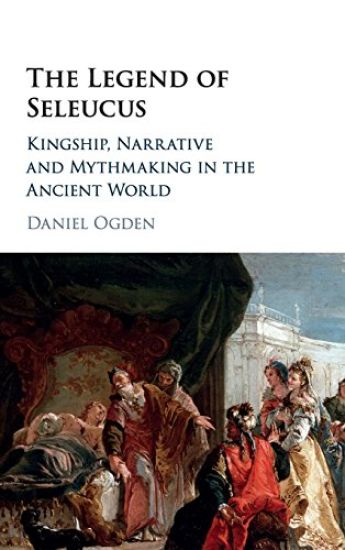
In the chaos that followed the death of Alexander the Great his distinguished marshal Seleucus was reduced to a fugitive, with only a horse to his name. But by the time of his own death, Seceucus had reconstructed the bulk of Alexander's empire, built Antioch, and become a king in his turn, one respected for justness in an age of cruelty. The dynasty he founded was to endure for three centuries. Such achievements richly deserved to be projected into legend, and so they were. This legend told of Seleucus' divine siring by Apollo, his escape from Babylon with an enchanted talisman, his foundations of cities along a dragon-river with the help of Zeus' eagles, his surrender of his new wife to his besotted son, and his revenge, as a ghost, upon his assassin. This is the first book in any language devoted to the reconstruction of this fascinating tradition.
The Strix-Witch

The Strix-Witch

Daniel Ogden

Cambridge University Press
2021
pokkari
The strix was a persistent feature of the folklore of the Roman world and subsequently that of the Latin West and the Greek East. She was a woman that flew by night, either in an owl-like form or in the form of a projected soul, in order to penetrate homes by surreptitious means and thereby devour, blight or steal the new-born babies within them. The motif-set of the ideal narrative of a strix attack - the 'strix-paradigm' - is reconstructed from Ovid, Petronius, John Damascene and other sources, and the paradigm's impact is traced upon the typically gruesome representation of witches in Latin literature. The concept of the strix is contextualised against the longue-durée notion of the child-killing demon, which is found already in the ancient Near East, and shown to retain a currency still as informing the projection of the vampire in Victorian fiction.
The Legend of Seleucus

The Legend of Seleucus

Daniel Ogden

Cambridge University Press
2020
pokkari
In the chaos that followed the death of Alexander the Great his distinguished marshal Seleucus was reduced to a fugitive, with only a horse to his name. But by the time of his own death, Seceucus had reconstructed the bulk of Alexander's empire, built Antioch, and become a king in his turn, one respected for justness in an age of cruelty. The dynasty he founded was to endure for three centuries. Such achievements richly deserved to be projected into legend, and so they were. This legend told of Seleucus' divine siring by Apollo, his escape from Babylon with an enchanted talisman, his foundations of cities along a dragon-river with the help of Zeus' eagles, his surrender of his new wife to his besotted son, and his revenge, as a ghost, upon his assassin. This is the first book in any language devoted to the reconstruction of this fascinating tradition.