Kirjojen hintavertailu. Mukana 11 377 098 kirjaa ja 12 kauppaa.

Kirjahaku

Etsi kirjoja tekijän nimen, kirjan nimen tai ISBN:n perusteella.

2 kirjaa tekijältä Daniel P. Gitterman

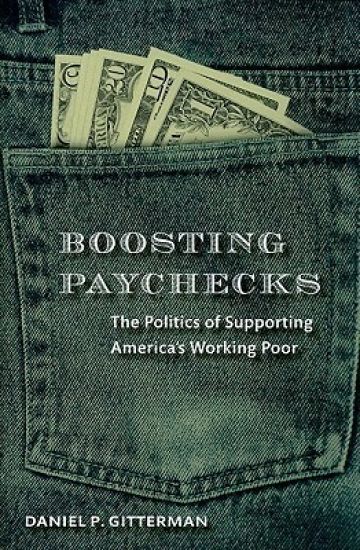
Boosting Paychecks

Boosting Paychecks

Daniel P. Gitterman

Brookings Institution
2009
nidottu
"When most people think of policies designed to help the poor, welfare is the first program that comes to mind. Traditionally welfare has served individuals who do not work—hence much of the stigma that some attach to the program. An equally important strand of American social policy, however, is meant to support low-wage workers and their families. In Boosting Paychecks, Daniel Gitterman illuminates this often neglected part of the American safety net.Gitterman focuses on two sets of policy instruments that have been used to aid the working poor since the early twentieth century: the federal tax code and the minimum wage. The income tax code can be fine-tuned in many ways—through exemptions, deductions, credits, changing tax brackets and rates—to alter the amount of income workers are left with at the end of the day. In addition, it interacts with the minimum wage to determine the economic well-being of many lowincome households. Boosting Paychecks analyzes the partisan politics that have shaped these policies since the New Deal era, with particular attention paid to the past three decades. It also examines the degree to which they have succeeded in lifting low-wage workers and their families out of poverty.Forging a new political bargain that balances labor market flexibility with security for poor working families is one of the most critical challenges facing government today. Boosting Paychecks sheds new light on the scope of this challenge and the political constraints and opportunities policymakers face."
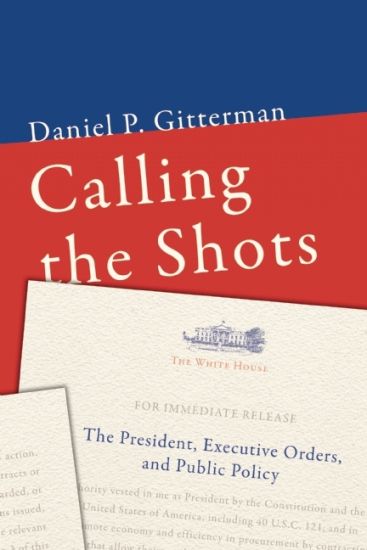
Calling the Shots

Calling the Shots

Daniel P. Gitterman

Brookings Institution
2017
nidottu
Modern presidents are CEOs with broad powers over the federal government.The United States Constitution lays out three hypothetically equal branches of government—the executive, the legislative, and the judicial—but over the years, the president, as head of the executive branch, has emerged as the usually dominant political and administrative force at the federal level. In fact, Daniel Gitterman tells us, the president is, effectively, the CEO of an enormous federal bureaucracy.Using the unique legal authority delegated by thousands of laws, the ability to issue executive orders, and the capacity to shape how federal agencies write and enforce rules, the president calls the shots as to how the government is run on a daily basis. Modern presidents have, for example, used the power of the purchaser to require federal contractors to pay a minimum wage and to prohibit contracting with companies and contractors that knowingly employ unauthorized alien workers.Presidents and their staffs use specific tools, including executive orders and memoranda to agency heads, as instruments of control and influence over the government and the private sector. For more than a century, they have used these tools without violating the separation of powers. Calling the Shots demonstrates how each of these executive powers is a powerful weapon of coercion and redistribution in the president's political and policymaking arsenal.