Kirjojen hintavertailu. Mukana 11 342 296 kirjaa ja 12 kauppaa.

Kirjahaku

Etsi kirjoja tekijän nimen, kirjan nimen tai ISBN:n perusteella.

3 kirjaa tekijältä Daniel P. Sulmasy

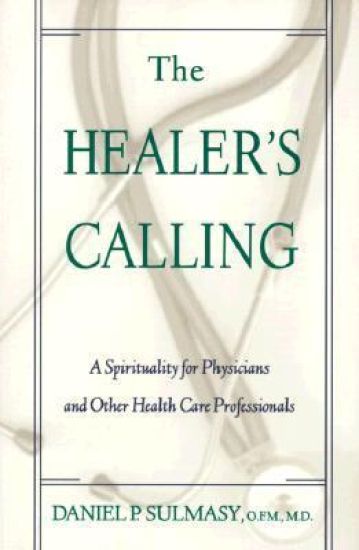
The Healer's Calling

The Healer's Calling

Daniel P. Sulmasy

Paulist Press International,U.S.
1997
nidottu
Integrates faith and healthcare, offering professionals insight on how to find spiritual meaning in clinical practice and take seriously their Christian vocation to transform the world through caring for patients in light of the Gospel. †
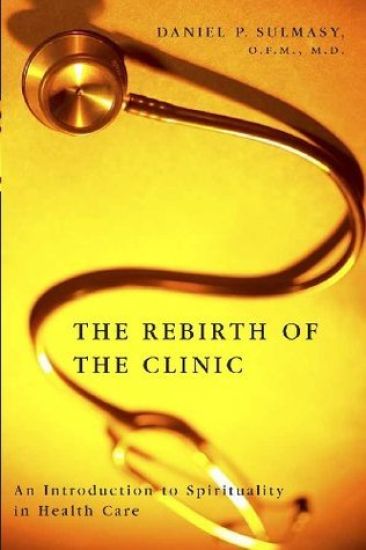
The Rebirth of the Clinic

The Rebirth of the Clinic

Daniel P. Sulmasy

Georgetown University Press
2006
pokkari
"The Rebirth of the Clinic" begins with a bold assertion: the doctor-patient relationship is sick. Fortunately, as this engrossing book demonstrates, the damage is not irreparable. Today, patients voice their desires to be seen not just as bodies, but as whole people. Though not willing to give up scientific progress and all it has to offer, they sense the need for more. Patients want a form of medicine that can heal them in body and soul. This movement is reflected in medical school curricula, in which courses in spirituality and health care are taught alongside anatomy and physiology. But how can health care workers translate these concepts into practice? And how can they strike an appropriate balance, integrating and affirming spirituality without abandoning centuries of science or unwittingly adopting pseudoscience? Physician and philosopher Daniel Sulmasy is uniquely qualified to guide readers through this terrain. At the outset of this accessible, engaging volume, he explores the nature of illness and healing, focusing on health care's rich history as a spiritual practice and on the human dignity of the patient. Combining sound theological reflection with doses of healthy skepticism, he goes on to describe empirical research on the effects of spirituality on health, including scientific studies of the healing power of prayer, emphasizing that there are reasons beyond even promising research data to attend to the souls of patients. Finally, Sulmasy devotes special attention and compassion to the care of people at the end of life, incorporating the stories of several of his patients. Throughout, the author never strays from the theme that, for physicians, attending to the spiritual needs of patients should not be a moral option, but a moral obligation. This book is an essential resource for scholars and students of medicine and medical ethics and especially medical students and health care professionals.
A Balm for Gilead

A Balm for Gilead

Daniel P. Sulmasy

Georgetown University Press
2006
pokkari
Once rarely discussed in medical circles, the relationship between spirituality and health has become an important topic in health care. This change is evidenced in courses on religion and medicine taught in most medical schools, articles in journals such as the "New England Journal of Medicine", and conferences being held all over the country. Yet, much of the discussion of the role of religion and spirituality in health care keeps the critical distance of only being about spirituality. "A Balm for Gilead" goes further, offering a work of spirituality. Sulmasy moves between the poetic and the speculative, addressing his subject in the tradition of great spiritual writers like Augustine and Bonaventure. He draws from philosophical and theological sources - specifically, Hebrew and Christian scripture - to illuminate how the art of healing is integrally tied to a sense of the divine and our ultimate interconnectedness. Health care professionals - and anyone else involved with the care of the sick and dying - will find this series of meditations both inspiring and instructive. Sulmasy addresses the spiritual malaise that physicians, nurses, and other health care workers experience in their professional lives, and explores how these Christian healers can be inspired to persevere in the care of the sick. Drawing on the parable of the prodigal son, for instance, Sulmasy illustrates how some physicians have put financial gain ahead of their patients, and how genuine spirituality might change their hearts. He examines both enigmatic topics such as the relationship between sinfulness, sickness, and suffering and the spirituality of more routine topics such as preventive medicine. In one especially stirring and poignant meditation, he reflects on the spirituality of dying in the light of Christian hope. "A Balm for Gilead" interweaves prayer and reflection, pointing the way to a twenty-first-century spirituality for health care professionals and their patients.