Two of the most pressing issues for any theory of mental illness to be established and accepted is to define the mind and to determine whether mankind consists of both spiritual and physical natures or exists merely as a material existence. Although many professionals argue that the brain is the most relevant topic of discussion in mental illness, the mind is the reason why the idea of mental illness exists. The mind, therefore, must first be defined and understood before the brain-dysfunction theory can be evaluated and potentially applied. But such a study poses a problem for science-driven approaches, since the mind cannot be observed and the scientific method can only be applied to effects of the mind - such as behavior and physical changes to the body. These are some of the issues discussed in this volume.Likewise, this book explores the history of the current construct of mental illness, which Emil Kraepelin created and which led to the Nazi Holocaust. This philosophy and system/paradigm/construct is still the foundational theory behind today's mental health system. It is not just the Holocaust, however, which exposes that this utilitarian system is broken: history consistently reveals that denying the spiritual nature of mankind results in horrific and barbaric treatment of humanity. Despite this fact, the denial of the spiritual nature or reducing it to the physical nature is one of the major tenets on which the current construct of mental illness rests.Further, though modern day psychiatrists claim that they are altruistic, one must question why empathy and care should matter if humanity is not spiritual/moral in nature. If we are only physical bi-products of evolution (materialism), then why do we have a moral system at all, and why do we seek to remedy any distress or impairment in a person's life? Why not simply allow evolution to run its course? To believe in the classic medical model - which is today's construct of mental illness - is to deny the spiritual nature of humanity. If we are to truly treat people's minds, we must consider the reality of the spiritual nature as well as how to approach and heal
Suicidal ideations, attempts, and completions are increasing at a disturbing rate around the world. The currently popular humanistic phenomenology and subsequent biological approaches have failed to resolve the underlying problems and are, in fact, widely understood to increase suicidal ideation. Clearly, a radical change in how suicide is viewed and approached is urgently needed. Though the medical model's failure to reduce suicides and its contribution to the problem is evident, many people are unaware that the Bible offers a tried and true alternative phenomenology to that of psychiatric/humanistic theory. The Word of God provides numerous case studies of suicidal thinking, attempts, and completions, and more importantly, Scripture offers empirical insight into both why people choose to end their lives and how to effectively help those in desperate need. In Suicidal Ideation: a Biblical Perspective for Counselors, Daniel Berger points the reader to Scripture and exposes how the current empirical findings concerning suicide confirm the Biblical understanding and approach to suicide as relevant and vitally important. Moreover, this book corrects misconceptions about suicidal thinking and helps to equip helpers, practitioners, and ministers with the only validated approach to people in despair. While no one can change another's thinking or behavior, Suicidal Ideations: a Biblical Perspective for Counselors supplies the reader with discernment and an evidence based biblical approach, which enables confidence and facilitates effectiveness to help others in times of crisis.
For much of the twentieth century, psychiatry, psychology and social theory have held that mental illness, historically known as madness, cannot be objectively defined. This fluidity of concept is especially striking in light of the dogmatism that continues to characterize these fields of study and practice. However, the unmistakable failure to effectively treat the widespread evidence of mental struggle points to the possibility that psychiatric theory has gotten something wrong or missed something at the foundational level. Could it be that mental illness is recognizable across all cultures and all eras, that it has a clear definition which was directly stated in the past and still is implied in modern psychiatry through the DSM-5? This book explores what mental illness or madness is; furthermore, it asserts that mental illness does indeed have a clear definition, a distinct cause and a reliable remedy. No one will argue that fact that the diagnoses of mental illness are of epidemic proportions. But this does not have to be the case: the remedy is clear; the madness can stop.
Diagnoses of depressive and bipolar disorders have reached epidemic proportions. The current psychiatric theories, approaches, and suggested remedies have together failed to resolve these human struggles despite technological advances and continued claims of validity and reliability. In fact, since its introduction in the early 1960s, the current humanistic paradigm has worsened both individuals and society as a whole. Suicidal ideation and completions are also rapidly increasing within the church and even among church leadership. There clearly exists an urgent need to rethink the widespread human struggle known today as depression. In this book, Dr. Berger proposes from both Scripture and scientific evidence that the root of our mental struggles lies in our metaphysical souls rather than in our physical bodies. As the reader will discover, the solution is not to endlessly invent new theories and alleged physical remedies that inevitably fail, but to return to understanding humanity's true nature as God declares it to be from the beginning of time. Only by realizing and accepting this important perspective does our own human fragility and depravity begin to make sense. At the same time, this is not a book that suggests that those who struggle should simply pray and read their Bible more and that all of their problems will vanish. Rather, the book offers proven and practical answers to important questions.Rethinking Depression invites the Christian who seeks answers and desires to help others struggling or diagnosed within the psychiatric system to re-examine the current ways of understanding and treating depression and to consider the gracious perspective that in all of our mental suffering, sorrow, and hopelessness-no matter how severe, we are not abnormal or different from one another at our core. In truth, what we all desperately need is sure hope and genuine healing for our souls that is only found in the person and work of Jesus Christ.
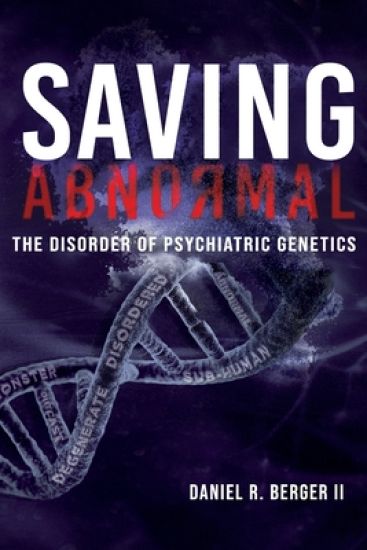
In Saving Abnormal, Dr. Daniel Berger II presents an eye-opening account of both the historic origins and development of the current bio-psycho-social/neo-Kraepelinian model of mental illness, as well as how and why creating and asserting concepts of abnormality/degeneracy upon society is vital to sustain psychiatry's existence. This book explores the key figures, important historic events, and clear scientific evidence so that the reader can gain understanding about the bio-psycho-social approach to the human soul/psyche, why it continues to fail, and why it must be discarded. More importantly, the book offers an alternative perspective that has historically shown to lead people into genuine hope and deliverance from their mental, emotional, and behavioral struggles. From its genesis in race psychology, through its ushering in the Holocaust, and to its current destructive results, the genetic theory of mental illness continues to be a history of stigmatizing people in need of help and of harming individuals and entire societies. The currently held construct of mental illness is simply not an approach to human nature and human phenomena that saves lives or rightly explains the human condition. Instead, it is a phenomenology that judges some people to be categorically "unhealthy"/abnormal, blames it on their biology, and positions them mentally to be hopeless products of mother nature's selection.In addition to the history of the medical model, Dr. Berger also discusses in detail the foundational tenets of faith that undergird the currently popular genetic/eugenic theory of mental illness that are embraced by all who promote this paradigm. What should become apparent when the facts are discerned is that psychiatric genetics is primarily a worldview, not an empirical field. Saving Abnormal presents a wealth of evidence to consider and calls for a paradigm shift in the way the human soul/psyche is framed and approached.