Kirjojen hintavertailu. Mukana 11 342 296 kirjaa ja 12 kauppaa.

Kirjahaku

Etsi kirjoja tekijän nimen, kirjan nimen tai ISBN:n perusteella.

4 kirjaa tekijältä Daniel R. Huebner

Becoming Mead

Becoming Mead

Daniel R. Huebner

University of Chicago Press
2014
sidottu
George Herbert Mead is a foundational figure in sociology, best known for his book Mind, Self, and Society, which was put together after his death from course notes taken by stenographers and students and from unpublished manuscripts. Mead, however, never taught a course primarily housed in a sociology department, and he wrote about a wide variety of topics far outside of the concerns for which he is predominantly remembered-including experimental and comparative psychology, the history of science, and relativity theory. In short, he is known in a discipline in which he did not teach for a book he did not write. In Becoming Mead, Daniel R. Huebner traces the ways in which knowledge has been produced by and about the famed American philosopher. Instead of treating Mead's problematic reputation as a separate topic of study from his intellectual biography, Huebner considers both biography and reputation as social processes of knowledge production. He uses Mead as a case study and provides fresh new answers to critical questions in the social sciences, such as how authors come to be considered canonical in particular disciplines, how academics understand and use others' works in their research, and how claims to authority and knowledge are made in scholarship. Becoming Mead provides a novel take on the history of sociology, placing it in critical dialogue with cultural sociology and the sociology of knowledge and intellectuals.
Becoming Mead

Becoming Mead

Daniel R. Huebner

University of Chicago Press
2014
nidottu
George Herbert Mead is a foundational figure in sociology, best known for his book Mind, Self, and Society, which was put together after his death from course notes taken by stenographers and students and from unpublished manuscripts. Mead, however, never taught a course primarily housed in a sociology department, and he wrote about a wide variety of topics far outside of the concerns for which he is predominantly remembered-including experimental and comparative psychology, the history of science, and relativity theory. In short, he is known in a discipline in which he did not teach for a book he did not write. In Becoming Mead, Daniel R. Huebner traces the ways in which knowledge has been produced by and about the famed American philosopher. Instead of treating Mead's problematic reputation as a separate topic of study from his intellectual biography, Huebner considers both biography and reputation as social processes of knowledge production. He uses Mead as a case study and provides fresh new answers to critical questions in the social sciences, such as how authors come to be considered canonical in particular disciplines, how academics understand and use others' works in their research, and how claims to authority and knowledge are made in scholarship. Becoming Mead provides a novel take on the history of sociology, placing it in critical dialogue with cultural sociology and the sociology of knowledge and intellectuals.
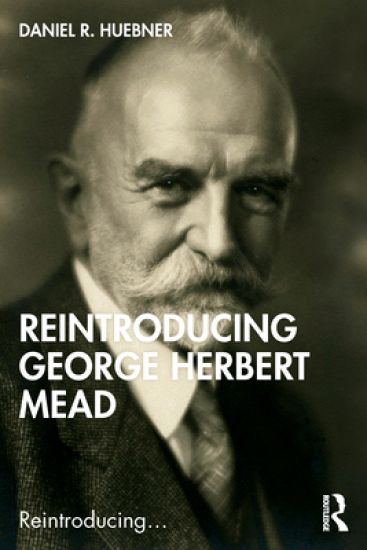
Reintroducing George Herbert Mead

Reintroducing George Herbert Mead

Daniel R. Huebner

TAYLOR FRANCIS LTD
2022
sidottu
George Herbert Mead has long been known for his social theory of meaning and the ‘self’ - an approach which becomes all the more relevant in light of the ways we develop and represent ourselves online. But recent scholarship has shown that Mead’s pragmatic philosophy can help us understand a much wider range of contemporary issues including how humans and natural environments mutually influence one another, how deliberative democracy can and should work, how thinking is dependent upon the body and on others, and how social changes in the present affect our understandings of the past. Historical scholarship has also changed what we know of Mead’s life, including new emphasis on his social reform efforts, his engagement with colonization and war, and critical reinterpretation of the works published after his death. This book provides an approachable introduction to Mead’s contemporary relevance in the social sciences, showing how a pragmatic view of social action serves as the core of Mead’s theory, offering striking insights into human agency, symbolism, politics, social change, temporality, and materiality. As such, it will appeal to scholars of sociology and the social sciences more broadly, with interests in social theory and the enduring importance of the sociological classics.
Reintroducing George Herbert Mead

Reintroducing George Herbert Mead

Daniel R. Huebner

TAYLOR FRANCIS LTD
2022
nidottu
George Herbert Mead has long been known for his social theory of meaning and the ‘self’ - an approach which becomes all the more relevant in light of the ways we develop and represent ourselves online. But recent scholarship has shown that Mead’s pragmatic philosophy can help us understand a much wider range of contemporary issues including how humans and natural environments mutually influence one another, how deliberative democracy can and should work, how thinking is dependent upon the body and on others, and how social changes in the present affect our understandings of the past. Historical scholarship has also changed what we know of Mead’s life, including new emphasis on his social reform efforts, his engagement with colonization and war, and critical reinterpretation of the works published after his death. This book provides an approachable introduction to Mead’s contemporary relevance in the social sciences, showing how a pragmatic view of social action serves as the core of Mead’s theory, offering striking insights into human agency, symbolism, politics, social change, temporality, and materiality. As such, it will appeal to scholars of sociology and the social sciences more broadly, with interests in social theory and the enduring importance of the sociological classics.