Kirjojen hintavertailu. Mukana 12 016 292 kirjaa ja 12 kauppaa.

Kirjahaku

Etsi kirjoja tekijän nimen, kirjan nimen tai ISBN:n perusteella.

5 kirjaa tekijältä Daniel R. Mandell

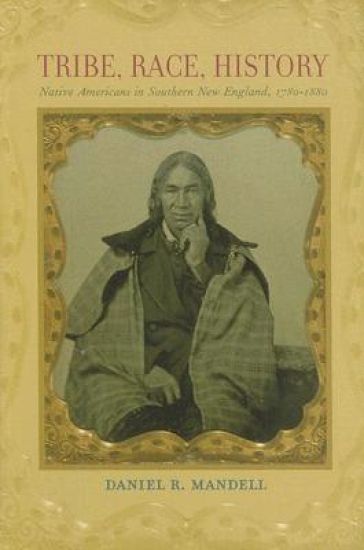
Tribe, Race, History

Tribe, Race, History

Daniel R. Mandell

Johns Hopkins University Press
2008
sidottu
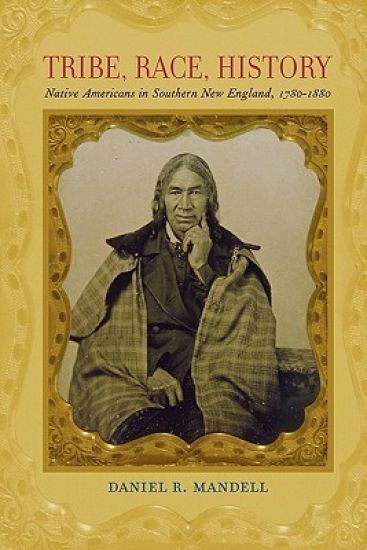
Tribe, Race, History examines American Indian communities in southern New England between the Revolution and Reconstruction, when Indians lived in the region's socioeconomic margins, moved between semiautonomous communities and towns, and intermarried extensively with blacks and whites. Drawing from a wealth of primary documentation, Daniel R. Mandell centers his study on ethnic boundaries, particularly how those boundaries were constructed, perceived, and crossed. He analyzes connections and distinctions between Indians and their non-Indian neighbors with regard to labor, landholding, government, and religion; examines how emerging romantic depictions of Indians (living and dead) helped shape a unique New England identity; and looks closely at the causes and results of tribal termination in the region after the Civil War. Shedding new light on regional developments in class, race, and culture, this groundbreaking study is the first to consider all Native Americans throughout southern New England.
King Philip's War

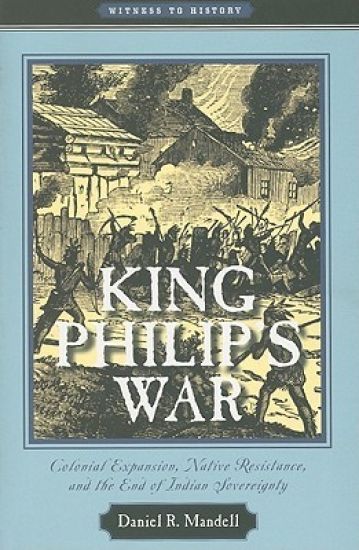
King Philip's War

Daniel R. Mandell

Johns Hopkins University Press
2010
pokkari
King Philip's War was the most devastating conflict between Europeans and Native Americans in the 1600s. In this incisive account, award-winning author Daniel R. Mandell puts the war into its rich historical context. The war erupted in July 1675, after years of growing tension between Plymouth and the Wampanoag sachem Metacom, also known as Philip. Metacom's warriors attacked nearby Swansea, and within months the bloody conflict spread west and erupted in Maine. Native forces ambushed militia detachments and burned towns, driving the colonists back toward Boston. But by late spring 1676, the tide had turned: the colonists fought more effectively and enlisted Native allies while from the west the feared Mohawks attacked Metacom's forces. Thousands of Natives starved, fled the region, surrendered (often to be executed or sold into slavery), or, like Metacom, were hunted down and killed. Mandell explores how decades of colonial expansion and encroachments on Indian sovereignty caused the war and how Metacom sought to enlist the aid of other tribes against the colonists even as Plymouth pressured the Wampanoags to join them. He narrates the colonists' many defeats and growing desperation; the severe shortages the Indians faced during the brutal winter; the collapse of Native unity; and the final hunt for Metacom. In the process, Mandell reveals the complex and shifting relationships among the Native tribes and colonists and explains why the war effectively ended sovereignty for Indians in New England. This fast-paced history incorporates the most recent scholarship on the region and features nine new maps and a bibliographic essay about Native-Anglo relations.
Tribe, Race, History

Tribe, Race, History

Daniel R. Mandell

Johns Hopkins University Press
2011
pokkari
Tribe, Race, History examines American Indian communities in southern New England between the Revolution and Reconstruction, when Indians lived in the region's socioeconomic margins, moved between semiautonomous communities and towns, and intermarried extensively with blacks and whites. Drawing from a wealth of primary documentation, Daniel R. Mandell centers his study on ethnic boundaries, particularly how those boundaries were constructed, perceived, and crossed. He analyzes connections and distinctions between Indians and their non-Indian neighbors with regard to labor, landholding, government, and religion; examines how emerging romantic depictions of Indians (living and dead) helped shape a unique New England identity; and looks closely at the causes and results of tribal termination in the region after the Civil War. Shedding new light on regional developments in class, race, and culture, this groundbreaking study is the first to consider all Native Americans throughout southern New England.
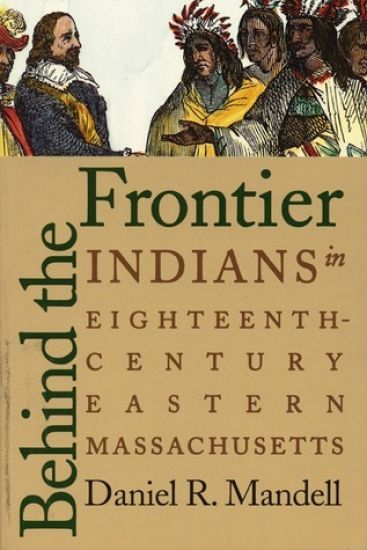
Behind the Frontier

Behind the Frontier

Daniel R. Mandell

University of Nebraska Press
2000
pokkari
Behind the Frontier tells the story of the Indians in Massachusetts as English settlements encroached on their traditional homeland between 1675 and 1775, from King Philip's War to the Battle of Bunker Hill. Daniel R. Mandell explores how local needs and regional conditions shaped an Indian ethnic group that transcended race, tribe, village, and clan, with a culture that incorporated new ways while maintaining a core of "Indian" customs. He examines the development of Native American communities in eastern Massachusetts, many of which survive today, and observes emerging patterns of adaptation and resistance that were played out in different settings as the American nation grew westward in the nineteenth century.
The Lost Tradition of Economic Equality in America, 1600–1870

The Lost Tradition of Economic Equality in America, 1600–1870

Daniel R. Mandell

Johns Hopkins University Press
2020
sidottu
An important examination of the foundational American ideal of economic equality—and how we lost it.Winner of the Missouri Conference on History Book Award for 2021The United States has some of the highest levels of both wealth and income inequality in the world. Although modern-day Americans are increasingly concerned about this growing inequality, many nonetheless believe that the country was founded on a person's right to acquire and control property. But in The Lost Tradition of Economic Equality in America, 1600–1870, Daniel R. Mandell argues that, in fact, the United States was originally deeply influenced by the belief that maintaining a "rough" or relative equality of wealth is essential to the cultivation of a successful republican government.Mandell explores the origins and evolution of this ideal. He shows how, during the Revolutionary War, concerns about economic equality helped drive wage and price controls, while after its end Americans sought ways to maintain their beloved "rough" equality against the danger of individuals amassing excessive wealth. He also examines how, after 1800, this tradition was increasingly marginalized by the growth of the liberal ideal of individual property ownership without limits. This politically evenhanded book takes a sweeping, detailed view of economic, social, and cultural developments up to the time of Reconstruction, when Congress refused to redistribute plantation lands to the former slaves who had worked it, insisting instead that they required only civil and political rights. Informing current discussions about the growing gap between rich and poor in the United States, The Lost Tradition of Economic Equality in America is surprising and enlightening.